What Is GL-5 Gear Oil?
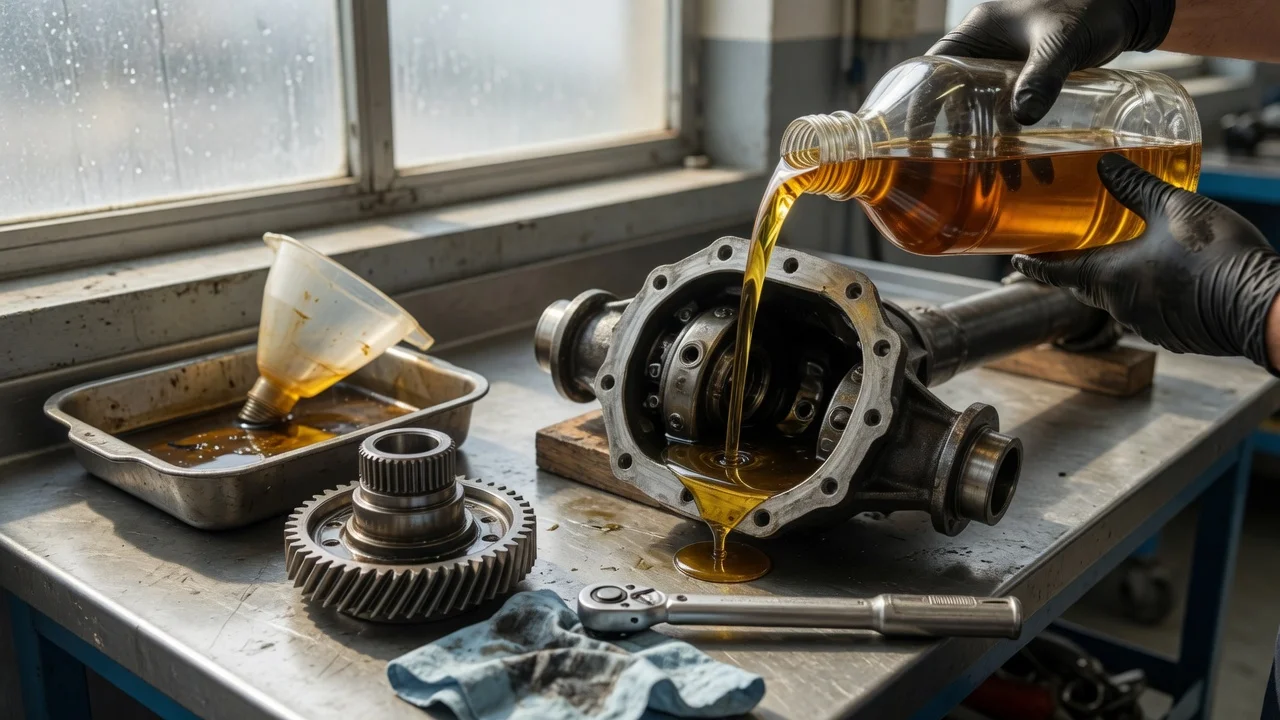
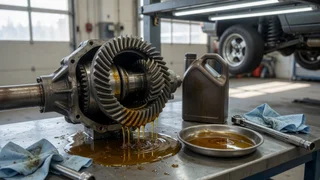
GL-5 gear oil is a gear lubricant that meets the American Petroleum Institute (API) service category GL-5. The "GL" stands for gear lubricant. The category is intended mainly for hypoid gears, the angled, heavily loaded gears found in most rear axles and many differentials. Its defining feature is a high level of extreme pressure (EP) additives, which help protect gear teeth when metal surfaces are pressed together hard enough to squeeze out a normal oil film.
What the GL-5 rating means
API gear lubricant categories describe the kind of service an oil is designed for, not how thick it is. GL-5 is the category for severe gear service: hypoid gears operating under high speed with shock loading, and under low speed with high torque. In practice, this makes GL-5 the common specification for differentials and axles in cars, pickups, SUVs and many commercial vehicles.
Seeing "GL-5" on a bottle tells you about the oil's protective additive performance. It does not by itself tell you whether that oil is right for a particular vehicle. The vehicle maker's specification, found in the owner's manual or service information, is what determines that.
How GL-5 gear oil works
Hypoid gears mesh with a combination of rolling and sliding contact, and the pressure between the teeth can be very high. Under those conditions, ordinary oil alone may not keep the metal surfaces apart, which can lead to scuffing, scoring and accelerated wear.
EP additives, typically based on sulfur and phosphorus compounds, address this. When contact pressure and heat rise at the gear teeth, these additives react with the metal surface to form a protective layer. That layer takes the damage that would otherwise go to the gear teeth themselves, helping the gears survive heavy loads, towing, and sudden torque spikes.
For an owner, this mainly affects the durability of the differential or axle. Using a lubricant with inadequate EP protection in a hypoid axle can shorten gear life, while using the correct oil supports normal service life and quiet operation.
GL-5 versus GL-4
GL-4 is the closely related category most often confused with GL-5. The two are not simply a "good" and "better" version of the same thing. They are designed for different jobs.
Criterion | GL-4 | GL-5; EP additive level | Moderate | High; Typical intended use | Many manual transmissions and transaxles; moderately loaded gears | Hypoid gears in axles and differentials under severe service; Compatibility with brass or bronze synchronizers | Generally designed with these in mind | May be unsuitable in some transmissions unless the oil is also rated for that use; Suitability for heavily loaded hypoid axles | Usually not sufficient where GL-5 is specified | Designed for this service
The practical consequence runs in both directions. Putting GL-4 in an axle that calls for GL-5 can leave the gears underprotected. Putting GL-5 in a manual transmission that calls for GL-4 can also cause problems: in some designs, the strong EP chemistry can attack yellow metals such as brass and bronze used in synchronizers, and it can change friction characteristics so that shifting feels different or synchronizers wear faster. How significant this is depends on the transmission design and the specific oil formulation, so the manufacturer's specification is the deciding factor.
Some products are labeled as meeting both GL-4 and GL-5. These are formulated to provide axle-level protection while remaining compatible with certain transmissions. Whether a dual-rated oil is acceptable for a specific vehicle still depends on what that vehicle's maker approves.
GL-5 rating versus viscosity grade
A GL-5 gear oil label usually shows two separate pieces of information. The API category, such as GL-5, describes performance and additive protection. The SAE viscosity grade, such as 75W-90 or 80W-90, describes how thick the oil is and how it flows at low and high temperatures. These are independent, so two oils can both be GL-5 while having different viscosity grades. Both need to match the vehicle's specification.
Limited-slip differentials
Limited-slip differentials often need a friction modifier so their internal clutches engage smoothly instead of chattering. Some GL-5 oils include this additive and are labeled for limited-slip use; others require it to be added separately; and some vehicle makers specify their own fluid. A GL-5 rating on its own does not indicate limited-slip compatibility, so check the label and the vehicle's requirements.
Choosing the right gear oil
Check the owner's manual or service information for the required API category and viscosity grade for each component, since the axle, transfer case and transmission may each call for something different. Do not assume GL-5 is a universal upgrade over GL-4; use it where it is specified. If the vehicle has a limited-slip differential, confirm whether the oil already contains a friction modifier or whether one must be added. If a manufacturer requires a proprietary or specifically approved fluid, follow that requirement even if a generic GL-5 oil appears similar.
This entry covers the general meaning of the GL-5 category. Exact additive levels, brand-specific formulations, and fluid requirements for individual makes, models and years are not covered here and should be confirmed from the vehicle's documentation or the oil manufacturer's product information.