What Is Automatic Hazard-Light Activation?
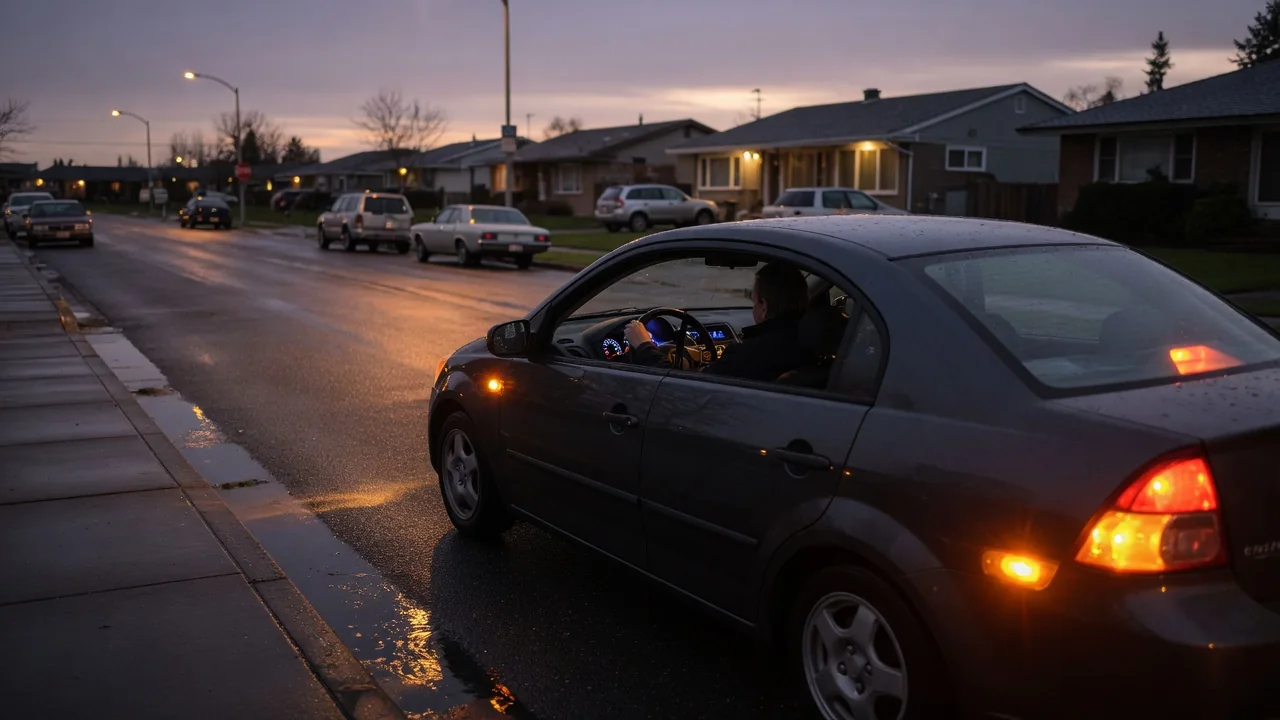
What is automatic hazard light activation? It is a feature that switches on a vehicle's four-way flashers without the driver touching the hazard button, usually in response to hard braking, a collision, or another event the vehicle's electronics judge to be risky. Understanding when and why it happens helps drivers tell a normal safety response from an electrical problem worth investigating.
Trigger examples
The most familiar trigger is severe braking. On vehicles equipped with an emergency stop signal, the control module watches deceleration and anti-lock brake activity, and when a stop looks like a panic event it may flash the brake lamps rapidly or turn on the hazard flashers as the car slows toward a halt. The goal is to give following drivers a stronger warning than steady brake lamps alone, since a sudden stop on a fast road leaves little reaction time.
Collisions are the other common trigger. When crash sensors command airbag deployment, many vehicles also switch on the flashers, and some unlock the doors or turn on interior lighting at the same moment, so a disabled car is easier to see and occupants easier to reach. Certain models add further triggers, such as a driver-assistance system bringing the car to a stop because the driver is unresponsive, or an emergency call being placed. Which events apply depends on the vehicle and its equipment.
Driver override
Automatic activation is not meant to lock the driver out. In most designs, pressing the hazard switch cancels the flashers once they have come on by themselves, and the indicator in the instrument cluster and the switch itself show whether they are still active. After a hard-braking event, many systems also cancel on their own when the driver accelerates again or the vehicle returns to normal speed, so the lights do not keep flashing through ordinary traffic.
Behavior after a crash can differ. Because the flashers are intended to mark a stopped vehicle, they may continue until the switch is pressed or the ignition is cycled, and the exact reset method varies between manufacturers. Some vehicles let the owner turn the hard-braking function on or off through a settings menu in the infotainment screen or cluster, while others have it fixed. The owner's manual is the reliable source for which controls exist on a given car.
Model variation
No single standard governs how this feature behaves across every vehicle, and regional lighting regulations influence what manufacturers offer. In some markets a rapidly flashing brake lamp is permitted during emergency braking, while elsewhere the same model may rely on the hazard flashers or omit the function. The name changes as well: emergency stop signal, emergency brake light, and adaptive brake lights are all labels drivers may see in manuals and menus for closely related behavior.
Thresholds are equally varied. One vehicle may require anti-lock braking to engage above a certain road speed, another may respond to deceleration alone, and the manufacturer rarely publishes the precise figures. Trim level and model year matter too, since the feature often arrives alongside stability control updates or driver-assistance packages. Two cars from the same brand can therefore react differently to the same hard stop, which is why vehicle-specific documentation matters more than general descriptions.
Everyday Use and Observations
In daily driving, most owners meet this feature unexpectedly: a deer steps out, the brake pedal goes down hard, and a clicking sound and two flashing arrows appear in the cluster as the car stops. That is usually the system working as designed. Seen from behind, the effect is all turn signals blinking together, sometimes after a burst of rapid brake-lamp flashes. The lights commonly stop once the car moves off again, though some require a press of the switch.
Other everyday flashes are not this feature at all. A brief blink of all four signals when locking or unlocking is a confirmation from the keyless entry system, and an alarm that has been triggered will also flash the lamps. Drivers who tow may notice trailer lamps joining in if the wiring is connected through the vehicle's lighting circuits. Noting what the car was doing when the flashers came on is the simplest way to separate these normal behaviors from each other.
Limits and Next Steps
The feature has clear limits. It does not shorten stopping distance, it cannot guarantee that a following driver notices, and it depends on working bulbs or LED modules, sound wiring and a healthy battery. After a severe impact, damaged lamps or lost power may prevent any flashing. It also does not replace the driver's own judgment: a slow-moving breakdown, a flat tire on the shoulder or a hazard ahead in fog still calls for switching the flashers on by hand.
Flashers that come on with no hard braking, impact or locking event deserve attention. A sticking hazard switch, moisture in a connector, a body control module fault or an aftermarket alarm can all produce similar symptoms, and any stored fault code is a clue to interpret rather than proof that a particular part has failed. A sensible next step is to record the conditions each time it happens, check the manual for the described triggers, and have a qualified technician test the circuit if the pattern does not match.