What Is an Intercooler?
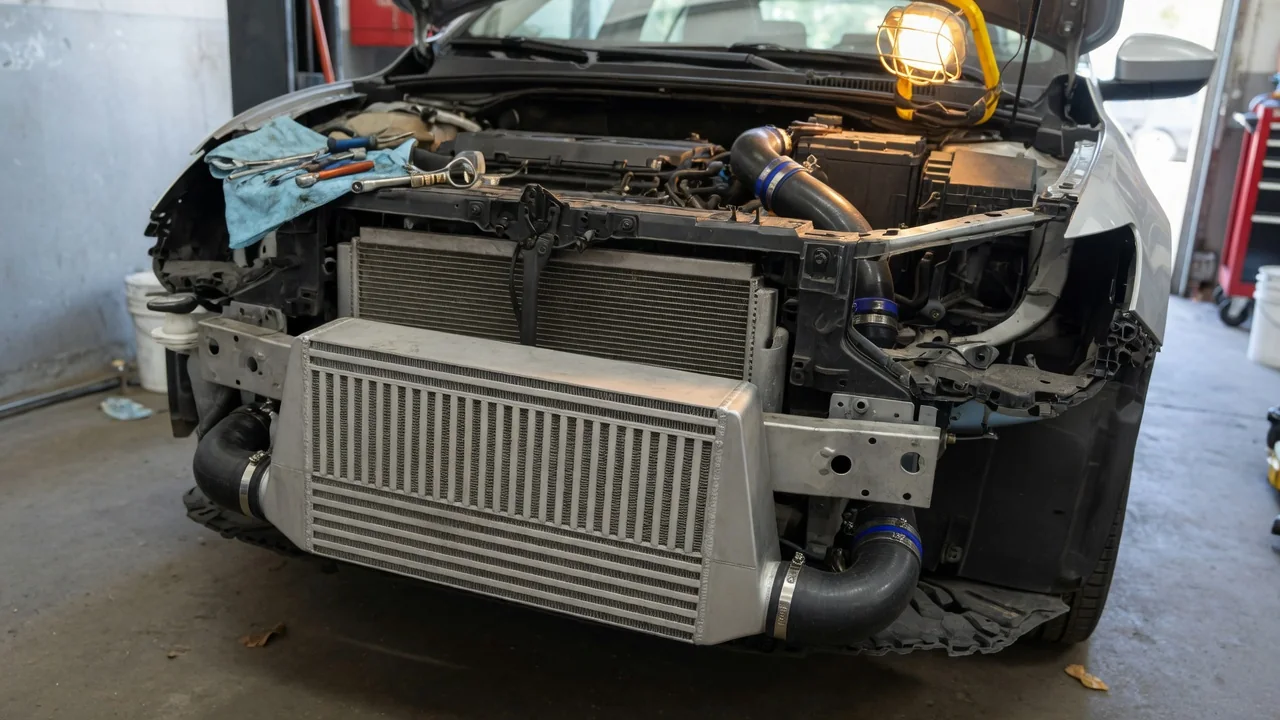
What is an intercooler? It is a heat exchanger placed between a turbocharger or supercharger and the engine's intake, built to cool compressed intake air before it reaches the cylinders. Cooler air is denser, carries more oxygen, and is less likely to trigger knock. Understanding how it works makes it easier to interpret power loss, odd noises, and boost-related warnings.
Heat from compression
A turbocharger or supercharger squeezes intake air to pack more of it into each cylinder, but compression raises temperature as surely as it raises pressure. The same effect warms the barrel of a bicycle pump during hard use. On a turbocharged engine, the compressor housing also sits close to exhaust-driven turbine components, so the charge picks up additional heat from the surrounding metal. Air leaving the compressor can therefore be far hotter than the outside air that entered the filter box moments earlier.
Hot charge air works against the reason for boosting in the first place. Warm air is less dense, so a given volume holds less oxygen, and high intake temperatures make gasoline engines more prone to knock, which pushes the engine computer to pull ignition timing or reduce boost. Diesels respond with higher combustion and exhaust temperatures. Drivers sometimes notice this as a car that feels strong on a cool morning and flatter after repeated hard acceleration on a hot afternoon, though how noticeable it is depends on the engine and its calibration.
Cooling path
The charge air follows a simple route: from the air filter into the compressor, out through a pipe or hose to the intercooler, through its core, and onward to the throttle body and intake manifold. Inside an air-to-air unit, the charge passes through tubes surrounded by fins while outside air streams across them, carrying heat away. These coolers usually sit behind the front bumper or beside the radiator, and on some vehicles they sit on top of the engine, fed by a hood scoop.
Other vehicles use an air-to-water design, sometimes called a charge air cooler with its own coolant circuit. Here the compressed air gives up heat to coolant, which is then pumped to a separate low-temperature radiator at the front of the car. This layout allows shorter intake plumbing and is sometimes built directly into the intake manifold. Opening the hood and tracing the large-diameter pipes from the turbo will usually reveal which arrangement a vehicle has, though covers and undertrays can hide much of it.
Leak symptoms
Because the intercooler and its plumbing sit on the pressurized side of the intake, any split hose, loose clamp, cracked plastic end tank, or damaged core lets boost escape. Common signs include reduced power under acceleration, a hissing or whooshing sound that rises with engine load, slower boost build-up, and poorer fuel economy. Diesel engines may produce dark smoke because fueling no longer matches the air actually arriving. An oily film around a joint can mark the spot, since a light mist of oil normally travels through the charge pipes.
A leak may also switch on the check engine light, often with codes relating to underboost or airflow readings that do not agree with expectations. Such a code is evidence to interpret rather than proof that the intercooler itself has failed; a sticking wastegate, a faulty sensor, a vacuum line problem, or a worn turbocharger can produce similar data. Code meanings and thresholds vary by manufacturer, so the definition should be confirmed for the specific vehicle before any part is blamed or replaced.
Everyday Use and Observations
In normal driving the intercooler does its job silently, and most owners never think about it. Its effect is easiest to notice at the extremes: towing up a long grade, repeated full-throttle pulls, or crawling in summer traffic and then accelerating hard. With little airflow across the core, an air-to-air unit soaks up underhood heat, and the first burst of acceleration may feel slightly dull until fresh air moves through again. Top-mounted units tend to be more sensitive to this than front-mounted ones.
A few simple observations help keep the system healthy. The core's fins, visible through the lower grille on many cars, can clog with leaves, bugs, and road grime or be bent by stones, all of which reduce airflow. Hoses can be checked visually for cracking, swelling, or oil-wet joints. In humid or cold conditions, some designs collect condensation inside the cooler, which may cause a brief stumble under hard throttle. Vehicles with a water-cooled setup have an extra coolant level worth watching, in whatever location the manufacturer specifies.
Limits and Next Steps
An intercooler can only bring charge air down toward the temperature of whatever is cooling it, never below, and every core adds some restriction that costs a little pressure. A larger unit is not automatically better: more internal volume and longer piping can slow throttle response, and fitment, sensor placement, and engine calibration all matter. Gains from an upgrade depend heavily on how hard the engine is being worked, so a stock daily driver may see little difference from the original equipment part.
When symptoms point to a boost problem, the sensible next step is a proper diagnosis rather than guesswork. A workshop can pressure-test or smoke-test the intake tract to locate leaks, and compare live readings for boost pressure and intake air temperature against the values expected for that engine. Checking the owner's manual or service information confirms component locations and any vehicle-specific checks. Driving for long periods with a significant leak is unwise, because the turbocharger may work harder to compensate and fueling may suffer.