What Is an Evaporative Emissions System?
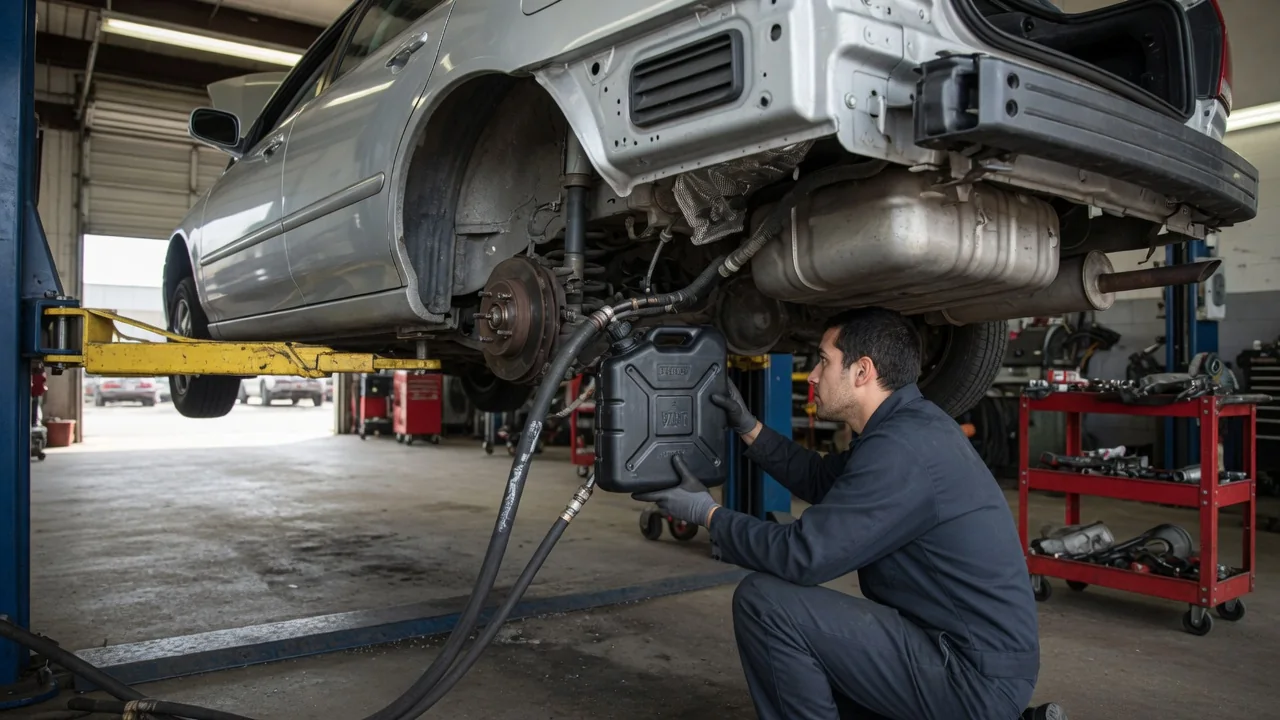
Gasoline evaporates constantly, even when a car is parked with the engine off. So what is an evaporative emissions system? It is the network of sealed lines, valves, and a charcoal canister that captures those fuel vapors instead of letting them drift into the air, then routes them to the engine to be burned. Understanding its basic layout makes its warnings far easier to interpret.
Tank vapor path
Fuel in the tank gives off vapor whenever temperature rises or the liquid sloshes, and that vapor needs somewhere to go. Rather than venting to the atmosphere, it travels through a line from the top of the tank to a canister filled with activated charcoal. The charcoal holds hydrocarbon molecules on its surface while allowing cleaned air to pass out through a vent. Valves at the tank typically keep liquid fuel from entering the vapor line during hard cornering or a rollover.
The sealed filler cap, or a capless filler neck with a spring-loaded door, is the part of this path most drivers actually touch. Refueling pushes a large volume of vapor out of the tank, and many vehicles direct that surge into the canister as well. Canister location varies widely: some sit near the tank under the rear of the vehicle, others are mounted in the engine bay. Hybrids and some newer designs may use a pressurized, sealed tank, so the layout on a given model deserves vehicle-specific confirmation.
Purge concept
A charcoal canister has limited capacity, so stored vapor must be removed periodically. That is the job of purging. When the engine is running and conditions are suitable, the engine computer opens a purge valve between the canister and the intake. Engine vacuum then draws fresh air in through the canister vent, sweeping the stored hydrocarbons off the charcoal and into the intake stream, where they are burned in the cylinders as part of normal combustion.
Because purged vapor is extra fuel, the computer meters it carefully, usually by pulsing the valve rapidly and watching oxygen sensor feedback to trim injector delivery. Purge flow is commonly limited or withheld on a cold engine and at certain idle conditions, though the exact strategy depends on the manufacturer. On some vehicles a faint, rhythmic ticking near the engine is simply the purge valve operating. Turbocharged engines may need additional check valves or a separate path because the intake manifold is not always under vacuum.
Warning symptoms
The most common sign of trouble is a check engine light, since the system tests itself for leaks and flow problems. Depending on the design, the computer seals the system and monitors pressure or vacuum with a sensor, or uses a small pump to do the same. If the reading does not behave as expected, a code is stored. Some vehicles also display a message asking the driver to check the fuel cap, which is a reasonable first thing to inspect.
Other symptoms are more physical. A raw gasoline smell around the vehicle, especially near the rear or after parking in a warm garage, suggests vapor is escaping somewhere. A purge valve that stays open can allow vapor into the intake at the wrong time, which may show up as rough running or a hard start right after filling up. A fuel pump nozzle that clicks off repeatedly during refueling can point to a restricted vent path or a canister that has taken on liquid fuel.
Everyday Use and Observations
In normal driving the system works silently, and good habits help keep it that way. Tightening the cap until it clicks, or making sure a capless door seats cleanly, preserves the seal the self-test depends on. Stopping at the first automatic shutoff matters as well; squeezing in extra fuel can push liquid into lines and a canister designed only for vapor. Charcoal soaked with gasoline does not recover well and can shed particles toward the valves downstream.
A few observations are perfectly normal. A brief hiss when opening the cap on a hot day reflects pressure or vacuum the tank was holding, and some hybrids ask the driver to wait a moment while the tank depressurizes before the fuel door releases. Leak tests often run only under specific conditions, such as a certain fuel level and temperature range, sometimes hours after shutdown. That is why a warning light may appear days after the fill-up that actually caused it, and why it may take several drive cycles to clear.
Limits and Next Steps
An evaporative code describes what the monitor measured, not which part is at fault. A reported leak could involve the cap seal, a cracked hose, a canister, a vent valve stuck open, or a corroded filler neck, and the code alone cannot distinguish among them. Definitions and test thresholds also differ between manufacturers, so the meaning of any stored code should be confirmed against information for the specific vehicle. Replacing parts on a guess often leaves the original fault in place.
Sensible first steps are simple: inspect the cap seal for cracks or debris, reseat it, and note when any fuel odor occurs. Beyond that, professional testing is the efficient route. Shops commonly use a smoke machine to introduce visible vapor at low pressure and a scan tool to command the valves and watch sensor data. Because the system contains flammable vapor, improvised pressure tests or probing near the tank are poor ideas. A persistent fuel smell or an inspection deadline are both good reasons to book a diagnosis promptly.