Why Does a Car Warn About a Loose Gas Cap?
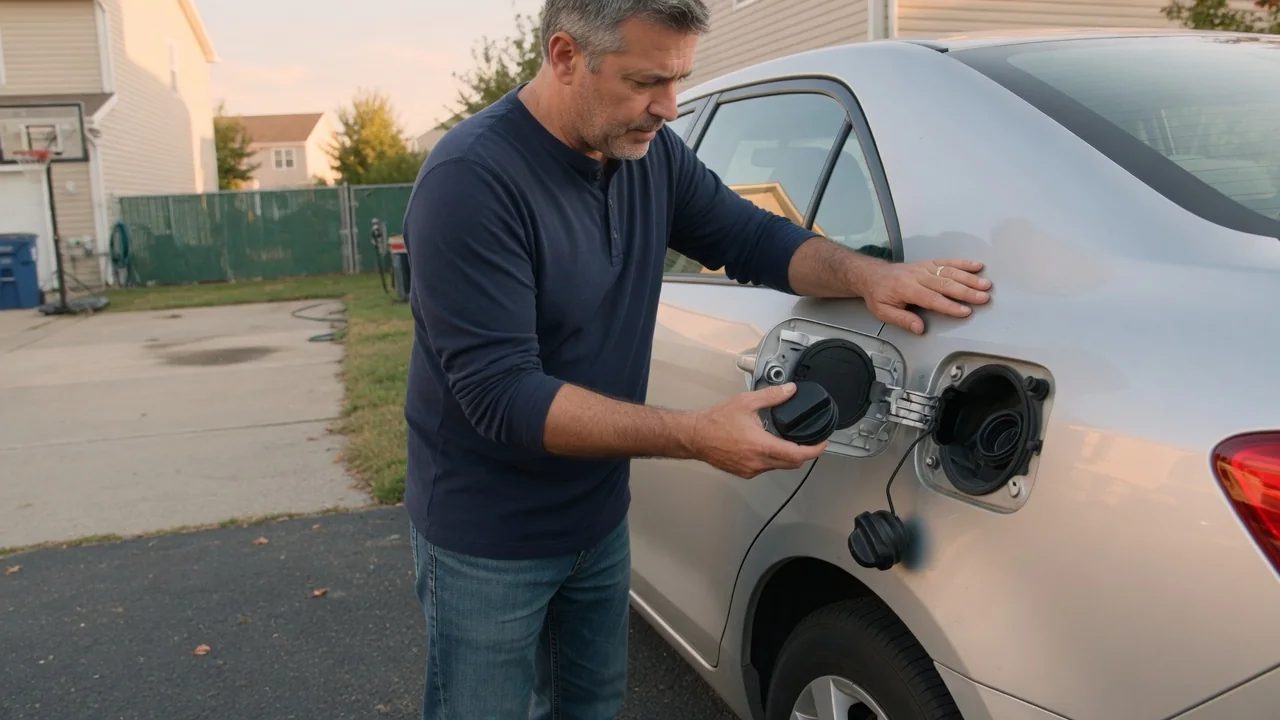
Why does a car warn about a loose gas cap when the engine seems to run perfectly well? The answer lies in the evaporative emissions system, which traps gasoline vapor instead of letting it escape into the air. Because the filler cap is part of that sealed system, the vehicle's computer treats a poor seal as a leak worth reporting to the driver.
Sealing
A fuel tank is not simply a container for liquid. Gasoline evaporates readily, especially in warm weather or after a drive, and the vapor it produces contains hydrocarbons that contribute to air pollution. To contain it, modern vehicles route vapor from the tank through hoses to a charcoal canister, where it is stored until the engine can draw it in and burn it. For that arrangement to work, the tank, filler neck, lines, and valves must form a closed space.
The cap is the one part of that closed space a driver opens regularly. A rubber seal on its underside presses against the filler neck, and many caps use a ratcheting mechanism that clicks when sufficient tightness is reached. If the cap is left off, cross-threaded, or its seal is cracked or dirty, vapor has a path to the outside. Some vehicles use capless filler designs with a spring-loaded flap instead, so the sealing surface differs, but the principle of a tight closure remains the same.
Warning behavior
In most designs, the vehicle has no sensor watching the cap itself. Instead, the engine computer periodically tests the whole vapor system by closing it off and applying either slight vacuum or slight pressure, then watching a pressure sensor to see whether the reading holds. If the pressure changes faster than expected, the computer concludes that a leak exists somewhere. A loose cap is among the simplest explanations, which is why some vehicles display a dedicated message asking the driver to check it.
How the warning appears depends on the manufacturer. Some instrument clusters show a text message or a cap-shaped symbol, while others only illuminate the check engine light and store a diagnostic trouble code related to an evaporative leak. The test usually runs only under particular conditions, such as certain fuel levels and temperatures, or after the car has sat for a while, so the warning can appear a day or more after the fill-up that caused it. That delay often confuses drivers who do not connect the two events.
Further diagnosis
A stored evaporative leak code is evidence that the system failed its self-test, not proof that the cap is at fault. The same result can come from a cracked hose, a canister vent valve that fails to close, a purge valve that sticks open, a corroded filler neck, or a damaged canister. Code definitions and the way leak sizes are categorized vary between manufacturers, so the meaning of a particular code should be confirmed against information for the specific vehicle.
When reseating the cap does not resolve the warning, technicians typically go beyond reading the code. A scan tool can show whether the monitor has run and what the tank pressure sensor reports, and some tools can command the vent and purge valves to check their response. A smoke machine is commonly used to introduce visible vapor into the system at low pressure so that an escaping wisp reveals the leak location. This kind of testing separates a simple cap problem from a fault elsewhere in the plumbing.
Everyday Use and Observations
For most drivers, the warning follows an ordinary refueling stop. The cap may have been tightened without reaching its click, left dangling on its tether, or seated over a bit of grit. The car typically drives normally, because a small vapor leak does not affect how fuel reaches the engine. Some owners notice a faint gasoline odor near the rear of the vehicle, particularly in a closed garage, though a small leak often produces no smell at all.
After the cap is properly secured, the light rarely goes out immediately. The computer generally needs to rerun its leak test and see it pass, sometimes over several drive cycles, before clearing the warning on its own. The number of trips and the conditions required differ from one vehicle to another, and the owner's manual often describes what to expect. Inspecting the cap seal for cracks, hardening, or debris at the same time is a reasonable habit, since a worn seal can leak even when tightened.
Limits and Next Steps
A cap warning has limits as a diagnostic clue. The system detects that pressure was lost, not where it went, so replacing the cap is an educated first guess rather than a guaranteed fix. A replacement that does not match the vehicle's filler neck design may not seal correctly either, so the correct part for the specific model matters. Likewise, a steady check engine light could relate to something other than fuel vapor, which only reading the stored codes can clarify.
If the warning persists after the cap has been checked and the car has been driven for several days, having the codes read and the system tested is the sensible next step. An unresolved evaporative fault can cause a failed emissions inspection in regions that require one, and an illuminated light can mask a new, unrelated problem. Any strong fuel smell, visible wetness, or dripping around the tank or filler area is a different matter and deserves prompt professional attention, since liquid fuel leaks carry a fire risk.