What Is an Automatic Transmission Clutch Pack
A modern automatic transmission shifts through its gears using more than just computer commands and valve-body pressure. Inside the case, a series of hydraulically applied clutch packs holds and releases rotating components to produce each ratio. When a driver asks what an automatic transmission clutch pack is, the question usually follows a symptom: a flare between gears, a harsh engagement, or a diagnostic trouble code. The answer matters because these friction assemblies are central to shift quality, power flow, and the long-term behavior of the transmission.
Meaning
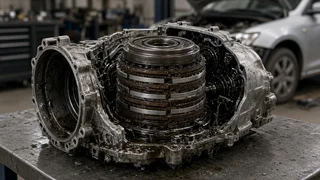
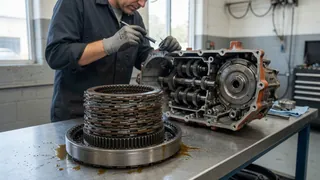
An automatic transmission clutch pack is a stacked assembly of steel plates and friction plates fitted inside a clutch drum. The friction plates have a bonded or grooved facing material, while the steel plates are smooth and typically splined to the drum or hub. When transmission fluid pressure pushes a piston against the stack, the plates squeeze together and lock the drum to a rotating member.
The clutch pack is not a single clutch like a manual-transmission clutch. It is one of several holding or driving clutches used to apply different gearset elements. A transmission may use multiple clutch packs along with bands and one-way clutches. In this context, the term describes a wear item inside the transmission, not a part the driver operates directly. Its condition affects how firmly and quickly each shift occurs.
How it works
Hydraulic pressure is the muscle behind clutch pack operation. Transmission fluid enters a piston cavity, pushing the piston against a return spring. The piston then compresses the friction and steel plates, creating enough grip to transfer torque through the engaged gearset. When the transmission controller or valve body vents the fluid, the return spring releases the stack and the clutch separates.
Good shift behavior depends on the timing and pressure of that engagement. If pressure rises too slowly, the plates slip and generate heat. If it rises too quickly, the engagement becomes abrupt. Wear in the friction material also changes the clearance between plates, which can make the piston travel farther and delay application. That is why a worn clutch pack can feel like a lazy, sliding shift even when the hydraulic controls are working normally.
Key differences
A clutch pack differs from a band because a band wraps around a drum and tightens externally, while a clutch pack sits inside a drum or around a hub and compresses axially. Both create holding force, but the clutch pack generally handles higher torque in a more compact space. A one-way clutch is different again: it locks in one direction without hydraulic apply pressure.
Comparing clutch packs within a transmission also matters because different packs are designed for different loads. The clutch used for reverse may be larger than one used for an overdrive ratio. Fluid specification and service history affect them all equally, since degraded fluid reduces cooling, lubrication, and apply-pressure stability. For an owner, any discussion of clutch pack health should begin with the correct transmission fluid and a record of whether it has been serviced.
Diagnostic codes are also part of the comparison. A code identifying a ratio error or a solenoid performance problem may point toward a clutch pack that cannot hold pressure, but it can also indicate a failed seal, a worn valve body bore, or a blocked fluid passage. Manufacturer-dependent definitions vary, and the same code on different vehicles can require different inspection steps. The fault code is evidence of a behavior, not proof that one specific pack has failed.
Understanding a problem
Common observations include delayed engagement into drive or reverse, flaring during an upshift, a felt slip under acceleration, or a burned odor from the fluid. These symptoms can be caused by slippage in a clutch pack, but they can also come from a low fluid level, a restricted filter, or a failing pressure-control solenoid. A worn pack tends to be more consistent once the transmission is warm, while aeration or low fluid may behave differently on hills or during hard turns.
A sudden loss of one gear or repeated neutral-like behavior under load should prompt a diagnostic check before continued use. Slippage creates heat and can spread debris through the valve body and cooler. Reading the vehicle-specific data stream and checking line pressure can help separate an electrical control issue from a mechanical holding problem. Repair options may include replacing seals, a piston, or the complete clutch pack, depending on what the disassembly reveals and whether the fluid contains clutch material or metal.