How Does an Automatic Transmission Clutch Pack Work?
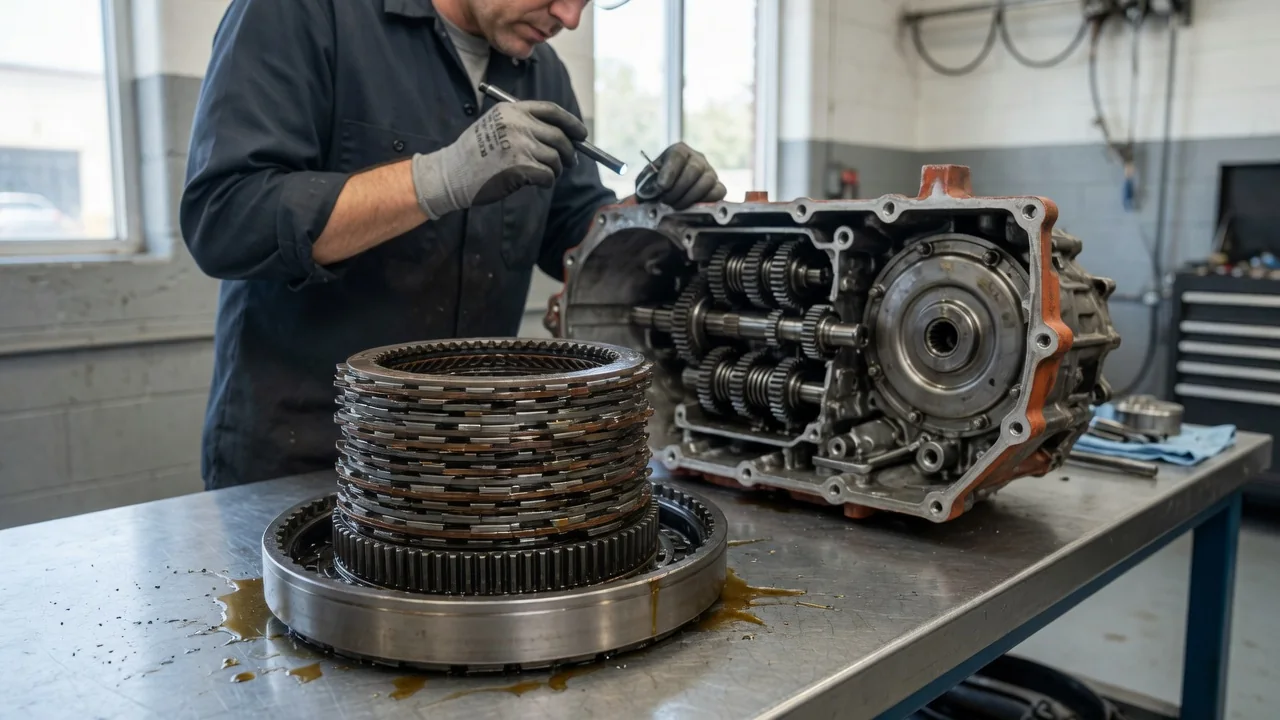
An automatic transmission changes gears without a clutch pedal, but it still relies on clutches. It has several of them, stacked and sealed inside the case. Knowing how an automatic transmission clutch pack works explains why shifts feel smooth or harsh, why fluid condition matters, and why some failures develop gradually. This guide covers three parts of automatic clutch pack operation: the friction plates, the hydraulic pressure that applies them, and the wear that limits their life.
Friction plates
A clutch pack is a stack of thin, ring-shaped plates of two alternating types. Friction plates carry a bonded lining of friction material, commonly a fiber- or paper-based composite, on one or both faces. Steel plates, also called separator plates, are plain, smooth steel. The two types are splined to different parts. One set usually engages teeth on an inner hub, and the other engages slots in a surrounding drum or in the transmission case. When the stack is loose, each set can spin independently, separated by a thin film of transmission fluid. When the stack is squeezed together, friction locks the plates. The hub and drum then turn as one, or one of them is held stationary.
That distinction defines the pack's job. In a typical planetary-gear automatic, a pack that connects two rotating members acts as a clutch, and a pack that anchors a member to the case acts as a brake. The transmission applies different combinations of clutches and brakes to hold, drive or free specific parts of its planetary gearsets. Each combination produces a different gear ratio. The number of plates in a pack, and the number of packs in a transmission, vary by design and by how much torque each pack must handle.
The friction lining is grooved rather than flat. The grooves let fluid move across the surface, which carries heat away and helps the plates separate cleanly when released. The lining also works together with the fluid. Automatic transmission fluid contains friction modifiers that make the plates grip in a controlled, predictable way as they come together instead of grabbing suddenly. This is one reason manufacturers specify particular fluids for particular transmissions.
Hydraulic pressure
In a conventional automatic, clutch packs are applied by fluid pressure rather than by a mechanical linkage. Behind the plate stack is an annular piston inside the drum or case, sealed by rubber or lip seals. When pressurized fluid enters the chamber behind the piston, the piston moves and clamps the plates against a backing plate held in place by a snap ring. Clamping force depends on the fluid pressure and the piston area, so higher pressure gives a tighter grip and more torque capacity.
Release matters as much as apply. When pressure is vented, return springs push the piston back so the plates can separate. Depending on the design, these may be coil springs or a single diaphragm-style spring. In a rotating drum, centrifugal force can push trapped fluid outward behind the piston and build unwanted pressure. Designs counteract this with features such as check balls or balance chambers, which prevent partial engagement.
The pressure comes from the transmission pump. The valve body, a block of passages and valves, directs fluid to the correct piston for each gear. In older designs, shift timing was governed mostly by hydraulic and mechanical signals. Modern transmissions typically use solenoids commanded by an electronic control module. Pressure is not simply switched on and off. During a shift, one pack is usually released while another is applied, and the control system ramps pressure through the overlap so torque transfers smoothly. Too little pressure lets the plates slip. Too much pressure, or pressure applied too abruptly, makes engagement harsh.
Wear
Some slip is part of every engagement. For a brief moment as a pack applies, the friction and steel plates rotate at different speeds, and the sliding contact turns energy into heat. Normally this lasts only a moment and the fluid carries the heat away. Wear speeds up when slip lasts longer or happens under more load than the pack was designed for. Common causes include low or degraded fluid, insufficient apply pressure, leaking piston seals, and heavy loads that keep temperatures high.
Excess heat damages both types of plate. Friction material can wear thin, char or become glazed, so it no longer grips consistently. Steel plates can discolor, warp or develop hot spots that prevent even contact. As material wears away, clearance in the stack grows, and the piston must travel farther before the plates clamp. The result can be delayed engagement, slipping, a flare in engine speed during a shift, or shudder. Worn friction particles also circulate in the fluid and collect in the pan and filter, and this debris can interfere with valves and solenoids elsewhere in the hydraulic system.
Many electronically controlled transmissions adapt to gradual changes by adjusting pressure or timing based on how recent shifts actually occurred. This adaptation can hide early wear for a while, but it cannot restore lost friction material. Once the control system reaches the limit of its adjustment range, symptoms may become noticeable.
Practical implications and limits
For owners, clutch pack design is the reason transmission fluid deserves routine attention. The fluid applies the pistons, cools the slipping plates and forms part of the friction system itself. Using the fluid type listed in the owner's manual and following the manufacturer's service schedule supports all three roles. Driving habits matter too. Sustained heavy loads, towing beyond the vehicle's rating and repeated hard launches all add heat, a major contributor to friction material wear.
A general explanation can only tell you so much about a specific vehicle. Slipping, harsh shifts or delayed engagement can come from clutch wear. They can also come from low fluid, a faulty solenoid, a valve body problem, a sensor fault or software behavior. Diagnosis therefore requires model-specific procedures, pressure testing or scan-tool data. The number of clutch packs, apply strategies, service intervals and adaptation behavior all vary widely between transmissions. Dual-clutch and continuously variable transmissions engage power in different ways, so this description applies most directly to conventional planetary automatics. For any specific transmission, the factory service information is the reliable reference.