What Is a Vehicle Mule in Development?
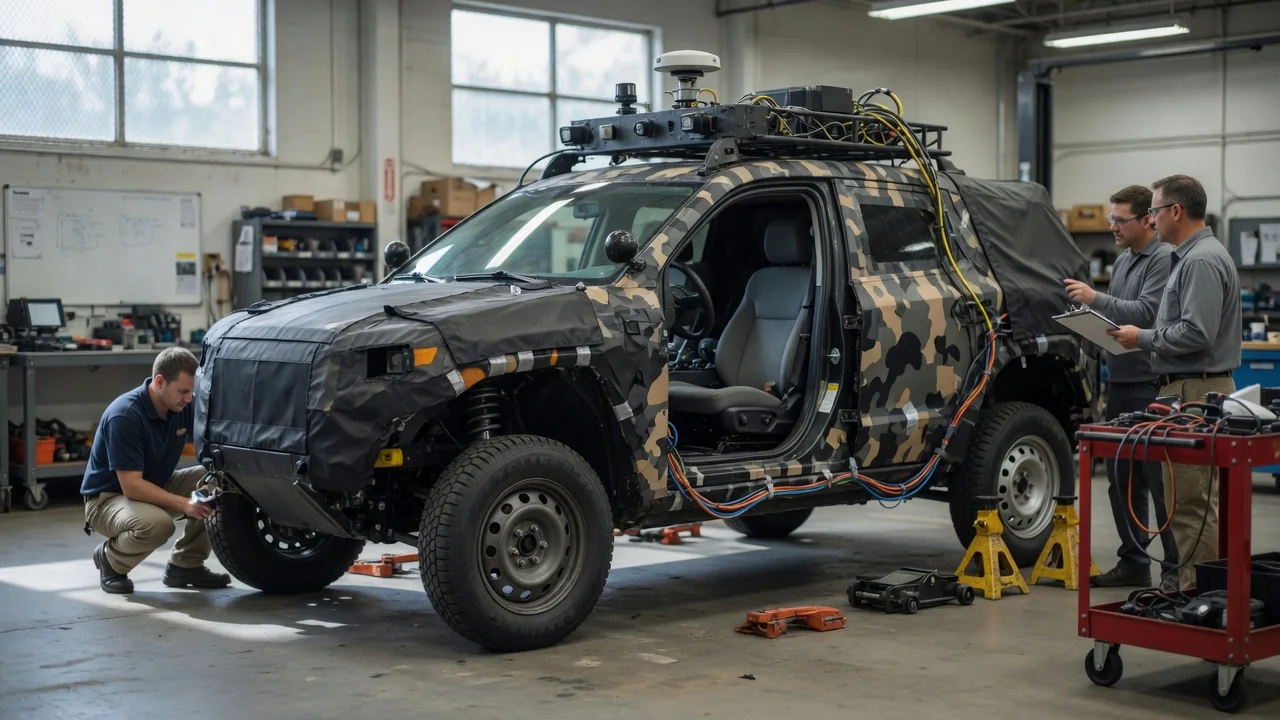
In automotive engineering, a vehicle mule is an early test car that pairs new, unreleased hardware with a body borrowed from an existing vehicle or built only roughly. Its job is to let engineers evaluate components under real driving conditions long before the final design is ready. If you have wondered what a vehicle mule in development actually is, or what the car development mule meaning covers, the short answer is this: the outside is a disguise or a convenience, and the real work happens underneath.
Hidden components: what the mule is really testing
The defining feature of a mule is that its important parts are not the ones you see. Engineers typically take a donor body, often from a current model or a closely related platform, and fit it with the systems under development. Depending on the program, that might mean a new engine or electric drive unit, a revised transmission, a different suspension layout, a new steering system, updated brakes, or an early version of the vehicle's electrical architecture. Because the body was not designed around these parts, fabrication is common: brackets, subframes, mounting points and floor sections may be modified so the new hardware physically fits.
Inside the cabin, a mule usually carries equipment that a production car never would. Data loggers record signals from sensors placed on the chassis, powertrain and cooling system, while laptops or dedicated displays let engineers watch live readings during a drive. Extra wiring harnesses, temporary switches and, in some cases, ballast weights are used to approximate the mass and weight distribution of the future vehicle. Additional safety equipment, such as a roll cage or fire suppression, may appear on mules intended for demanding track work, though this depends entirely on the test plan.
Software is another hidden component. Engine, battery, stability and driver-assistance control units on a mule may run early calibrations that change frequently between test sessions. This is one reason mules exist at all: they let teams develop and refine control strategies on real hardware without waiting for production tooling, final body panels or interior trim.
Road testing: why mules leave the lab
Simulation, computer modeling and test rigs answer many engineering questions, but they cannot reproduce every combination of road surface, temperature, load and driver behavior. Mules bridge that gap. Engineers use them to check how a component behaves when it is installed in a moving vehicle rather than isolated on a bench: whether a cooling system keeps temperatures in range during sustained climbs, how a suspension design handles broken pavement, or how a new drivetrain responds to repeated acceleration and braking.
Road testing with mules generally happens in stages. Early runs may take place on private proving grounds, where routes are controlled and repeatable. As confidence grows, testing can move to public roads and to regions chosen for their climate or terrain, such as hot, cold, high-altitude or mountainous areas. Public-road operation of test vehicles is subject to local regulations, which vary by country and jurisdiction, so the exact rules and permits involved differ from program to program.
Findings from mule testing feed back into the design. A part that overheats, vibrates or wears too quickly can be revised before tooling is committed, when changes are cheaper and simpler than they would be later. Over time, mules are typically joined or replaced by more complete prototypes that use the intended body and interior, allowing engineers to evaluate the whole vehicle rather than individual systems.
Appearance: how to recognize a mule
Because a mule borrows its body, it often looks like a car already on sale, which helps it blend into traffic. Close inspection usually reveals that something is off. Common clues include fender flares or widened wheel arches that accommodate a different track width, a body that sits at an unusual height, wheels and brakes that look out of proportion for the car, extra vents or cut openings for cooling, exhaust outlets in unexpected positions, and visible sensors, antennas or cables. Some mules have a stretched or shortened body when the new platform's wheelbase differs from the donor's.
Manufacturers may also add camouflage wrap, temporary panels or padding to hide shapes and details. Camouflage is more strongly associated with later prototypes that carry the real body, since there is more of the final design to conceal, but it can appear on mules too. A plain, unbadged car with a slightly odd stance can be just as effective a disguise, because observers tend to assume it is an ordinary production model.
The appearance of a mule is therefore a weak indicator of the final product. Its shape, proportions and trim reflect what was convenient for testing, not what customers will eventually see in a showroom.
Practical implications and limits
For readers who follow new-car development, the main lesson is to treat mule sightings cautiously. A mule can confirm that a manufacturer is testing something, and it occasionally hints at broad direction, such as a wider track or a different cooling layout. It rarely confirms specifications, final styling, interior design, model names or launch timing. Hardware on a mule may be an early iteration that later changes, or a concept that never reaches production at all.
Mules are engineering tools, not saleable cars. They may contain one-off fabrication, unvalidated parts and experimental software, and they may not satisfy the certification and safety requirements that apply to vehicles sold to the public. For that reason they are generally kept within the manufacturer's control and retired at the end of their useful life rather than offered for sale. Exact practices differ between companies and are not always disclosed.
It also helps to separate the term from related ones. Usage varies across the industry, but mule usually describes an early, partial test vehicle focused on specific systems, while prototype often refers to a more complete vehicle built closer to the intended design, and pre-production cars come later still. Recognizing these stages explains why early test cars look rough and why conclusions drawn from them should remain provisional.