How Is a New Car's Trunk Opening Tested? Object Fit, Latch Access and Sealing
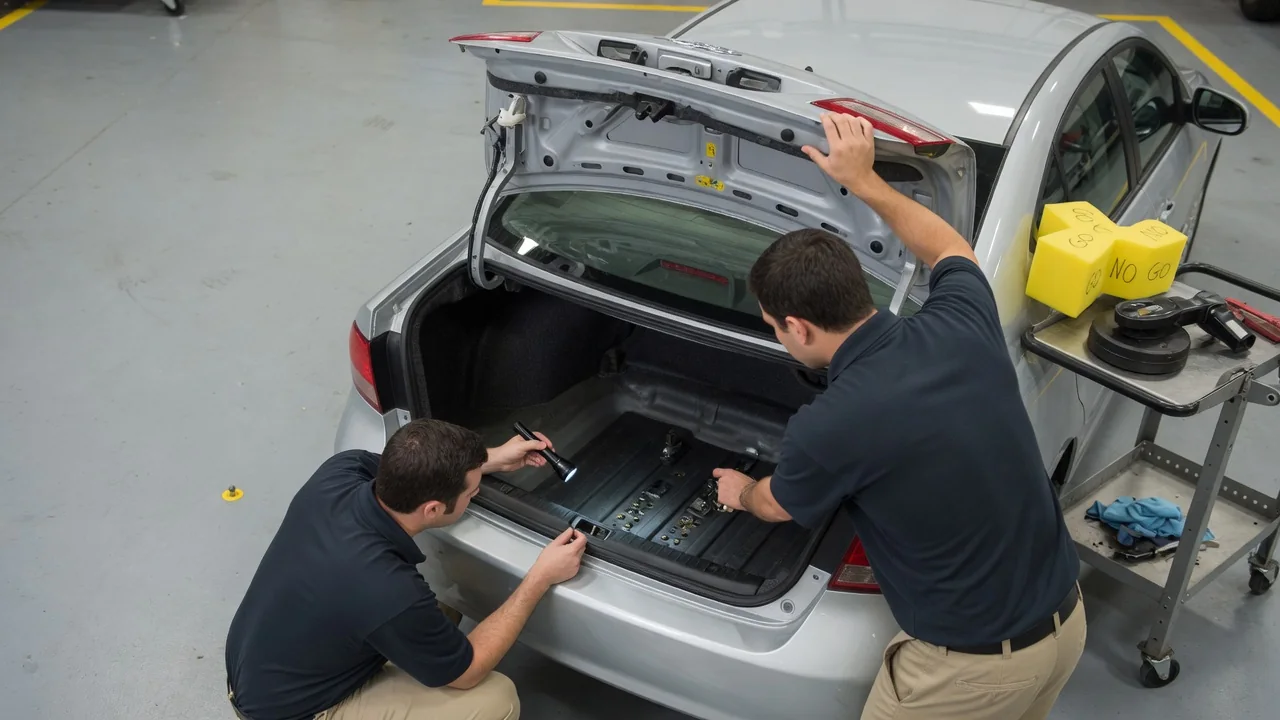
A trunk opening looks simple, but during vehicle cargo opening development it has to meet several competing demands at once. It must be wide and low enough for real luggage, easy to open and close for people of different heights, and tight enough to keep out water and dust for years. This article explains how a new car's trunk opening is typically tested, from early digital checks through physical prototypes, with a focus on object fit, latch access and weather sealing.
Object fit
Testing starts long before a prototype exists. Engineers place digital versions of common cargo items into the computer model of the body, such as suitcases, strollers, golf bags and boxes, and sometimes items that matter to a particular target market. The goal is not only to confirm total cargo volume but to check the path an object follows as it passes through the opening. A trunk can have generous volume and still reject a bulky item if the sill is too high, the opening narrows at the upper corners, or hinge arms and trim intrude into the aperture.
Cargo volume itself is usually measured with standardized methods so that figures can be compared, such as procedures published by SAE and ISO that fill the space with defined blocks or reference shapes. Those numbers say little about usability on their own, so teams also look at the width and height of the opening, the sill height above the ground, and any step between the sill and the cargo floor. Each of these affects how much lifting and tilting a person must do to load something heavy.
Once physical bodies are available, whether early prototypes or hand-built mockups, the digital results are checked with real objects. Evaluators load and unload reference luggage, note where items catch on seals, latches or trim, and look for problems such as a striker that scrapes bags or a lid edge that ends up at head height when open. Findings feed back into the design and can lead to changes in hinge type, opening shape or trim contours before production tooling is finalized.
Latch access
A trunk that holds everything is still a problem if people struggle to open or close it. Ergonomic studies use virtual human models representing a range of body sizes to check whether a shorter person can reach the raised lid or liftgate to pull it down, and whether a taller person risks hitting their head on the open edge. Physical evaluations with participants of different heights then confirm the simulations, along with the location and feel of exterior release buttons, handles and interior pull grips.
Engineers also evaluate the effort needed to open and close the lid, because gas struts, torsion bars or springs must balance its weight across the whole range of travel. Too little assistance makes the lid feel heavy; too much makes it hard to close or lets it rise unexpectedly. On vehicles with power operation, testing extends to opening speed, adjustable height settings for low garages, obstacle detection that stops or reverses motion, and remote or hands-free release functions. These systems are typically run through many repeated cycles and at temperature extremes, since cold can stiffen struts and seals and slow motors.
The latch itself is checked for secure engagement, resistance to unintended opening and consistent release. Some requirements depend on the market and body style. In the United States, for example, passenger cars with a trunk compartment must provide an interior release that lets someone trapped inside open it, and that release must be visible in the dark. Rear doors on hatchbacks and SUVs can fall under separate door retention requirements. Development teams verify that the design meets whichever rules apply to the specific vehicle and market.
Weather sealing
The trunk opening is one of the largest openings in the body, so sealing it is a significant development task. Engineers study the cross-section and compression of the rubber seal, the gap and flush between the lid and surrounding panels, and the water management channels built into the opening. Ideally, water running off the lid lands in a gutter around the opening and drains away instead of reaching the seal or dripping into the cargo area when the lid is raised.
Physical prototypes typically go through spray or shower booths that simulate heavy rain, along with conditions that mimic car washes and driving through standing water. Afterward, technicians inspect the cargo floor, spare wheel well and trim panels for moisture. Dust chambers check for fine particle intrusion, which can reveal leak paths that water testing misses. Wind noise is evaluated as well, because a seal that keeps out water may still let air whistle through at highway speeds.
Sealing is also tested over time. Repeated opening and closing cycles, temperature cycling, sun exposure and freezing conditions can make rubber harden, shrink or tear, and ice can bond a lid to its seal. Engineers also balance seal compression against closing effort: a firmer seal improves sealing but makes the lid harder to latch fully, which raises the risk of a lid that looks shut but is only partially latched.
Practical implications and limits
For owners, this kind of testing explains why trunk designs involve trade-offs. A low sill and a wide aperture make loading easier but can complicate body stiffness and water management, while a tightly sealed lid may need a firm push to latch. Development aims for a workable balance based on how a vehicle is expected to be used, so a layout that suits one buyer's cargo habits may feel awkward to another.
Testing also has limits. Prototypes are evaluated under defined conditions, while real use adds variables such as worn or damaged seals, blocked drain channels, aftermarket racks or bike carriers, overloaded cargo areas and collision repairs that alter panel alignment. Published cargo volume figures do not guarantee that a particular item will fit, so measuring the actual opening and checking the owner's manual for power liftgate settings, the emergency release location and seal care recommendations remains the most reliable approach for any specific vehicle.