What Is a Secondary Air Injection System?
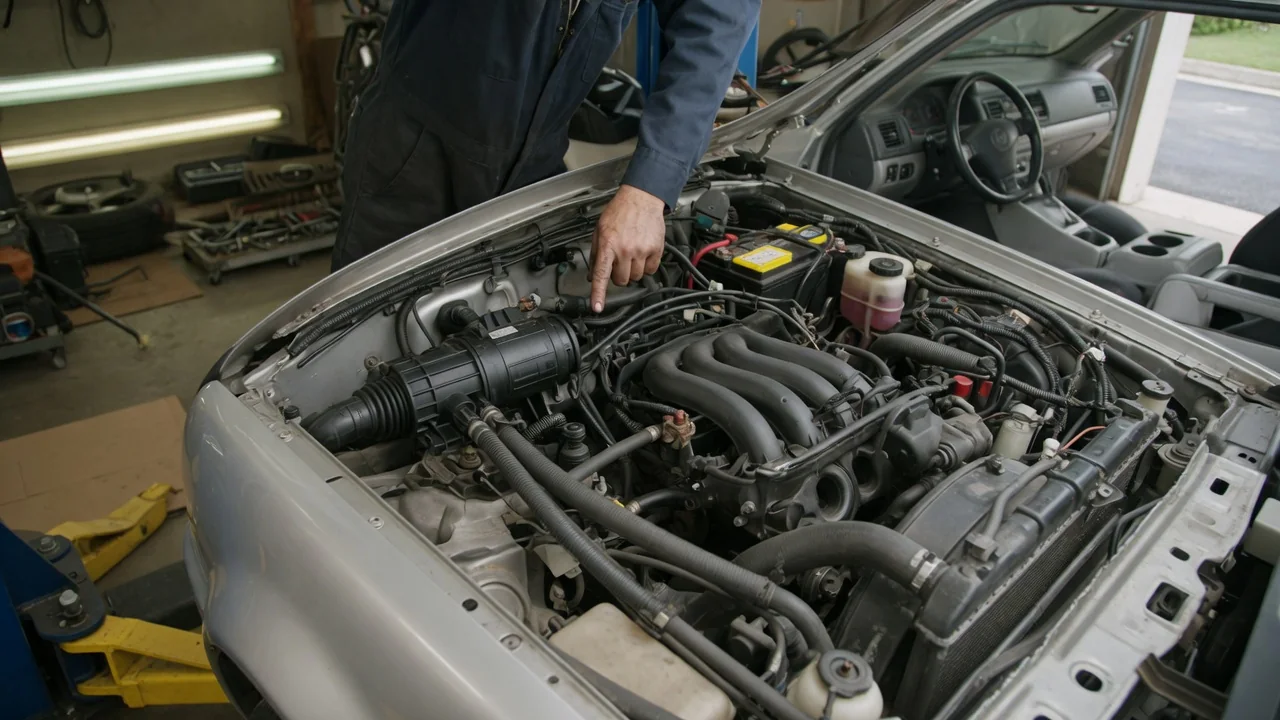
What is a secondary air injection system? It is an emissions control arrangement fitted to some gasoline cars that pushes fresh outside air into the exhaust stream for a short period, usually right after a cold start. The added oxygen helps burn leftover fuel and heat the catalytic converter sooner. This article explains the pump, the timing, the fault codes, and sensible next steps.
Air pump concept
The heart of the system is an air pump that draws filtered outside air and delivers it into the exhaust, typically at the exhaust ports or manifold, upstream of the catalytic converter. This air never enters the cylinders, which is why it is called secondary; the primary air is what the engine breathes through the throttle. Oxygen arriving in hot exhaust lets unburned hydrocarbons and carbon monoxide continue to oxidize after they leave the combustion chamber, releasing heat exactly where the catalyst needs it.
Designs differ considerably between manufacturers and eras. Older vehicles often used a belt-driven pump that ran with the engine and relied on diverter valves to redirect the airflow, while many later cars use an electric pump switched by a relay under engine computer control. Between the pump and the exhaust sits a check valve or combination valve that stops hot gas from flowing backward. Some engines have one bank of plumbing, others two, and plenty of modern cars have no such system at all.
Startup
A cold engine needs a richer mixture to run smoothly, and a cold catalytic converter does very little cleaning until it reaches its working temperature. That combination makes the first moments after startup the dirtiest part of a typical drive. By feeding extra air into the rich exhaust during this window, the system encourages an exothermic reaction that warms the converter faster, shortening the time before it begins treating the exhaust effectively.
On cars with an electric pump, the engine computer usually commands it on only when conditions suit, such as a low coolant temperature at start, and then shuts it off after a brief period once the oxygen sensors and catalyst are ready for closed-loop fueling. A warm restart may not trigger it at all. The exact enabling conditions and run time are calibrated by each manufacturer, so the behavior on one model should not be assumed for another.
Fault context
Because the system is part of emissions control, the engine computer checks whether it works. A common strategy watches the upstream oxygen sensor while the pump runs, expecting a lean shift when extra air arrives; some vehicles use a dedicated pressure or flow sensor instead. If the expected response is missing, a diagnostic trouble code may be stored and the check engine light illuminated. Generic codes exist for the system, and manufacturers also add their own, which need vehicle-specific confirmation.
A stored code describes what the monitor saw, not which part failed. Insufficient flow, for example, could come from a worn pump, a blown fuse or faulty relay, a stuck valve, a cracked or disconnected hose, a vacuum control problem, or carbon-clogged passages in the cylinder head. Moisture is a recurring theme: when a check valve leaks, exhaust condensation can travel back into the pump and damage it, so replacing the pump alone may not cure the underlying cause.
Everyday Use and Observations
In daily driving the system is nearly invisible. The most noticeable sign on many cars with an electric pump is a whirring or humming sound, somewhat like a small vacuum cleaner, coming from the engine bay for a short time after a cold start and then stopping abruptly. That noise is normal operation. Owners sometimes mistake it for a failing accessory, particularly on a chilly morning when it stands out against an otherwise quiet idle.
Changes in that familiar sound are worth noting. A pump that grows louder, screeches, or rattles can indicate worn bearings or water intrusion, while complete silence on a car that used to hum may point to an electrical problem or a seized motor. Driveability often feels unchanged with a fault present, since the system does not affect how the engine runs once warm. The warning light and a possible failed emissions inspection tend to be the practical consequences.
Limits and Next Steps
The system has clear limits. It adds no power, does not improve fuel economy, and plays no role once the engine and catalyst are warm. It also cannot compensate for other problems such as misfires, exhaust leaks, or an aged converter. Some manufacturers have moved away from it, using precise fuel control, ignition timing strategies, and converters mounted close to the engine to achieve fast warm-up instead, which is why its presence depends heavily on the specific engine.
When a fault appears, a sensible first step is to have the codes read along with any freeze-frame data, then confirm what they mean for that exact vehicle using its service information. Exhaust components get extremely hot and the pump circuit can carry substantial current, so hands-on testing is best left to a qualified technician with a scan tool capable of commanding the pump. Removing or disabling the system is not a wise shortcut, since tampering with emissions equipment can be illegal and may cause inspection failure.