What Is a Perforated Seat Cover? Airflow, Ventilation, and Cleaning
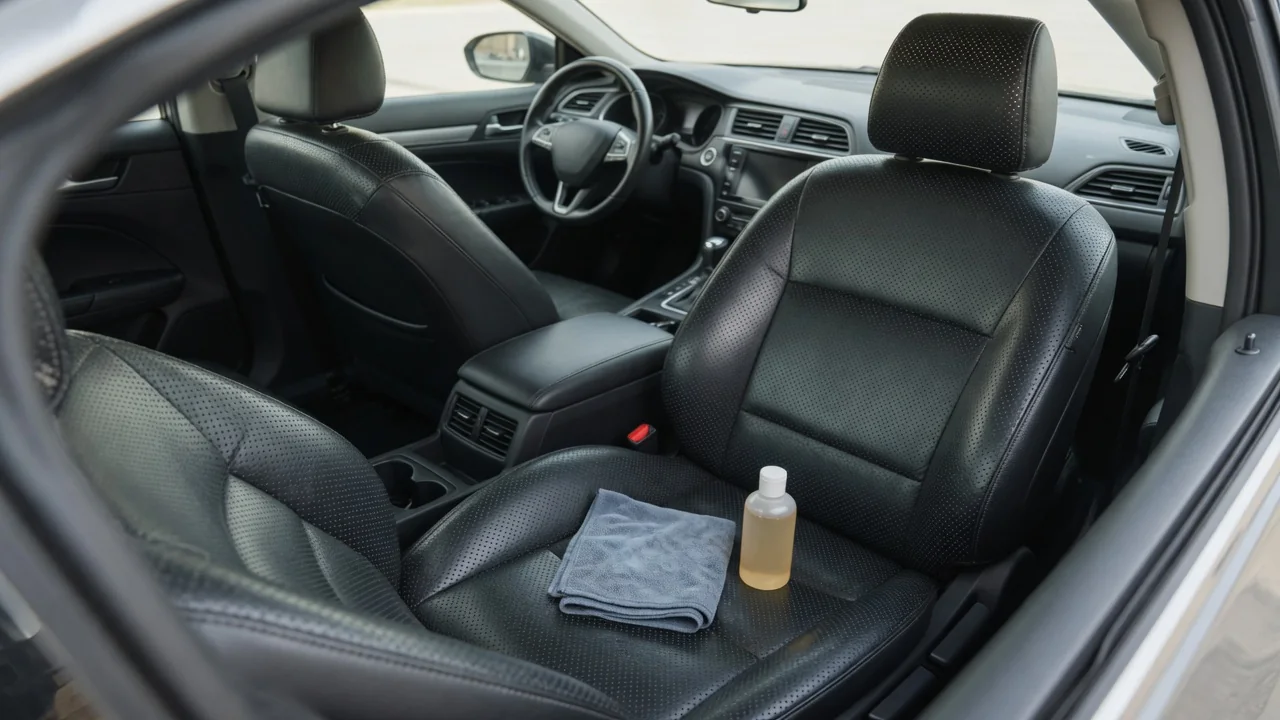
A perforated seat cover is an upholstery surface, usually genuine leather, synthetic leather, or vinyl, punched with a pattern of small holes. The term applies both to factory perforated car seat upholstery and to aftermarket covers fitted over existing seats. The holes change how air and moisture move between the occupant and the seat. That affects comfort, determines how well the surface works with ventilated seat systems, and changes how the material should be cleaned.
How Perforations Affect Airflow
Leather and vinyl are much less breathable than woven fabric. Where the body presses against a solid surface, heat and perspiration have little room to escape, which is why a smooth seat can feel sticky on a warm day. Perforations create many small openings through the top layer, giving air and moisture vapor a path into the padding beneath instead of keeping them trapped at the contact point. Without any fan, this passive exchange is modest, because the occupant's body covers many of the openings, but it can reduce the clammy feeling that solid surfaces tend to produce.
Where the holes are placed matters. Perforations are commonly used in the center inserts of the cushion and backrest, where the body makes the most contact, while bolsters and edges are often left solid. What sits behind the surface matters just as much. If the layers underneath are open foam or an air-permeable spacer material, air can move through. If the cover has a dense backing, a sealed foam layer, or adhesive behind the holes, it may look perforated yet breathe very little. Hole size, density, and pattern vary between manufacturers, and there is no single universal standard.
Perforated Upholstery and Seat Ventilation
Passive breathability is different from an active ventilated seat, sometimes marketed as a cooled seat. In an active system, small fans built into the cushion, the backrest, or both move air through internal channels or an air-distribution layer toward the surface. Depending on the design, the fans either push air out toward the occupant or draw air away from the body. In either case, the perforated cover is the final stage of the system: it is what allows the moving air to reach the skin. Without openings in the surface, the fans would mostly circulate air inside the seat.
Not every perforated seat is ventilated. Perforations are often used for appearance or for passive comfort alone, and many heated seats work without any holes at all. Some seats combine heating and ventilation behind the same perforated surface. The reliable way to know what a particular vehicle has is to check its controls and owner's manual rather than assuming from the look of the upholstery.
Aftermarket covers deserve particular care on ventilated seats. A solid cover will largely block the airflow the factory system is designed to deliver. A perforated aftermarket cover may let some air through, but its holes may not line up with the zones the fans serve, and its backing can still restrict flow. Separately, many seats contain side airbags in the backrest, so any cover should be one the vehicle and cover maker identify as compatible with the seat's airbag deployment.
Cleaning Perforated Seat Covers
The same openings that let air through also collect crumbs, dust, skin oils, and spilled liquids, and they offer a direct path into the padding underneath. The guiding principle when cleaning is to keep liquid out of the holes. Start by vacuuming with a soft brush attachment, using light passes that lift debris out of the openings rather than pressing it deeper.
Apply cleaner to a microfiber cloth or soft-bristled brush instead of spraying it straight onto the seat. Foaming cleaners and lightly dampened cloths put less liquid on the surface than a direct spray. Choose a product suited to the material, such as a leather cleaner for genuine leather or a mild interior cleaner for vinyl and synthetic leather. Work gently, then wipe away residue with a clean, dry cloth. Cleaner or conditioner left sitting in the holes can dry there, clog the openings, and leave visible dots across the pattern, so apply conditioner sparingly and buff off any excess.
Blot spills promptly rather than rubbing, since rubbing can push liquid into the perforations. On ventilated seats, avoid saturating the surface, because moisture that passes through the holes can reach the internal padding and the components behind it. For removable aftermarket covers, follow the care label: some are designed to be washed, others are not. The vehicle owner's manual is the best guide for factory upholstery.
Practical Implications and Limits
Perforation is a comfort feature, not a substitute for climate control. How much difference it makes depends on outside temperature, clothing, trip length, cabin temperature, and whether the seat has active ventilation. Owners should also expect some trade-offs. A perforated surface needs a little more care than a solid one, and the holes can make wear more noticeable over time, particularly where the material is regularly stretched, such as the side bolster used when getting in and out of the car.
Repairs also work differently. Replacing a damaged section usually means sourcing matching perforated material to preserve both the appearance and any ventilation function, and a patch or filler that seals the holes will stop air from passing through that area. Because construction, materials, and ventilation designs vary between vehicles and cover makers, general guidance only goes so far. For a specific seat, the vehicle's owner's manual and the cover manufacturer's instructions remain the authority on what the system does and how it should be maintained.