What Is a Microcar? Size, Packaging, and Everyday Uses
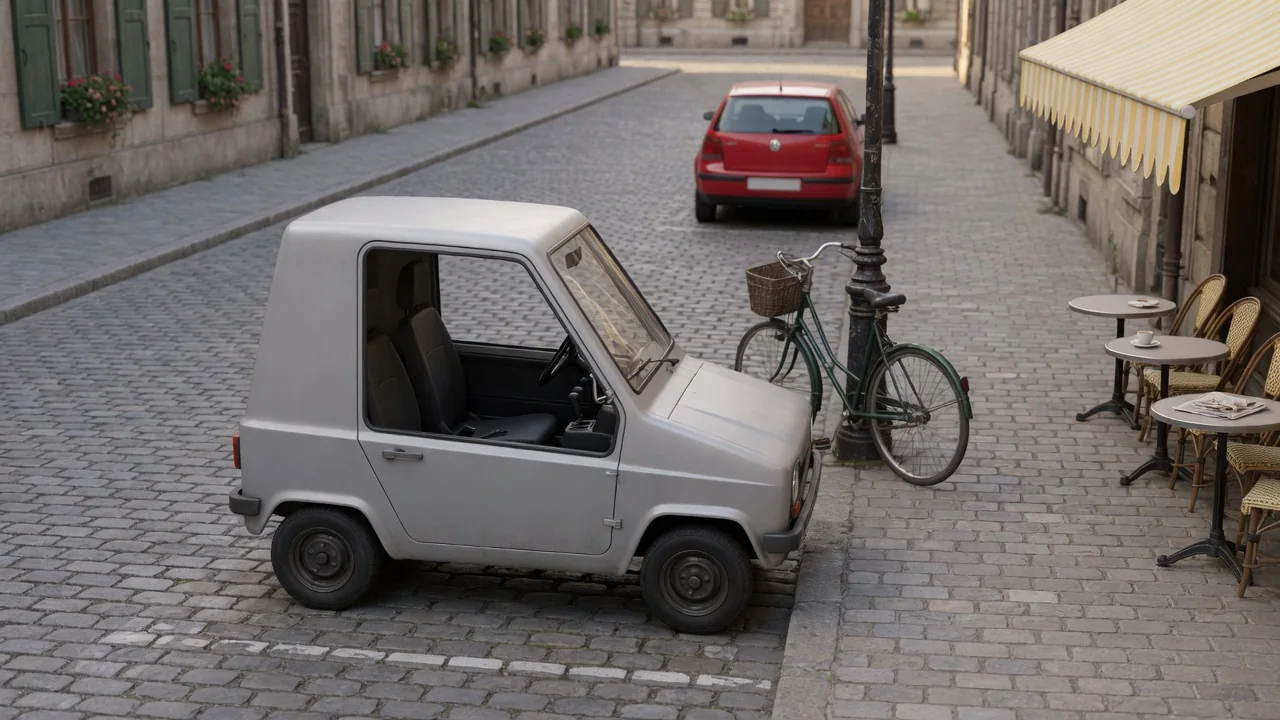
A microcar is the smallest class of passenger vehicle: a short, narrow car usually built for one or two occupants, powered by a small engine or electric motor, and meant mostly for short trips in crowded places. There is no single worldwide definition of the microcar vehicle type. The label covers several overlapping groups shaped by local rules. What ties them together is a design approach that puts a compact footprint first and accepts clear trade-offs to achieve it.
Small dimensions
Size is the trait that defines a microcar. These vehicles sit below city cars and subcompacts in length, width, and usually weight. Many are short enough to fit into curbside gaps that a typical compact car could not use. Width matters as much as length, because a narrow body is what makes tight streets, parking garages, and congested traffic easy to handle. Height, by contrast, is often generous relative to length, which helps the cabin feel less cramped than the exterior suggests.
Whether a given vehicle counts as a microcar often depends on its legal classification rather than its looks. Japan's kei car category, the European light and heavy quadricycle categories, and US low-speed vehicle rules each set their own limits on factors such as dimensions, power, mass, or top speed. A vehicle that qualifies for one of these classes in one region may count as an ordinary passenger car elsewhere. Some of these categories also carry different, often less demanding, safety requirements than full passenger cars.
Small dimensions also change how the car behaves. A short wheelbase and low mass give a tight turning circle and modest energy use, which suits stop-and-go driving. The same traits can make the ride feel busier over bumps, because there is less distance between the axles to smooth out pitching. A light, tall body can also be pushed around more noticeably by strong crosswinds or the wake of large trucks.
Packaging
Packaging is the engineering task of fitting people, powertrain, wheels, and cargo into a given shape, and in a microcar it is the central challenge. Designers typically push the wheels as close to the corners as possible and keep overhangs very short, so nearly all of the length goes to the cabin. An upright seating position and a tall roofline let occupants sit higher and more vertically. That uses height to make up for the missing length.
Seating layouts vary. Two seats side by side is the most common arrangement. Some designs instead seat occupants one behind the other, stagger the seats slightly to give shoulders more room, or add small rear seats best suited to children or occasional use. Powertrains are usually mounted at the rear or under the floor to free up cabin space. Electric microcars commonly place the battery beneath the floor, which keeps the cabin clear and lowers the center of gravity.
Cargo space is where the compromises show most clearly. Storage is often limited to a small area behind the seats, a compact front compartment, or a modest hatch. Folding a passenger seat may be the only way to carry bulky items. Doors and other access points are shaped by the same constraints. Historically, some microcars even used unconventional entry arrangements, such as a door at the front of the body, to save length.
Use cases
The core use case is short-distance urban driving. A microcar suits commuting within a city, school runs, shopping trips, and other errands where one or two people travel a few miles at moderate speeds. In dense neighborhoods, being able to park in small spaces and maneuver through narrow streets can save time every day. The modest energy needs of a small, light vehicle also suit frequent short trips.
Microcars also suit places with low speeds and limited space: university campuses, resorts, large industrial sites, gated communities, and older town centers with tight lanes. In some countries, the lightest microcar categories may be driven with a restricted license or at a younger age than full cars. That makes them a form of independent transport for people who cannot drive a conventional car or prefer not to. The exact rules depend on the vehicle class and local law.
Many households treat a microcar as a second vehicle rather than their only one. A larger car handles long trips, family travel, and heavy loads, while the microcar covers routine local driving. Small businesses that make frequent stops in congested areas can also benefit from a vehicle that parks easily and uses relatively little energy over short distances. Examples include local deliveries or service calls with light equipment.
Practical implications and limits
The same choices that make a microcar convenient in town limit it elsewhere. Some legal categories cap top speed or bar the vehicle from highways and expressways entirely, so the first practical question is where the car is allowed to go. Even highway-legal vehicles in this class tend to have limited power in reserve for merging and passing. Road, wind, and tire noise can also be more noticeable in a small, lightly insulated body on long, fast stretches.
Safety deserves careful thought. Basic physics means that in a collision between vehicles of very different mass, the lighter one goes through a larger change in speed. A short body also leaves less room for crumple zones to absorb energy. Engineering can reduce these effects, but results vary widely by design and by the standards a vehicle was built to meet. Rather than assuming, check a specific vehicle's legal classification, the safety equipment it carries, and any independent crash test results available for it.
Ownership details also differ by category. Registration, licensing, insurance, and inspection can follow different rules than for ordinary passenger cars, and parts or qualified service may be harder to find for niche manufacturers. Before choosing a microcar, compare its seating and cargo capacity with your real trips, and confirm that the roads you use are permitted. Also review the owner's manual for load limits, maintenance intervals, and charging or fueling requirements.