What Is a Mass Airflow Sensor on a Car
When a car accelerates, cruises, or simply idles, the engine computer must know how much air is entering the intake passage. The mass airflow sensor, commonly called a MAF sensor, supplies that measurement. It converts moving air into an electrical sensor signal the powertrain control module reads many times per second. With that value, the computer sets fuel delivery and ignition timing. If the reading is missing or skewed, drivability suffers and a diagnostic trouble code may appear. Knowing what this component does makes its symptoms and repairs much easier to understand.
Meaning
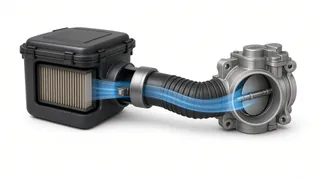
A mass airflow sensor on a car is an electronic device placed in the intake tract between the air filter and the throttle body. Its job is to measure the actual air mass entering the engine, not just air speed or volume. Because oxygen content changes with temperature and altitude, measuring mass gives a more useful fuel calculation than a simple flow estimate. The sensor sends a varying voltage or frequency signal to the engine control module, which interprets the value as airflow.
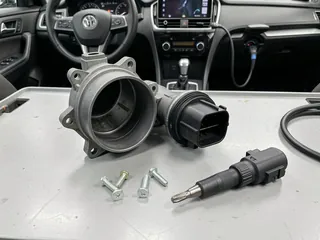
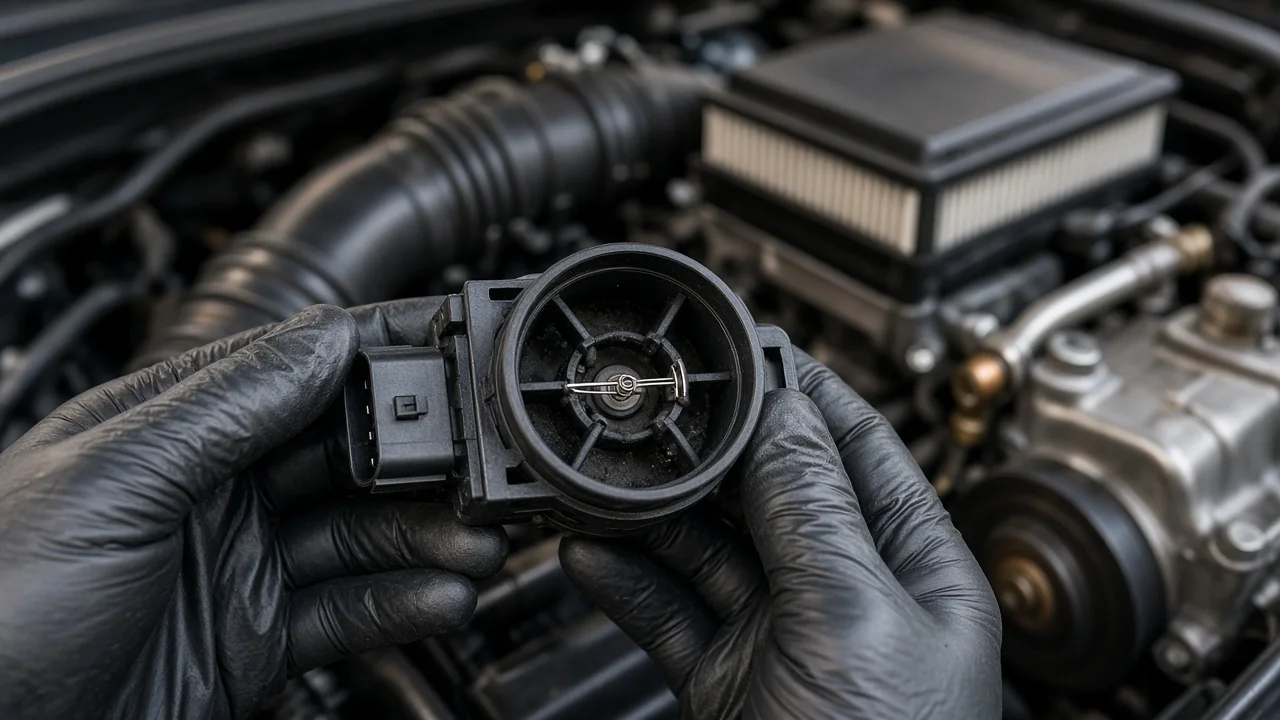
In everyday use, the MAF sensor helps the engine run cleanly and respond smoothly. When the driver presses the accelerator, more air rushes past the sensor. The computer sees the change and adds the correct amount of fuel. A weak or dirty MAF signal may cause hesitation, rough idle, or poor fuel economy. The part itself is usually a small plastic housing with a sensing element and an electrical connector located near the airbox.
How it works
Most modern MAF sensors use a heated wire or film. The engine computer keeps that element at a set temperature above the incoming air. As air mass flows across the hot surface, it removes heat. The electronics measure how much current is needed to maintain the temperature. More airflow produces more cooling, so the required current rises. That changing current becomes the sensor signal representing air mass.
The intake passage design matters because the sensor samples only a portion of the total airflow. The housing is shaped so the air moves in a predictable way across the sensing element. After the MAF, the air continues to the throttle plate and then into the cylinders. The computer combines the airflow value with other data, including throttle position, engine temperature, and oxygen sensor feedback, to adjust fuel trim and spark timing.
Key differences
A mass airflow sensor is often confused with a manifold absolute pressure sensor, but they solve different measuring problems. A MAF sensor directly reports how much air enters the engine. A MAP sensor reports pressure inside the intake manifold, and the computer estimates airflow from that pressure, engine speed, and temperature. Some vehicles use one method, while others may use both depending on the engine control strategy.
The practical difference appears during diagnosis. A MAF reading changes with throttle opening and air density, and it can be affected by air leakage after the sensor. Unmetered air entering through a cracked intake hose or loose connection bypasses the MAF and makes the measured value lower than the actual airflow. A MAP-based system responds differently to that same leak because manifold pressure changes. Recognizing which sensor the vehicle uses helps narrow the likely cause of a fueling problem.
Understanding a problem
A failing mass airflow sensor often produces a driveability complaint before a warning light appears. The engine may stumble during acceleration, idle unevenly, or feel down on power. Fuel economy can drop because the computer is adding fuel based on an inaccurate air reading. A diagnostic trouble code related to the MAF circuit or an implausible airflow value may be stored. The code indicates where to test, but it does not prove that the sensor itself is defective.
Before replacing the sensor, check the basics around it. A dirty air filter, loose electrical connector, damaged intake duct, or a leak between the MAF and throttle body can distort the measurement. Cleaning a contaminated sensing element sometimes restores normal behavior, but the cleaning method must be safe for the electronics. If the problem persists after checking the circuit and intake path, a professional diagnosis can compare live sensor data against expected values under load.