What Is a Hydraulic Valve Lifter? Oil Pressure, Lash Adjustment and Noise
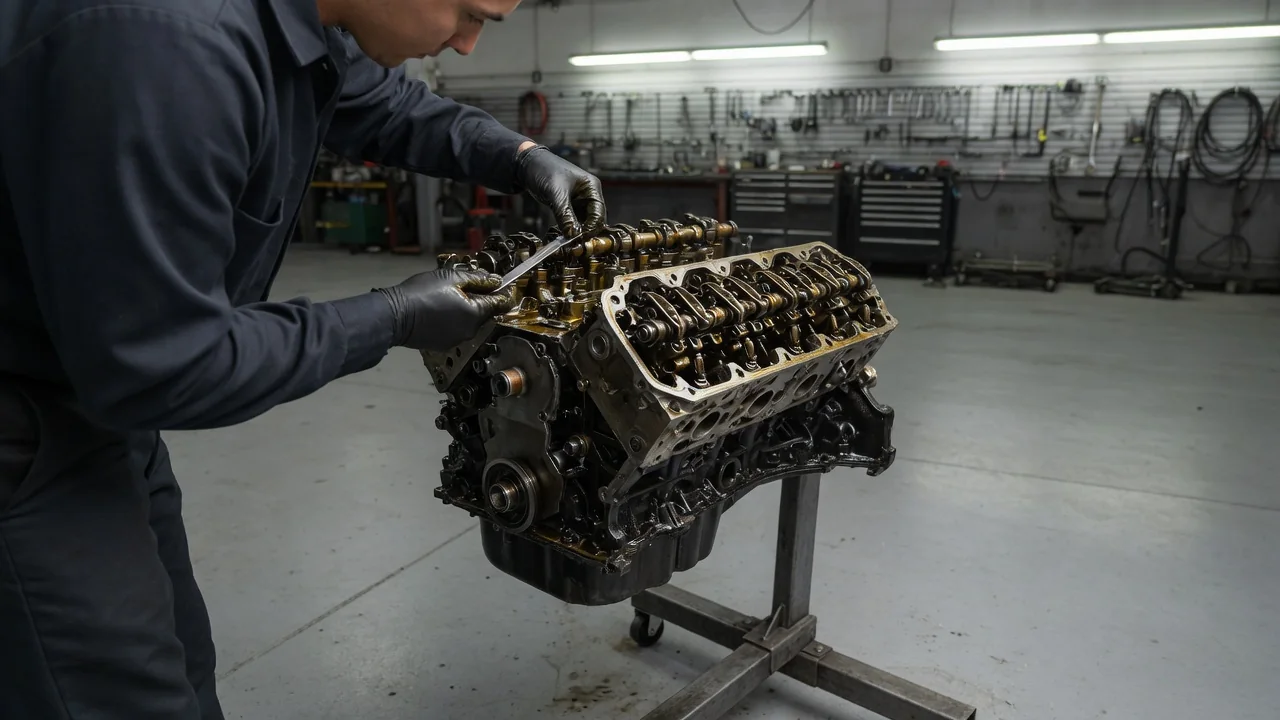
A hydraulic valve lifter is a small, oil-filled component in the valvetrain that sits between the camshaft and the parts that open the valves. It carries cam motion to the valve while automatically taking up clearance, so the engine can run quietly without periodic manual lash adjustment. Hydraulic lifter operation comes down to three connected ideas: how engine oil pressure feeds the lifter, how it adjusts lash on its own, and why it sometimes makes noise.
Oil Pressure: How the Lifter Fills and Holds Oil
A typical hydraulic lifter has an outer body that rides on the camshaft lobe, either on a flat or slightly crowned face or on a roller. Inside the body is a closely fitted plunger with a light spring beneath it and a one-way check valve, usually a small ball or disc. Engine oil from a pressurized gallery enters through a hole in the side of the lifter body, fills a reservoir inside the plunger, and passes through the check valve into a small chamber below the plunger. The plunger spring pushes the plunger upward against the pushrod, rocker, or valve, and oil fills the space this creates.
When the cam lobe begins to raise the lifter, the load on the plunger increases and pressure in the lower chamber rises. That pressure closes the check valve and traps the oil. Because oil is nearly incompressible, the trapped column makes the lifter act almost like a solid part, and it transmits the cam's lift to the valve. As the lobe rotates back to its base circle and the load drops, oil pressure from the engine can open the check valve again and replace any oil that escaped during the lift event.
This design depends on a steady supply of clean oil at adequate pressure. The lifter does not need high pressure to hold the valve open, since the trapped oil does that job, but it does need enough flow to refill reliably between cycles. Oil that is low, aerated with air bubbles, contaminated, or far from the intended viscosity can prevent the chamber from filling with a solid column of liquid, which changes how the lifter behaves.
Lash Adjustment: Zero Clearance Without a Feeler Gauge
Valve lash is the small clearance in the valvetrain when the valve is closed. Engines with solid, or mechanical, lifters need a deliberate gap so that the valve can fully close as parts expand with heat. That gap must be checked and set periodically with feeler gauges or shims, because wear on the cam, lifter, valve tip, and valve seat gradually changes it. Too much clearance causes noise and wear; too little can keep a valve from sealing.
A hydraulic lifter removes the need for that gap. Its plunger spring keeps the valvetrain in light contact at all times, and the oil chamber expands or shrinks as needed. The key is a controlled leakdown: a very small, precisely machined clearance between the plunger and body lets a little oil escape under load on each lift. On the next base-circle period, the check valve lets fresh oil in. Over many cycles, the lifter settles at whatever length keeps clearance at essentially zero, automatically compensating for thermal expansion and gradual wear.
In pushrod engines with adjustable rocker arms, the lifter is given a specific preload at installation, which positions the plunger partway down its travel so it has room to extend or retract. Many other designs are non-adjustable, with preload set by component dimensions and the rocker fastener torque. Overhead cam engines often use the same principle in hydraulic bucket tappets or in hydraulic lash adjusters that act as the pivot point for a finger follower. The specific arrangement and setup procedure depend on the engine design.
Noise: Why Hydraulic Lifters Tick
The most common lifter noise is a light, rhythmic ticking that follows engine speed. A brief tick right after a cold start can happen when an engine has sat for a while: some lifters, especially those resting on a lobe that holds their valve open, slowly bleed oil from the lower chamber through normal leakdown. Until the oil pump restores flow and the chamber refills, that lifter has clearance, and the valvetrain taps. The sound typically fades within moments as oil reaches the lifters.
A tick that persists after warm-up points to a lifter that cannot hold or fill its oil properly. Possible contributors include a low oil level, oil foaming from overfilling or contamination, viscosity outside the manufacturer's recommendation, and varnish or sludge that makes the plunger or check valve stick. Wear inside the lifter can enlarge the leakdown clearance so oil escapes too quickly, and a lifter that no longer extends is often described as collapsed. Noise in the same area can also come from a worn cam lobe, rocker, pushrod, or roller, so a tick does not automatically mean the lifter itself has failed.
Hydraulic lifters can also misbehave in the opposite direction. If the valves float at very high engine speed, the lifter may extend to fill the momentary gap, a condition called pump-up. The lifter then holds the valve slightly open, which can reduce compression and cause a loss of power until the extra oil leaks down.
Practical Implications and Limits
For owners, the main practical benefit of hydraulic lifters is that routine valve-lash adjustment is generally not part of scheduled maintenance. The trade-off is that the lifters are directly sensitive to oil condition. Keeping the oil at the correct level, using the grade and specification listed in the owner's manual or service information, and changing it at the recommended interval are the most direct ways to support reliable lifter function. Which grade is correct, and whether a short startup tick is considered acceptable, varies by engine and should be checked in that vehicle's documentation.
Diagnosis has limits as well. Many sounds resemble lifter tick, including direct fuel injectors, which tick by design, as well as exhaust manifold leaks, loose heat shields, and worn accessory drive components. A mechanic's stethoscope or careful listening at different points can help localize the source, but confirming a faulty lifter often requires inspection. Oil additives or switching to a thicker oil may quiet a noise temporarily without correcting a worn part, and a viscosity the engine was not designed for can affect other oil-fed systems such as variable valve timing.
When replacement is needed, the scope depends on the engine. Some designs allow individual lifters or lash adjusters to be replaced with modest disassembly, while others require removing the cylinder head or intake components. On engines with flat-tappet lifters, new lifters are commonly paired with a new camshaft because the two wear together. A collapsed or stuck lifter should also prompt a look at why it failed, such as oil quality or debris, so the replacement parts are not exposed to the same conditions.