What Is a Gasket Maker in Car Repair? Flange Fit, Cure, and Use
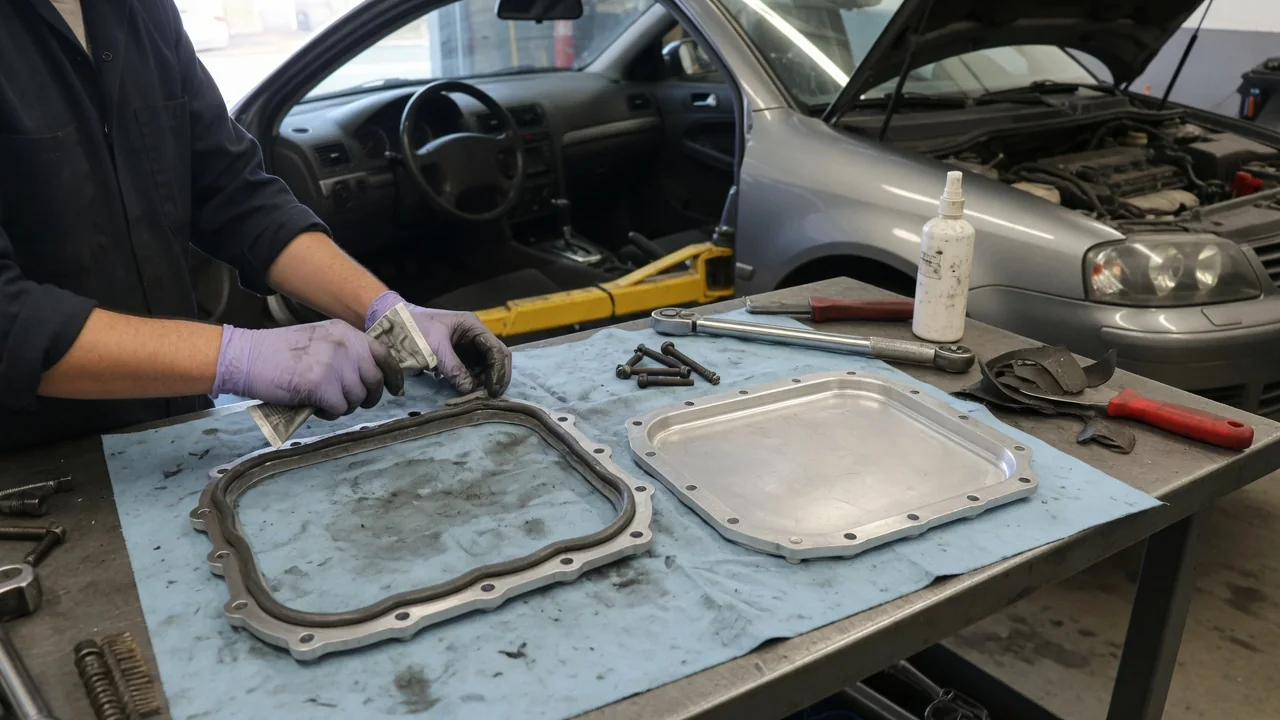
In car repair, a gasket maker is a liquid or paste sealant applied to a mating surface that cures into a seal between two parts. It either replaces a precut gasket or forms the seal a factory design calls for. Usually sold in a tube or cartridge, an automotive gasket maker sealant is common on oil pans, valve covers, timing covers, and various housings. How well it works depends on how the flanges fit, how the material cures, and whether the joint was designed for it.
Flange fit
A flange is the surface where two parts meet and are bolted together. A gasket maker fills the small gaps, tool marks, and surface irregularities between those surfaces so fluid cannot escape. The type of flange strongly influences which kind of gasket maker suits the job. Rigid, machined flanges that fit closely, such as cast housings bolted metal to metal, are often sealed with anaerobic gasket makers, which are designed to work as a thin film between tight-fitting metal surfaces. Flexible flanges, such as stamped steel covers, and joints with wider gaps or some movement between parts are more commonly sealed with RTV silicone, which remains elastic after it cures and can bridge larger gaps.
Surface preparation matters as much as the product. Both flanges should be clean, dry, and free of oil, coolant, and old gasket material, because most gasket makers do not adhere well to contaminated surfaces. Aluminum parts need careful scraping, since a gouge or scratch running across the sealing surface can become a leak path that the sealant may not fully fill. The bead itself should be continuous and even, and it is typically routed around the inside of bolt holes so the seal stays unbroken. Too much material is a problem of its own: excess that squeezes into the inside of an engine or transmission can break loose, travel with the oil, and partially block a pickup screen or a small passage.
Clamping completes the fit. Fasteners are normally tightened in the sequence and to the values listed in the service information, because uneven clamping can thin the bead in some areas while leaving it thick in others. It is also worth checking that the flange is flat and undamaged before sealing it, since a bent stamped cover or a cracked casting changes the gap the sealant has to fill.
Cure
Curing is the chemical change that turns the applied material from a paste into a durable seal. RTV silicone, short for room-temperature vulcanizing, cures by reacting with moisture in the surrounding air. It forms a skin on the outside first and then cures progressively inward, so thick beads take longer than thin ones, and cold or very dry conditions generally slow the process. Product instructions state the time allowed before assembly and the time needed before the part goes back into service, and those times vary between products, so the label is the reference rather than a general rule of thumb.
Assembly timing affects the result. Many RTV instructions call for joining the parts while the bead is still wet, before a skin forms, so the material can conform to both surfaces. Some products direct the installer to snug the fasteners first and complete the final tightening after a specified wait. Refilling fluids or running the engine before the sealant has cured enough can push soft material out of the joint or disturb the seal, which is one reason a repair can leak even when the correct product was used.
Anaerobic gasket makers cure differently. They harden when confined between metal surfaces and cut off from air, so the material inside a properly closed joint cures while any excess outside the joint stays liquid and can be wiped away. Cure speed depends on factors such as the metals involved, the gap size, and temperature, and some instructions call for a primer on certain surfaces. Chemistry also matters for RTV: some acetic-cure silicones release acetic acid as they cure, recognizable by a vinegar-like smell, which can be a concern near sensitive components. Products labeled as sensor-safe are formulated for use on engines equipped with oxygen sensors.
Appropriate use
A gasket maker is most appropriate where the manufacturer designed the joint to use one. Many engines use formed-in-place gaskets on parts such as oil pans and timing covers, and the service information for those joints typically identifies the type of sealant and the application method. It can also be appropriate where the service information permits a liquid sealant as an alternative to a cut gasket, or where a precut gasket is unavailable and the joint is a low-pressure, close-fitting seal suited to the product.
It is not a universal substitute. Where a gasket's thickness sets a clearance or the position of a part, replacing it with sealant changes that dimension and can affect how the assembly functions. Joints exposed to combustion pressure, such as cylinder head gaskets, rely on engineered gaskets rather than a bead of sealant. Adding gasket maker on top of a preformed gasket designed to be installed dry can make it slip or squeeze out of place, although some instructions do call for small amounts at specific spots, such as where several parts meet. Chemical compatibility counts too: a product suited to engine oil may not be rated for fuel, gear oil, or coolant, so the label should list the fluid and temperature range the joint will see.
Practical implications and limits
For a car owner, the first practical step is finding out what the service information specifies for the particular joint being repaired. General mechanisms explain why gasket makers behave as they do, but they do not predict how any given vehicle was designed, which sealant it uses, or what bead size and fastener values it requires. When the specification is not available, choosing a product whose packaging clearly matches the flange type, fluid, and operating temperature reduces guesswork without guaranteeing the outcome.
Using a gasket maker also changes later service work. Cured sealant can bond two parts tightly enough that separating them takes patience, and prying between flanges risks bending a cover or marking a sealing surface. Removing old material before resealing adds time, and the required cure period means a vehicle may not be ready to drive immediately after the last bolt is tightened. Planning for these delays tends to produce better results than rushing the refill or test run.
Finally, a gasket maker has clear limits as a fix. It seals a sound joint; it does not repair a cracked housing, a warped cover, stripped threads, or a part that moves more than the joint was built to tolerate. Smearing sealant over the outside of an existing leak is not a repair, because the fluid is escaping from inside the joint. If a newly sealed joint leaks, the cause is often found in preparation, bead placement, assembly timing, or clamping, and correcting it usually means taking the joint apart and starting again.