What Is a Body Control Module? Lights, Locks, Inputs and Diagnosis
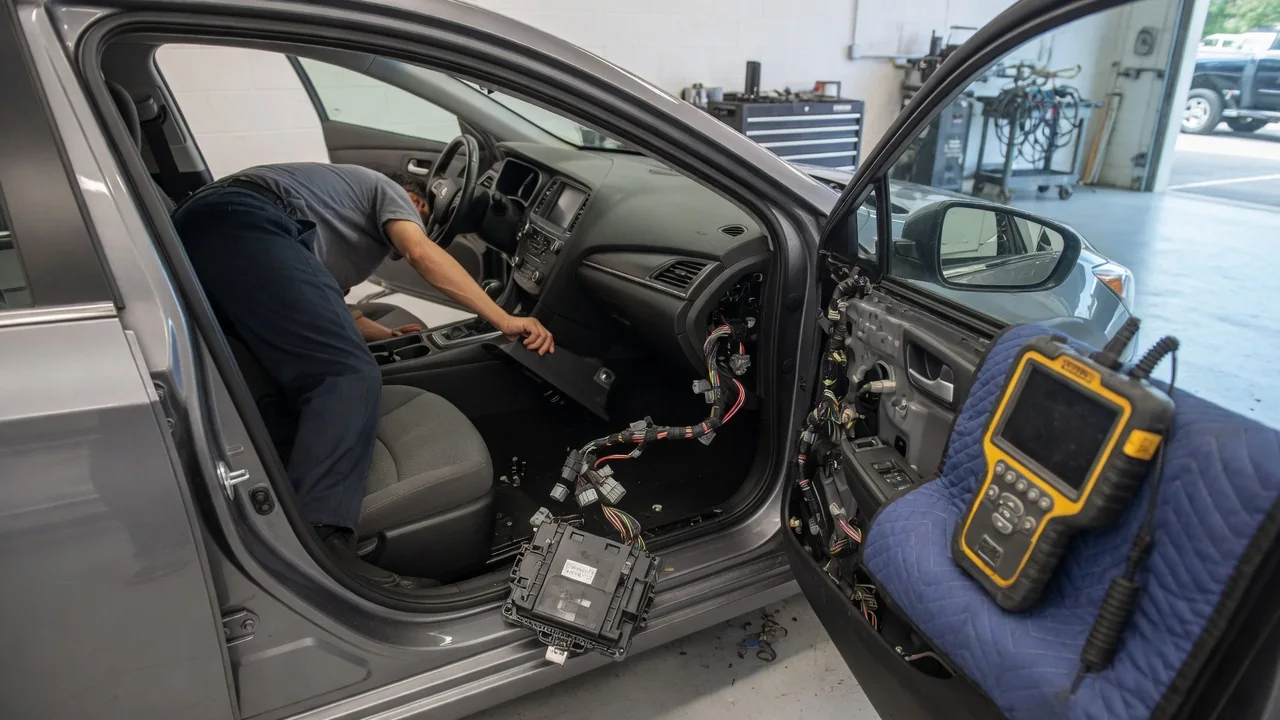
A body control module (BCM) is an electronic control unit that manages many of a vehicle's comfort, convenience, and security functions. Instead of wiring every switch directly to a bulb or motor, many modern vehicles send those signals to the BCM, which decides when to switch outputs on or off. If you are wondering what is a body control module, the short answer is that it coordinates body electrical features such as lighting, door locks, and related accessories.
How a Body Control Module Handles Lights and Locks
Lighting is one of the most visible parts of the car body control module role. On many vehicles, the headlamp switch, turn signal stalk, and hazard button do not power the lamps directly. Instead, they send a request to the BCM, which then switches the exterior lamps through internal solid-state drivers, external relays, or commands to another module. The same logic often controls interior lighting: dome and courtesy lamps that turn on when a door opens, fade out after a delay, and shut off automatically if left on, which helps protect the battery. Some designs also handle daytime running lamps, exit lighting, and automatic headlamp operation.
Door locks follow a similar pattern. Lock and unlock requests can arrive from the interior door switches, a key cylinder switch, or a remote keyless entry receiver, and the BCM decides which lock actuators to drive. Depending on the vehicle, it may also provide automatic locking once the car is moving, unlocking when the vehicle is shifted to park or switched off, selective unlocking of only the driver door, and alarm arming. In some architectures the BCM participates in theft deterrent or immobilizer functions, while in others those tasks belong to a separate security module.
Many BCMs also manage related body accessories, such as wipers, the horn, power window lockout, or the rear window defroster. Exactly which features are assigned to the module varies widely, so a feature that is BCM-controlled on one vehicle may be handled elsewhere on another.
Inputs the Body Control Module Reads
To make decisions, the BCM needs to know what the driver is asking for and what state the vehicle is in. The most basic inputs are switches: the headlamp switch, turn signal and wiper stalks, door ajar switches, hood and trunk switches, and door lock switches. Some of these are simple on-off circuits that pull an input to ground or to battery voltage. Others use resistor networks, so a single wire can report several switch positions as different voltage levels that the module interprets.
Sensors supply additional information. An ambient light sensor allows automatic headlamp control, and some vehicles add a rain sensor for automatic wipers. The module also needs ignition or power mode status, which tells it whether the vehicle is off, in accessory mode, or running. Much of the remaining information arrives as network messages rather than through dedicated wires. Vehicle speed, gear position, and airbag deployment status may be shared over a CAN bus by other modules, while smaller devices such as switch panels or mirror motors often communicate over lower-speed LIN links. In some designs the BCM also acts as a gateway that passes messages between networks.
The BCM combines these inputs according to its software and stored configuration. For example, it may turn on the dome lamp when a door switch closes, but only if the interior lamp switch is not set to off, and then start a timer once the door is shut. Many modules also store configuration data tied to the vehicle's equipment and options, which is why the same type of module can behave differently depending on the vehicle it was set up for.
Diagnosing Body Control Module Problems
Because the BCM touches so many circuits, it is often blamed for body electrical problems. Symptoms that can point toward the module include several unrelated features failing at the same time, lights or locks operating on their own, intermittent behavior, or a parasitic battery drain caused by a module that does not go to sleep after the vehicle is shut off. However, the same symptoms can come from much simpler causes: a blown fuse, a failed bulb, a worn switch, a damaged wire, a poor ground, or low system voltage from a weak battery.
A sensible diagnostic sequence starts with the basics. Confirm battery condition and charging voltage, then check the relevant fuses and relays. Next, read diagnostic trouble codes with a scan tool that can access body modules, since many basic code readers only communicate with engine and transmission systems. Body codes and network communication codes, often called U-codes, can show whether the BCM is reporting a circuit fault or has lost contact with other modules. Live data is especially useful: if the BCM shows a switch changing state when it is pressed, the input side is working and attention moves to the output circuit and the load itself. Many capable scan tools can also command outputs directly, which helps separate a module problem from wiring or a failed component.
Before concluding that the module has failed, verify its own power feeds and ground connections using the wiring diagram from the vehicle's service information, and inspect connectors for corrosion, water intrusion, or loose terminals. Manufacturers sometimes release software updates or service bulletins that address known BCM behavior, so checking for applicable updates is worthwhile. Confirming these items first avoids replacing a module when the actual fault lies in the circuit around it.
Practical Implications and Limits
Knowing how the BCM works helps owners interpret what they see. Behaviors such as lights staying on briefly after the doors lock, automatic locking while driving, or a horn chirp on locking are usually programmed features rather than faults, and many vehicles allow them to be changed through a settings menu or a capable scan tool. Modifications can interact with the module in unexpected ways. Some BCMs monitor current through lamp circuits, so replacing incandescent bulbs with lower-current LED bulbs can trigger fast turn signal flashing or bulb-out warnings. Accessories spliced into body circuits can also create unintended loads or backfeed that confuse the module or contribute to battery drain.
The main limit of any general explanation is that BCM responsibilities are not standardized. Manufacturers use different names for these modules, and some vehicles split body functions across several units, such as front and rear body modules or separate door modules. The reliable way to know which module controls a particular feature on a particular vehicle is that vehicle's service information.
Replacement deserves particular care. A new or used BCM often must be programmed to the vehicle and configured for its equipment, and functions tied to security, keys, or immobilization may require factory-level tools or procedures. Installing a used module without that setup can leave features disabled or create new faults. Disconnecting the battery may also reset some stored settings, so it helps to know the correct procedure for a given vehicle before beginning electrical work.