What a Battery Regulator Is and How It Controls Charging

If you have seen the term battery regulator in a repair estimate, a forum thread or a parts catalog, you are most likely looking at the voltage regulator in your vehicle's charging system. It is the component that controls how much electrical output the alternator produces, so the battery is recharged and the electrical system is powered without being overcharged or starved. This guide explains what it is, how it works, how it differs from parts with similar names, and what to check if you suspect a fault.
The short answer
A battery regulator is the device that keeps a vehicle's system voltage within a safe range while the engine is running. It does not store energy and it does not generate power. Instead, it tells the alternator how hard to work. When the battery and electrical loads need more current, the regulator lets the alternator increase its charging output. When demand drops or the battery is close to full, it reduces output.
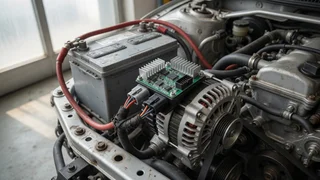
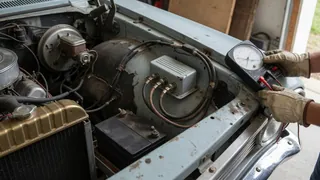
One qualification changes the answer depending on what you drive. On many older cars the regulator was a separate box mounted in the engine bay. On most later vehicles it is built into the alternator. On many modern vehicles the engine or body control module decides the target voltage and the alternator follows those commands, so there may be no standalone part you could point to and call the regulator. Motorcycles, ATVs and small engines often use a combined regulator/rectifier, and in solar or marine setups the phrase battery regulator is sometimes used loosely for a charge controller. The rest of this article focuses on cars and light trucks.
How a voltage regulator works
An alternator produces electricity by spinning a magnetized rotor inside a set of stationary windings. The rotor's magnetism comes from a small current passed through its field winding. The stronger that field current, the more output the alternator produces at a given engine speed.
The regulator controls that field current. It continuously compares the system voltage with a target value. If voltage falls below the target, for example when headlights, the blower fan and rear defroster are all on, it increases field current so the alternator produces more. If voltage rises above the target, it cuts field current back. Modern electronic regulators do this by switching the field on and off very rapidly, varying the proportion of on time to fine-tune output.
The practical effect is a steady supply of power. Without regulation, alternator output would rise and fall with engine speed, which could boil the battery's electrolyte and damage electronics at high rpm, or leave the battery undercharged at idle.
As general guidance, a healthy 12-volt car system typically shows somewhat above 13 volts and below about 15 volts at the battery with the engine running, while a fully charged battery at rest sits a little above 12.5 volts. The exact target varies by vehicle, battery type, temperature and charging strategy, so treat the manufacturer's service information as the reference for your specific model.
Where the regulator is located
Design | Where the regulation happens | What it means for repair; External regulator | Separate unit, usually on the fender well or firewall, wired to the alternator | The regulator can often be replaced on its own; Internal regulator | Inside or bolted to the back of the alternator | Some alternators allow regulator replacement; many owners replace the whole alternator; Computer-controlled charging | The engine or body control module sets the target voltage and commands the alternator | Faults may involve the module, a battery sensor, wiring or the alternator, and diagnosis usually needs a scan tool
A wiring diagram for your vehicle is the most reliable way to find out which design you have. Looking at the alternator connector also gives clues: computer-controlled systems often have a small multi-pin plug carrying signal wires in addition to the heavy output cable.
How it differs from similar parts
Rectifier: converts the alternator's alternating current into direct current the battery can use. In car alternators it is a separate set of diodes; in many motorcycles it is combined with the regulator in one unit. Battery sensor: on many newer vehicles, a sensor on the negative battery terminal reports current, voltage and temperature to the computer, which then adjusts the charging target. It informs regulation but does not regulate by itself. Battery charger or maintainer: an external device you plug in when the vehicle is parked. It contains its own regulation circuitry but is not part of the vehicle's charging system. Battery management system: in hybrids and electric vehicles, this manages the high-voltage pack. Those vehicles typically charge the 12-volt battery through a DC-DC converter rather than a conventional alternator and regulator. Fuses and fusible links: protect the charging circuit from overcurrent but do not control voltage.
Signs of a failing regulator
Regulator faults usually show up as either too much or too little charging. Many of these symptoms can also come from a weak battery, a worn alternator, a slipping drive belt or poor connections, so a symptom points to the charging system as a whole rather than proving the regulator has failed.
Undercharging: slow cranking, a battery that repeatedly goes flat, dim lights at idle, or a battery or charging warning light. Overcharging: bulbs that burn out often, a battery that feels hot, swells, smells of sulfur or loses electrolyte, or unusually bright headlights. Unstable output: lights that flicker or pulse, gauges that move erratically, or electrical accessories that behave inconsistently. Warning messages or stored fault codes related to charging system performance on computer-controlled vehicles.
What to check before blaming the regulator
Basic checks with a digital multimeter can narrow down the cause. Work only in a well-ventilated area, keep hands, clothing and tools away from the belt and fan, and avoid creating sparks near the battery.
1) Inspect the battery terminals and cables. Corrosion, loose clamps or damaged cables can mimic a charging fault. 2) Measure battery voltage with the engine off. A low reading suggests a discharged or weak battery, which should be charged and tested before judging the charging system. 3) Start the engine and measure again at the battery terminals. A reading that stays near the engine-off value suggests the alternator is not charging; a reading well above the normal range suggests overcharging, which commonly points to regulation. 4) Switch on major loads such as headlights, blower and rear defroster, and watch whether voltage holds steady or collapses. 5) Check voltage drop on the positive and ground circuits. With the engine running, measure between the alternator output terminal and the battery positive post, then between the alternator housing and the battery negative post. A significant reading means resistance in the wiring or connections rather than a regulator fault. 6) Check the charging fuse or fusible link, confirming it matches the specified fuse rating for that circuit. 7) If the battery drains while the vehicle is parked but charges normally while running, test for parasitic draw. That is a separate problem caused by something consuming current with the ignition off, not a regulator issue.
On vehicles with computer-controlled charging, a scan tool is often needed to read commanded versus actual voltage, check the battery sensor and retrieve fault codes. A code tells you where to look, not which part to replace. Some vehicles also require the battery to be registered with the computer after replacement so the charging strategy matches the new battery.
When to stop driving or get professional help
Overcharging deserves prompt attention. A battery that is hot, swollen, leaking or giving off a strong rotten-egg smell can be dangerous, and continued high voltage can damage control modules and lighting. Undercharging is less immediately hazardous but can leave you stranded once the battery is depleted, and on some vehicles low voltage affects power steering, braking assist or engine management. If voltage readings are clearly abnormal, a warning light stays on, or your vehicle uses computer-controlled charging or high-voltage hybrid or electric systems, a qualified technician with model-specific diagnostic equipment is the sensible next step.
Key takeaway
A battery regulator is the voltage regulator that controls alternator output so the battery stays charged and the electrical system receives stable power. Depending on the vehicle, it may be a separate unit, part of the alternator, or a function of the engine computer. When charging problems appear, check the battery, connections, voltage drop and fuses first, then use running-voltage readings to judge whether regulation is the likely cause.