What Are Air Curtains Around Car Wheels?
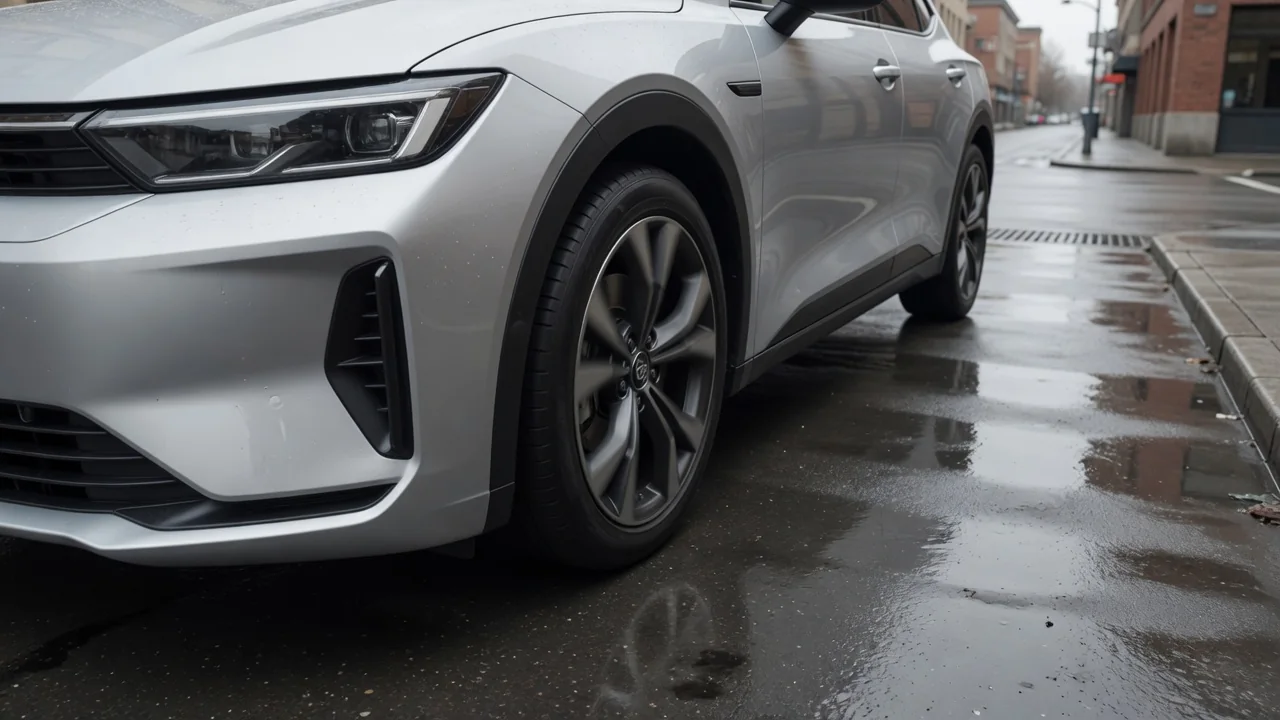
Many modern cars have narrow vertical slots at the outer corners of the front bumper. For drivers wondering what are air curtains around car wheels, the short answer is that these openings channel moving air through a duct and release it across the face of the front wheel, forming a thin sheet of fast flow that helps the surrounding air slip past a turbulent area.
Flow path
An air curtain begins with an inlet in the front bumper, usually a tall, slim opening near the outer edge where oncoming air builds pressure. Behind it, a molded duct carries that air a short distance through the bumper structure and turns it toward the wheel well. The duct ends at a narrow exit slot in the wheel arch liner, positioned just ahead of the tire, so the air leaves as a flat, fast-moving sheet instead of a diffuse stream.
From that exit, the sheet travels rearward along the outer face of the wheel and tire, staying close to the body side instead of spilling into the wheel well. You can often trace the route yourself by looking into the bumper slot with a flashlight and then finding the matching outlet inside the arch. Layouts vary by vehicle: some integrate the inlet with a fog lamp bezel, some pair it with a vent behind the wheel, and some designs apply the idea to the rear wheels as well.
Wheel turbulence
A rotating wheel is one of the messiest aerodynamic features on a car. The tire pushes air aside at the contact patch, the spokes churn it like a fan, and the open wheel well lets flow tumble in and out. This disturbed air spills outward from the arch and mixes with the smoother stream running along the body side, creating a wide, energy-wasting wake that adds drag and can contribute to wind noise at highway speeds.
The air curtain works as a barrier of directed flow across the wheel opening. Because the sheet moves quickly and stays attached to the outer surface, it discourages air from being pumped out of the wheel well and helps the passing stream bridge the gap from bumper to door. The result is a narrower wake behind the front wheel. Wheel design matters too, which is why flatter, more closed wheel faces are often paired with these ducts on efficiency-focused models.
Design limits
Air curtains are a refinement, not a transformation. Their benefit depends on vehicle speed, since the pressure driving air through the duct grows as the car goes faster, so the effect is small in city traffic and more meaningful during steady highway cruising. Any gain also depends on the complete body shape; an inlet that works on one bumper may do little on another, and manufacturers tune duct size and exit angle through wind tunnel and simulation work.
Packaging imposes further constraints. The duct must share bumper space with crash structures, lighting, sensors, washer reservoirs, and cooling hardware, so its cross-section and curvature are often compromises. Wide tires, steering angle, and suspension travel change how the wheel sits relative to the exit slot, which can weaken the sheet in crosswinds or while cornering. Some bumper corner openings are styling features with blanked-off backs, so a slot's appearance alone doesn't confirm a functional air curtain on a given vehicle.
Everyday Use and Observations
In daily driving, a working air curtain gives no sensation you could feel from the seat. Its contribution shows up indirectly as a small part of the car's overall efficiency and range at speed, alongside underbody panels, grille shutters, and mirror shaping. What owners do notice is physical: the inlets collect leaves, road grit, insects, slush, and packed snow, and the exit slot in the arch liner can pick up mud thrown by the tire.
A simple visual check during washing is usually enough. Look through the bumper opening to see whether daylight or the liner outlet is visible, and rinse away loose debris with gentle water flow. Dirt patterns can offer clues, too; a clean streak along the liner near the outlet or a distinct dust line on the wheel face suggests air is moving through. Patterns differ between vehicles and driving conditions, so treat these marks as hints, not as measurements.
Limits and Next Steps
Because the ducts are part of the bumper and liner assembly, damage is the main way they stop working. A curb strike, parking bump, or loose liner fastener can crush, misalign, or disconnect the duct, and collision repairs occasionally leave a piece missing. Aftermarket bumpers, body kits, or fender liners may not reproduce the original passage. A blocked curtain typically won't trigger a warning light or fault code, so inspection is the only reliable way to find a problem.
If you want to know whether your car has functional air curtains, the owner's documentation, the manufacturer's model information, or a dealer parts diagram for the bumper and wheel arch liner will show whether a duct is fitted. When bodywork is repaired, ask the shop to confirm the ducts and liners were reinstalled and seated correctly. Adding openings to a bumper that was never designed for them is unlikely to help, since the benefit depends on engineered duct shape and exit placement.