Vintage Auto Glass Replacement: What to Check Before You Buy
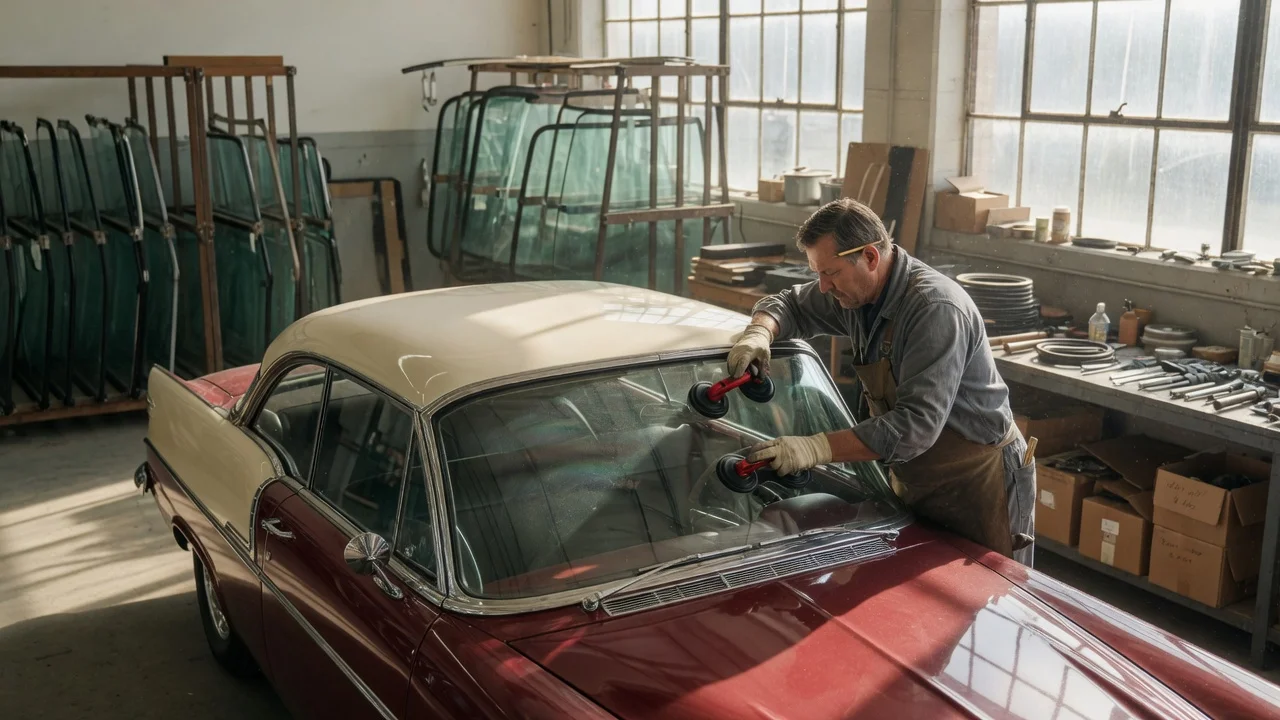
Immediate answer
Replacement is usually feasible when the glass is flat or gently curved and the surrounding body and seal are sound. Laminated windshields can often be cut from new stock; curved side or rear glass may require locating used, new-old-stock, or reproduction pieces. The deciding factors are glass shape, date-code or branding needs, seal condition, and whether the surrounding metal has rust or distortion.
What materially changes the answer
If the vehicle is being preserved for judged competition, date-coded or manufacturer-marked glass may matter. If it is a driver-quality car, a clean replacement without exact markings is often acceptable. Heavily curved tempered glass is the hardest case: it cannot be cut from flat stock and must come from an existing mold or donor vehicle.
Repair before replacement
A small bullseye, star break, or short crack in laminated windshield glass can sometimes be repaired if it is outside the driver’s direct sight line and away from the edge. Repair preserves original markings and seal. Deep cracks, edge damage, or breaks in tempered side and rear glass cannot be repaired. Tempered glass fractures into small granules when it fails, so replacement is the only option.
Glass types used on vintage vehicles
Windshields are normally laminated safety glass: two layers of glass with a plastic interlayer. Flat laminated windshields can be cut from new stock and installed with the correct seal. Curved side and rear windows are often tempered glass. If the curve is mild, a glass shop may be able to form or source a reproduction. Complex curves usually require a donor part.
Some early vehicles used plate glass or non-safety glass. In most jurisdictions, replacement glass must meet current safety standards, which may rule out using original non-laminated material even if an original part is found.
Seals, channels, and surrounding metal
A new glass panel will not seal correctly if the rubber gasket, locking strip, or metal channel is hardened, torn, or rust-jacked. Inspect the pinchweld and channel before ordering glass. Reproduction seals are available for many models; if not, a universal seal may work only when the original shape is simple.
Rust or previous collision damage around the opening can change the dimensions the new glass must fit. In those cases, body repair should come first. Otherwise the replacement may crack during installation or leak afterward.
Sourcing options and compatibility
New-old-stock glass matches the original shape and markings but supply is unpredictable. Reproduction glass is made to original patterns; availability is better for popular models. Donor glass from a salvage vehicle may be the only curved tempered option, but it must be checked for delamination, scratches, and edge chips. Custom-cut laminated glass suits flat windshields and some flat side windows.
Model-year and market differences are common. A windshield listed for one body style may not fit another, even within the same model line. Confirm the part number, body code, and production date before purchase. For imports, be aware that European and North American versions sometimes used different glass thickness or tint.
Installation cautions
Vintage glass is often installed with a rope-in rubber gasket rather than modern urethane adhesive. The gasket must be the correct profile and soft enough to seat without excess force. A rigid or incorrectly shaped gasket can crack the new glass. If a modern adhesive is used in a car designed for a gasket, drainage and body flex behavior may change.
Tempered side glass is sensitive to pressure at its edges. Chips or scratches along the edge can cause sudden breakage during installation or later thermal stress.
What to document before ordering
Exact model year, body style, trim, and market. Glass type: laminated or tempered. Shape: flat, slightly curved, or deeply curved. Markings required for originality, if any. Condition of seal, channel, and surrounding metal. Measured dimensions and thickness when no part number is available.
When to accept a compromise
For a regular driver, a date-code mismatch usually has little practical effect. For a concours restoration, the absence of original markings may be a significant deduction. In either case, do not install untempered or non-laminated glass in a location that requires safety glass. Safety compliance should take priority over appearance.
Unresolved gaps
Availability, price, and lead time are not supplied here because they vary by model, supplier, region, and production run. A local glass shop or marque specialist can confirm whether a specific pattern is currently in production or whether a donor vehicle is the realistic source.