VIN Decoding for Vehicles in the UK
The short answer
A UK VIN decoder reads a vehicle's 17-character Vehicle Identification Number and reports what that code reveals: typically the manufacturer, the country or region of manufacture, the model family and some body or engine details. For UK cars, it works best alongside the registration number and the V5C logbook, not as a replacement for them. The main caveat is that the VIN usually cannot confirm a car's exact trim level or optional equipment by itself. That generally needs the manufacturer's build record for that specific vehicle.
What a VIN is and how it is structured
A VIN is a unique identifier assigned to a vehicle by its manufacturer. Modern road vehicles generally use the 17-character format defined by the international standard ISO 3779. The letters I, O and Q are normally excluded to avoid confusion with the numbers 1 and 0.
World Manufacturer Identifier (characters 1 to 3): identifies the manufacturer and the region where the vehicle was built. Vehicle Descriptor Section (characters 4 to 9): describes vehicle attributes such as model line, body style or engine. The meaning of these characters is set by each manufacturer. Vehicle Identifier Section (characters 10 to 17): distinguishes the individual vehicle and often includes a plant code and serial number.
How UK decoding differs from US-focused tools
Many free online decoders are built around North American rules. In that market, the ninth character is a check digit and the tenth character indicates the model year. Manufacturers building for Europe, including the UK, are not bound by those conventions in the same way. As a result, a US-oriented decoder may return no model year, a wrong model year, or a check-digit error for a perfectly genuine UK car. Treat a model year reported by a generic decoder as unconfirmed unless another source supports it, such as the V5C or manufacturer records.
In the UK, the registration number is the main public identifier. Official DVLA vehicle enquiries and MOT history checks are carried out by registration number, not by VIN. The VIN connects to these records through the V5C registration certificate, which lists it. Checking that the VIN on the car matches the VIN on the V5C is a basic step for confirming identity before purchase.
Where to find the VIN on a UK vehicle
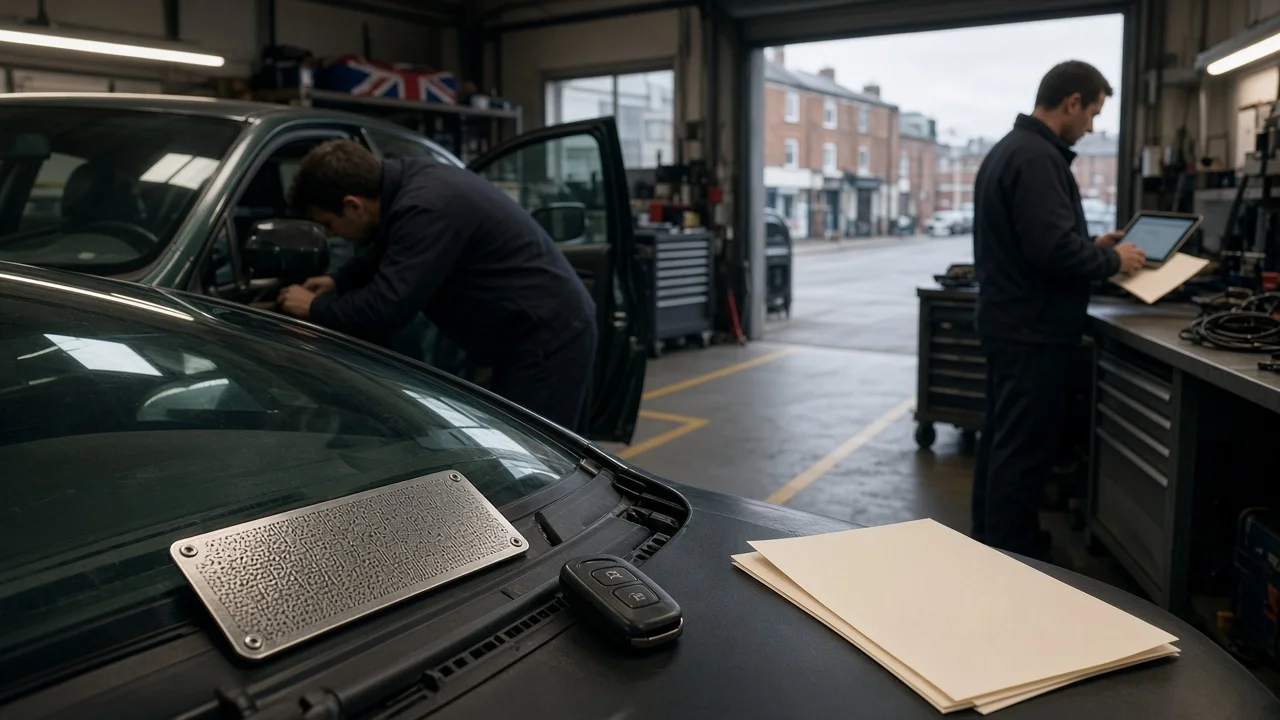
Locations vary by make and model. Common places include a plate visible through the base of the windscreen, a label or plate on a door pillar or under the bonnet, and a number stamped into the bodywork or chassis. The V5C logbook also records it. Characters that differ between these locations, or that show signs of tampering, are a reason to stop and investigate before buying.
Using a VIN to verify trim and equipment
For buyers trying to confirm that a car really is the trim level advertised, the VIN is a starting point rather than a final answer. The characters in the descriptor section may indicate model line, body type or engine. Many manufacturers, however, do not encode trim level, packs or individual options there. Two cars with consecutive VINs could be built with very different equipment.
Manufacturer build data: franchised dealers, or the manufacturer itself, can often retrieve the original build specification and option codes linked to a VIN. This is usually the most reliable way to confirm factory equipment. Service and sale paperwork: the original order form, invoice or service book may list trim and option codes that can be cross-checked against the VIN. Physical inspection: compare the badges, wheels, seats, lights and features fitted to the car against the manufacturer's published equipment list for that model year and market. Third-party decoders: these vary in coverage. Some draw on manufacturer data for certain brands, while others only interpret the standard VIN sections. Check what a service claims to report before relying on it for trim.
Factory build records show what the car left the factory with. They do not show parts that were later added, removed or replaced, so a physical check still matters.
Imports and older vehicles
Not every vehicle on UK roads carries a standard 17-character VIN. Older vehicles may have shorter chassis numbers from before the format was standardised. Some imported vehicles, particularly Japanese domestic-market models, are identified by a chassis or frame number that standard decoders cannot interpret. For these vehicles, trim and equipment checks usually depend on model-specific records, import documentation or specialist knowledge.
Gaps in the available evidence
No specific decoder services, prices, data coverage figures or manufacturer-by-manufacturer encoding details were available for this guide. Readers should confirm what a particular decoder or dealer lookup provides, and whether it covers their make and model, before paying for a report or relying on it for a purchase decision.