Veloster Turbo intercooler piping
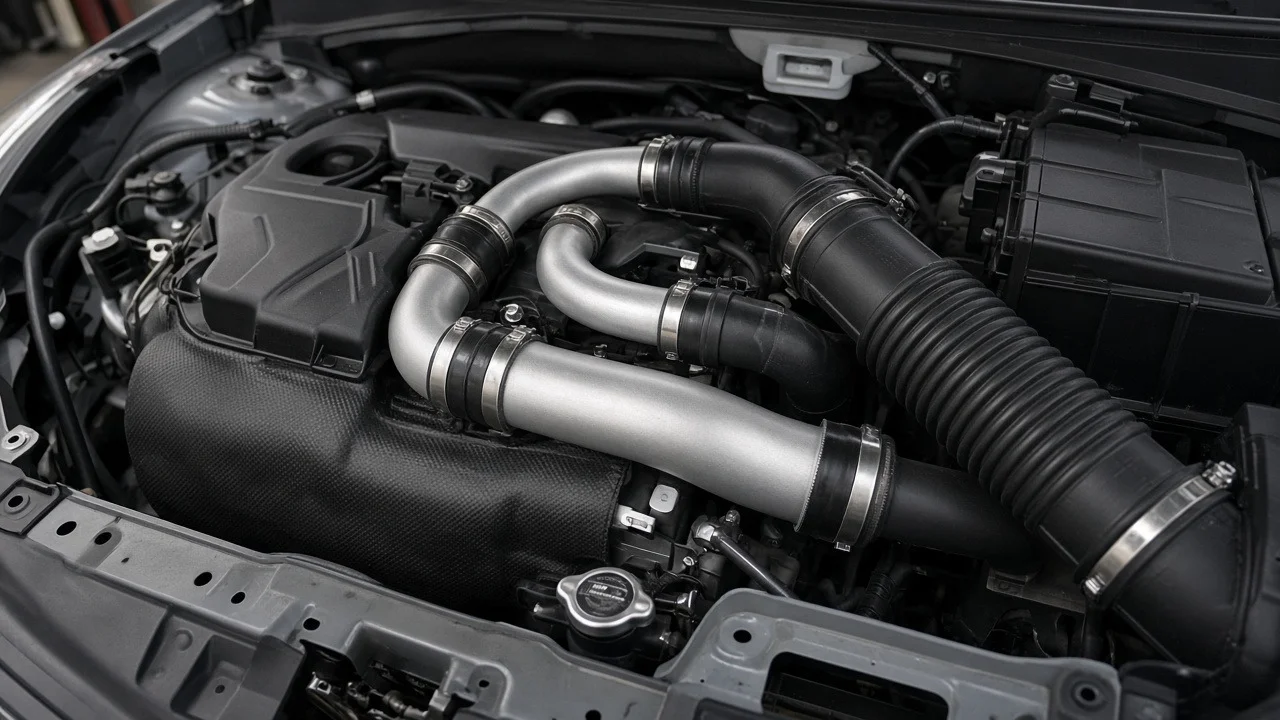
Choosing replacement Veloster Turbo intercooler piping usually comes down to fixing a boost leak, reducing pressure loss, or preparing for more reliable charge-air flow. The factory routing connects the compressor outlet to the intercooler and then to the throttle body, and any loose hose connection or split section can make boost pressure inconsistent. Because oil contamination from the crankcase ventilation system can soften couplers over time, a vehicle with higher mileage may need piping that resists swelling and holds clamps better than the original rubber sections. The right choice depends mainly on your current plumbing layout rather than on a single advertised pipe size.
The direct answer
Look for Veloster Turbo intercooler piping that matches the original cold-side and hot-side routing on your car. Most replacement kits are sold as multi-piece assemblies with silicone couplers and T-bolt or worm-gear clamps. The key condition is whether your setup still uses the factory intercooler end tanks and the stock turbo compressor outlet. If those connection points are unchanged, a model-specific pipe kit is usually the most direct purchase because the bends and support brackets are shaped to clear the radiator, subframe, and engine mount areas.
Material and clamp fit matter more than an advertised diameter increase. A pipe with a smooth internal surface and minimal step changes at the hose connection reduces turbulence and pressure loss. Silicone couplers should feel firm and resist collapsing under vacuum at idle; oil contamination can make inexpensive rubber swell, loosen, or slip off under boost. When comparing options, prioritize complete kits with the correct number of pipes for the stock routing, and confirm whether the kit reuses the factory mounting points or requires minor trimming of plastic shields.