Vauxhall Corsa Oil Pressure Switch: Symptoms and Replacement
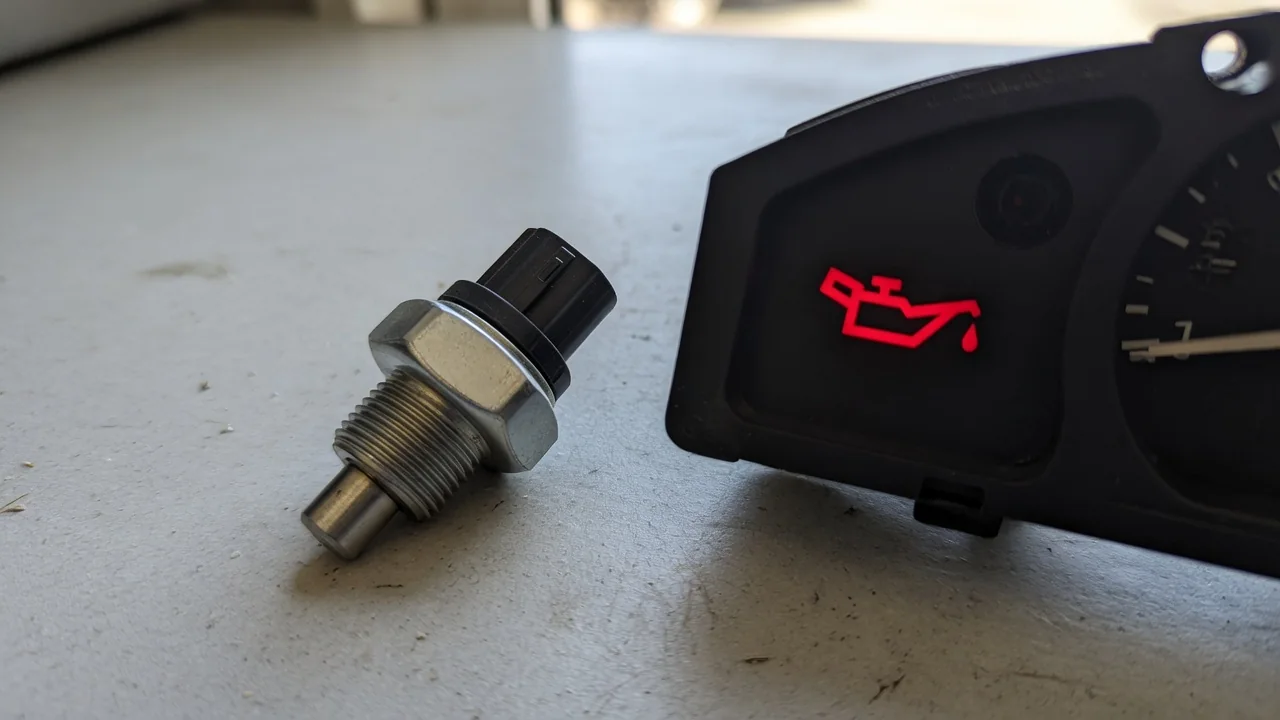
A Vauxhall Corsa oil pressure switch is a sender that helps the instrument cluster decide when to show an oil pressure warning light. Owners often assume that lamp means the switch has failed, but the same warning can also reflect genuine low pressure that threatens engine lubrication. Distinguishing those possibilities starts with the handbook, a careful oil level check, and professional oil pressure testing rather than replacing parts on the warning alone.
What the Oil Pressure Switch Does on a Vauxhall Corsa
On a Vauxhall Corsa, the oil pressure switch typically closes or opens according to whether lubricating pressure at its mounting point is above or below a threshold the sender is designed to detect. That circuit then drives the oil pressure warning light, or feeds a control module that does so. The lamp is a pressure-threshold signal, not a dipstick. It does not report how much oil is in the sump, so a full oil level check can still leave the warning unexplained if pressure at the sender is low or the circuit is at fault.
Exact switch behavior still depends on model year, engine and the warning system fitted to that Corsa. Some layouts use a simple ground-switching sender; others route the signal through electronics that also monitor related circuits. Confirm those details in the vehicle-specific information before assuming how the lamp should behave. An illuminated warning by itself cannot identify a failed oil pressure switch on a Vauxhall Corsa, and it cannot establish actual oil pressure. Treat the light as a reason to investigate lubrication and the sender circuit, not as a parts diagnosis.
When the Oil Warning Light Requires an Immediate Stop
With the ignition on and the engine stopped, an oil pressure warning light on many Vauxhall Corsa layouts is a bulb or circuit check rather than a running-engine fault, but that expectation must come from the handbook for the specific car. Once the engine is running, a warning that stays on, returns, or appears while driving is treated as a possible loss of lubricating pressure. Pull over when it is safe, switch the engine off, and do not keep driving to see whether the lamp goes out.
Flickering while idling, a brief flash when the engine is warm, or a warning that arrives with knocking, rattling or other unusual engine noise still does not prove the Vauxhall Corsa oil pressure switch is at fault. Those patterns can appear with genuine lubrication trouble, wiring movement or a sender that is only intermittently switching. Do not restart the engine solely to reproduce the light. If the car cannot be moved without running the engine, arrange recovery or professional assistance rather than risking further operation without confirmed oil pressure.
Symptoms That Can Prompt Switch and Wiring Checks
Oil leakage around a Corsa oil pressure switch, a damaged switch connector, or a warning that comes and goes can reasonably prompt inspection of the sender and its wiring. None of those findings confirms that the switch has failed. Seepage at the sender boss may have run down from a rocker cover, filter housing, or another joint above it, so the leak path needs tracing before a replacement switch is recommended. Connector corrosion, a loose terminal or a broken earth can mimic a failed sender without any mechanical pressure problem.
A lamp that appears only at idle, only when the engine is warm, or only during movement also cannot safely rule out an engine lubrication fault. Pressure can fall at low speed, oil can thin with temperature, and a genuine delivery problem can still be intermittent. Equally, a warning lamp that fails to illuminate during its expected ignition check may point to a bulb, cluster, fuse or warning circuit issue rather than a healthy sender. That missed self-check still needs assessing so a later genuine pressure warning is not missed.
Safe Observations Owners Can Make
Owners can start with an oil level check on level ground with the engine stopped, waiting the interval and following the dipstick or electronic procedure in the handbook. A correct reading shows there is oil in the sump; it does not prove that oil is being delivered at adequate pressure to the galleries. Topping up a low level is still worthwhile if the handbook allows it, but filling the engine does not confirm that an oil pressure warning light is resolved, especially if the lamp returns as soon as the engine is restarted.
Note when the warning appeared, whether it was at start-up, idle or while moving, any unusual noises, and recent oil service, filter work or other maintenance. That record helps a technician decide whether oil pressure testing, sender inspection or both come first. Visual inspection should stay in accessible areas with the engine off and cool: look for wetness near the sender, a disturbed switch connector, and obvious harness damage. Do not reach toward belts or fans, and do not get beneath an unsupported vehicle to hunt for oil leakage.
How Professional Testing Establishes the Cause
Before attributing a running-engine oil pressure warning to the sender, a technician should measure actual oil pressure with a gauge at the specified test point and compare it with the figures published for that identified Corsa engine. Idle and higher-speed readings, taken at the temperatures the data requires, show whether lubrication pressure is present even if the lamp is on. Only when measured pressure is adequate does attention reasonably shift to the oil pressure switch, the switch connector and the wiring, using the circuit information that applies to that model year.
A diagnostic scan may store related messages or show live sender status, but scan results alone cannot confirm adequate mechanical oil pressure. Electronic readings still depend on the same switch or sensor circuit that may already be misleading the cluster. If gauge pressure is low, investigation continues into filtration, pickup, pump delivery or internal leakage according to the test pattern, without treating symptoms as proof that any one of those parts has failed. If gauge pressure is sound and the circuit is open, shorted or switching incorrectly, the sender and harness become the next documented step.
What to Confirm Before Replacing the Corsa Oil Pressure Switch
A replacement switch must match the identified Corsa engine through reliable vehicle-specific parts information, not a claim that one sender fits every Vauxhall Corsa. Thread, sealing method, connector type and switching threshold can differ between gasoline and diesel units and across generations. Location and access also change with the engine, so the applicable service information should dictate how the old sender is removed, how the sealing face is prepared, and how the new unit is tightened. Improvised circuit tests and guessed tightening figures do not belong in that job.
After fitting, check the area for oil leakage once the engine has been restarted under controlled workshop conditions, and confirm that the oil pressure warning light behaves as the handbook describes during the ignition check and while running. If the warning persists, repeat oil pressure testing rather than assuming the new sender is the remaining fault. Labor for access, prior diagnostic work, and any switch connector or harness repair will affect the estimate, which varies with engine layout and how much investigation was needed before the replacement.