Valvoline Brake Pad Replacement: What to Expect and Where to Go Instead
The short answer
Valvoline Instant Oil Change centers are built around quick preventive maintenance, such as oil changes and fluid and filter services, usually while you stay in the car. Brake pad replacement is not a standard part of that quick-lube model. It requires lifting the vehicle, removing the wheels and working on the brake calipers. If you need new pads, plan on a brake specialist, a general repair shop, a dealership or a do-it-yourself job rather than a typical Valvoline visit.
One condition can change that answer. Service menus differ by location, franchise owner and market, and they change over time. This guide was written without a current Valvoline service list to check against, so it cannot confirm whether a particular center offers brake work. Call your local center or check its listed services before you go.
Why quick-lube shops usually skip brake jobs
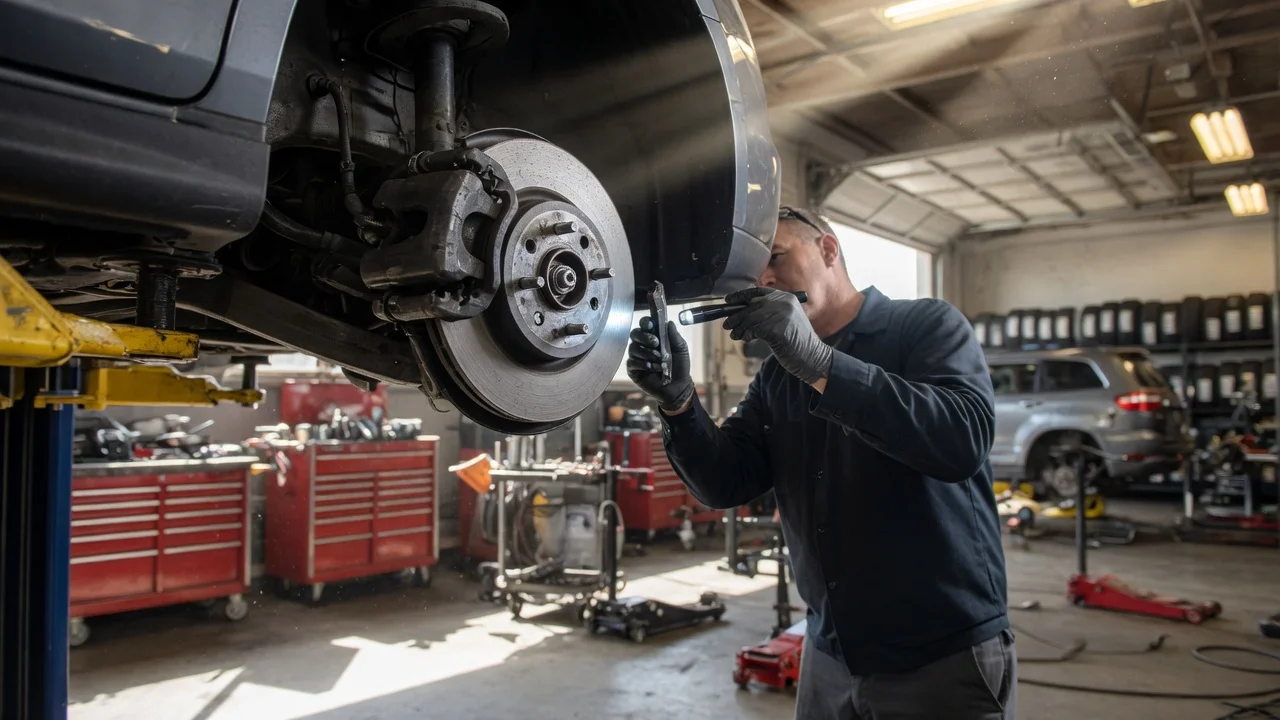
Quick-lube centers are designed for jobs that can be done from a service pit beneath the car or from under the hood, without taking the car off the ground. A brake pad job needs a lift or jack stands, removal of the wheels, and time to inspect the rotors, calipers and hardware. Rotors are the metal discs that the pads clamp against, and calipers are the clamps that hold the pads. That kind of job fits a repair bay better than a drive-through lane.
Valvoline the product brand versus Valvoline the service center
The Valvoline name shows up both on retail automotive fluids and on the Instant Oil Change service chain, and the two are run as separate businesses. Valvoline is best known for lubricants and fluids. It is not widely known as a brake pad manufacturer. If you are shopping for pads by brand, you will most likely be choosing from dedicated brake component makers or your vehicle manufacturer's original parts, not a Valvoline product.
Signs your brake pads may need replacing
A high-pitched squeal when braking, which often comes from a built-in wear indicator; Grinding or scraping, which can mean the pad material is worn through and metal is contacting the rotor; Longer stopping distances or a softer brake pedal; Pulsation or vibration through the pedal, which often points to rotor problems; A brake or pad wear warning light on the dashboard, on vehicles equipped with pad sensors; Pad material that looks thin when viewed through the wheel spokes
Grinding needs prompt attention. Metal-on-metal contact damages rotors quickly, which turns a pad replacement into a larger repair.
Choosing where to get brake pads replaced
Brake and muffler chains or general repair shops: brakes are routine work for them, and many will quote pads alone or pads with rotors; Dealerships: use factory parts and know model-specific procedures, which matters most for vehicles with electronic parking brakes or brake-related driver-assist systems; Independent mechanics: often flexible about using parts you supply or choosing between pad grades; Do-it-yourself: practical on many vehicles with basic tools, a torque wrench and jack stands, but some models need a scan tool to retract an electronic parking brake
When you compare quotes, ask whether the price covers one axle or both, whether the rotors will be resurfaced or replaced, whether new hardware such as clips and shims is included, and what warranty applies to parts and labor.
Matching pads to your vehicle
Brake pads are specific to make, model, model year, trim and axle. Front and rear pads almost always differ. Pads can also differ within a single model year depending on engine, brake package, towing package, performance trim or the market where the car was sold. Look up pads using your exact vehicle details or your vehicle identification number, and confirm the front or rear position before you buy. If a parts lookup shows several options for your model, you have an unresolved fitment difference. Check the existing pads or the brake package on your vehicle to settle it.
Common pad types
Ceramic: generally quiet with low dust, and common on passenger cars; Semi-metallic: contain metal fibers, generally handle heat well and suit heavier vehicles or towing, but tend to make more noise and dust; Organic (non-asbestos organic): generally softer and quieter, and tend to wear faster
Your owner's manual or the original equipment pad type is a sensible default. Move away from it only if you have a specific reason, such as regular towing or a preference for less dust.
What Valvoline may still help with
Even if your local center does not replace pads, a routine visit for other maintenance can still give you a chance to ask about any visible issues. Whether a given center offers brake inspections or brake fluid service could not be confirmed here, so ask the location directly. If you are told your brakes need work, get the pads and rotors measured and quoted by a shop that does brake repairs before you commit.
Next step
Contact your nearest Valvoline center to confirm whether it does brake work. If it does not, which is the typical case, get quotes from one or two brake-capable shops, and confirm the correct pad part for your exact model year, trim and axle before any work begins.