Valvoline Car Inspection: What It Is and How It Differs from a Routine Service Check
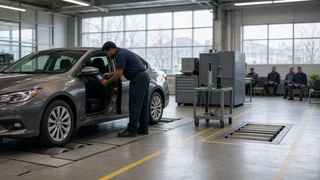
People searching for a Valvoline car inspection usually want one of two things. They may want an official state vehicle inspection, the kind that produces a test certificate or sticker. Or they may want the general under-hood check that comes with an oil change. These are different services with different outcomes. Which one you can get depends on your state and on the specific location you visit.
The Short Answer
Valvoline is best known in the US for quick-service oil change centers. During a routine visit, technicians typically look over items such as fluids, filters, wiper blades and lights. That check is a maintenance service. It is not a legal roadworthiness certification.
Some states let licensed private businesses perform official safety inspections, emissions tests or both. In those states, certain service centers may hold the required license, and a quick-lube shop may be among them. Not every Valvoline location offers official inspections, and in states where only government-run facilities can inspect, none will. Before you go, confirm with the specific location that it is an authorized inspection station for your state.
Official State Inspection vs. Courtesy Maintenance Check
Aspect | Official state inspection | Courtesy check during service; Purpose | Confirms the vehicle meets state legal requirements | Flags maintenance items the owner may want to address; Who sets the standards | State program rules and inspection criteria | The service provider; Outcome | Pass or fail, recorded as a certificate, sticker or electronic record | Recommendations only, with no legal status; Required for registration | Often, in states with inspection programs | No; What happens if issues are found | Repair, then retest | Optional service at the owner's discretion
What an Official Inspection Typically Covers
Requirements vary widely between states, and sometimes between counties within a state. A program may include a safety inspection, an emissions test or both. Some states require neither for ordinary passenger vehicles. States also revise their programs over time, so last year's rules may no longer apply.
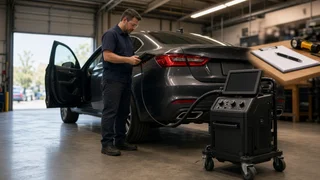
Safety inspection: commonly checks brakes, lights, horn, steering, tires, wipers, mirrors, glass and seat belts against the state's inspection criteria. Emissions test: for most newer vehicles, this usually means connecting to the on-board diagnostics (OBD-II) port. Older vehicles may need other test methods. A lit check-engine light is a common cause of failure. Vehicle identification: the inspector usually confirms that the vehicle identification number (VIN) matches the registration records.
What to Bring and Expect
States commonly ask for current registration and proof of insurance. Some also require a driver's license or other documents. Fees, wait times and accepted payment methods depend on state rules and the location, so check those details when you confirm that the shop performs inspections. Repairs are a separate question. A quick-service center may handle simple items like bulbs or wiper blades, but most mechanical repairs are outside its usual scope.
If the Vehicle Fails
A failed official inspection usually comes with a report listing the reasons. After repairs, the vehicle needs a retest. Many states set a deadline for the retest and have their own rules on whether it must happen at the same station and whether it costs extra. Keep the failure report, since the next inspector may need to see it.
Choosing Your Next Step
If you need an inspection to register or renew your vehicle, start by finding out what your state requires. Then confirm that the Valvoline location near you is licensed to perform it. If you only want a general look at your car's condition, the check during a routine oil change may be enough, but it does not count toward any legal requirement.