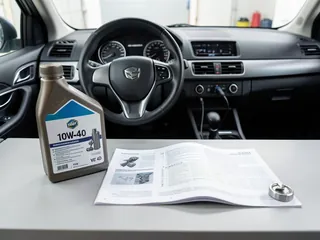
Valvoline 10W-40 Engine Oil: Is It the Right Choice for Your Engine?
The short answer
Valvoline 10W-40 is a reasonable choice only if your vehicle's manufacturer calls for a 10W-40 viscosity, or lists it as acceptable for the temperatures you drive in, and the specific bottle carries the performance rating your manual requires. If your manual specifies a different grade, such as 0W-20 or 5W-30, follow the manual rather than switching to 10W-40. The brand matters less than matching both the viscosity grade and the required specification.
What 10W-40 means
Viscosity describes how easily oil flows. In a multigrade label like 10W-40, the first number with the W (for winter) indicates how the oil behaves at low temperatures. A lower number flows more readily on a cold start. The second number indicates thickness at normal engine operating temperature. A 10W-40 is thicker when hot than a 10W-30 and flows less easily in the cold than a 5W-40.
This grade is commonly specified for some older engines, some higher-mileage engines, and many four-stroke motorcycles. Many recent passenger-car engines are designed around thinner oils, so 10W-40 is not a universal upgrade.
Conditions that change the answer
Your owner's manual or oil filler cap specifies a different viscosity: use the specified grade. Your manual requires a specific approval, such as an API service category, an ACEA sequence or a carmaker's own standard: confirm the exact Valvoline product lists that approval on its label. Viscosity alone is not enough. You ride a motorcycle with a wet clutch: use an oil rated for motorcycle wet-clutch use, typically shown as JASO MA or MA2, rather than a passenger-car oil of the same grade. You drive in very cold conditions: check whether your manual permits 10W-40 at your lowest expected temperatures. Your vehicle is under warranty: using an oil that does not meet the stated specification may create problems with a claim, so keep receipts showing the grade and rating you used.
Choosing among Valvoline's 10W-40 options
Valvoline has offered 10W-40 in more than one product line. Examples include conventional, high-mileage and motorcycle-specific oils, and some markets also have synthetic or synthetic-blend versions. Product names, formulations and approvals differ by country and change over time. Treat any specific product as a candidate to verify, not a confirmed match for your vehicle.
What to check | Where to find it | Why it matters; Viscosity grade | Owner's manual, oil filler cap | The engine is designed around a specific oil thickness range; Performance specification | Owner's manual; back label of the bottle | Confirms the oil meets the protection standard the engine requires; Motorcycle clutch rating (if applicable) | Bottle label, JASO marking | Wet clutches can slip with oils not rated for them; Base type (conventional, blend, synthetic) | Front label | Affects price and possibly drain interval; follow manual guidance on intervals; Market-specific product version | Label and retailer listing for your country | Formulations and approvals vary by region
Information not covered here
This guide does not include current prices, retailer availability, laboratory test results or comparisons with other brands, because no verified data on those points was available. It also cannot confirm compatibility for a particular model year, trim or engine. For that, check the owner's manual or ask a dealer or qualified technician with your vehicle's details.
Next step
Look up the oil grade and specification in your owner's manual. If it lists 10W-40, find a Valvoline 10W-40 product whose label shows that same specification and, for motorcycles, the appropriate clutch rating. If the manual lists a different grade, choose that grade instead.