Using Vaseline on a Tire Valve Stem
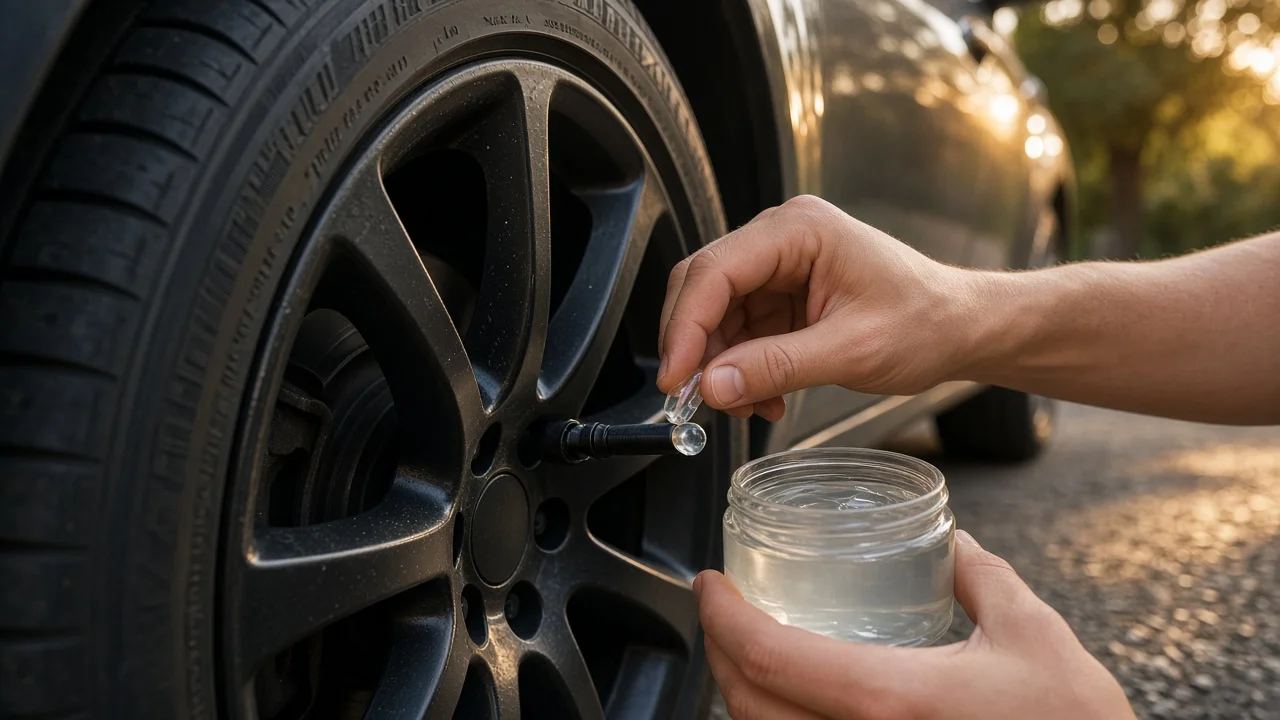
Whether to lubricate a tire valve stem with Vaseline can affect seating, sealing, and long-term rubber condition. Petroleum jelly is a common household grease, but a wheel and tire operate under repeated flex, heat, and moisture exposure. Understanding how the valve stem, cap, and core interact helps explain when a thin film may ease installation and when it may attract grit or swell certain elastomers. The answer depends on the stem material, the type of service, and whether the goal is temporary assembly aid or lasting sealing.
Essential answer
Vaseline can be used sparingly on a tire valve stem as a temporary assembly or seating lubricant, but it is not a tire sealant and should not replace proper inflation pressure maintenance. A thin film may help a rubber stem slide through a rim hole or let a cap thread on smoothly. However, petroleum-based grease can remain sticky and collect brake dust, sand, and road dirt, which may abrade the sealing surface or clog the valve core.
The specific material of the stem matters because some rubber compounds tolerate petroleum jelly better than others. On a clean rim and stem, light application during installation is generally low-risk; on a weathered, cracking, or already leaking stem, adding grease will not correct the air loss. The practical next step is to use only a small amount, wipe away excess, and confirm the tire holds its specified inflation pressure rather than assuming the lubricant sealed the system.