Understand and reduce brake dust
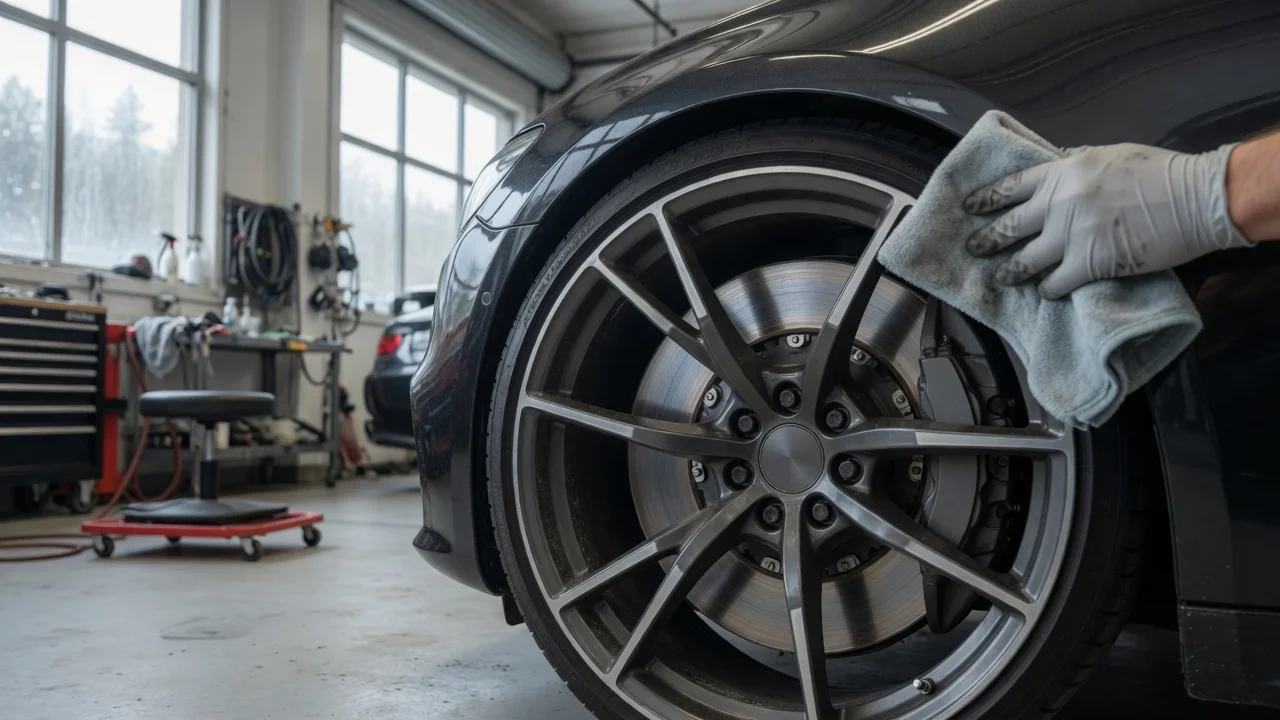
The short answer
Brake dust is the fine residue produced when brake pads press against brake rotors (the discs that turn with the wheel) and both surfaces wear down. Any car with friction brakes makes it, so it can be reduced but not eliminated. The most effective levers are the pad compound you choose, how often and how hard the friction brakes are used, and how regularly the wheels are cleaned. How much each lever helps depends on the specific vehicle, its brake hardware and its powertrain, so the answer varies by model, generation and market.
What brake dust is made of
Brake dust is a mix of material worn from the pad's friction compound, iron particles worn from the rotor, and traces of the binders that hold the pad together. The iron content is a large part of why the dust often looks dark grey or black and why it can bond to wheel finishes when left in place, especially once heat and moisture are involved.
Why some cars produce more than others
The main factors are the pad compound, the rotor material, vehicle weight, how the car is driven, and whether it has regenerative braking. Performance-oriented cars often use aggressive pad compounds chosen for consistent stopping at high temperatures, and these tend to shed more visible dust. Heavier vehicles need more braking effort to stop, which generally means more wear. Wheel design also affects how noticeable the dust is: open-spoke wheels in light finishes show it more than darker or closed designs.
Pad compounds and their trade-offs
Brake pads are commonly grouped into three broad families. These descriptions are general characteristics, not measured comparisons. No test data comparing dust output between specific products was available for this article, and results differ between brands and formulations within each family.
Compound | General dust tendency | Typical trade-offs; Semi-metallic | Tends to produce more, darker dust | Strong heat tolerance and bite; can be noisier and harder on rotors; Organic (non-asbestos organic, NAO) | Moderate; dust can be lighter in colour | Quiet and gentle on rotors; tends to wear faster and tolerate less heat; Ceramic | Generally lower visible dust, lighter in colour | Quiet with long life in everyday driving; often costs more and may suit high-heat or heavy-duty use less well
Switching to a lower-dust compound is the single biggest change most owners can make. It should only be done with pads specified as suitable for the exact vehicle, because the original pads were matched to that car's weight, brake size and intended use. On performance models, tow vehicles or heavily loaded vehicles, a low-dust pad may give up heat tolerance that the original compound was chosen to provide. If you are unsure, check the manufacturer's or pad maker's fitment and application guidance first.
Driving habits that cut brake wear
Anticipate stops and lift off the accelerator early so the car slows before the brakes are needed. Leave more following distance to reduce repeated hard braking. On long descents, use a lower gear or the vehicle's engine-braking or regeneration settings instead of riding the brakes. Remove unnecessary weight that the brakes must repeatedly stop.
Hybrids and electric vehicles
Hybrids and electric vehicles can slow the car by using the electric motor as a generator, called regenerative braking. When regeneration does much of the slowing, the friction brakes are used less, which generally means less pad and rotor wear and less dust. How much the friction brakes are still used depends on the vehicle's software, its regeneration settings and how it is driven, so the reduction varies by model and is not quantified here. Some vehicles let the driver pick a stronger regeneration mode, which usually shifts more braking away from the pads.
Keeping wheels clean and protected
Clean wheels regularly so dust does not build up and bake on with heat. Use a cleaner suited to your wheel finish. Harsh acidic products can damage some coatings, polished surfaces and bare alloys. Clean wheels when they are cool, and rinse thoroughly. A wheel sealant or coating can make dust easier to wash off, though it does not reduce how much dust is produced.
When more dust may signal a problem
A sudden increase in dust on one wheel, especially with grinding, pulling to one side, a burning smell or one wheel noticeably hotter than the others, can point to a sticking caliper, a dragging pad or worn-out pads. These are safety issues, not cosmetic ones, and the brakes should be inspected rather than simply cleaned.
Health and environmental context
Brake wear particles are recognised as one source of non-exhaust particulate pollution from road traffic. This applies to all vehicles with friction brakes, including electric ones. Specific emission figures and regulatory limits were not part of the material for this article, so no measurements are given here. As a basic precaution, avoid breathing dust when cleaning brakes or wheels, and do not blow brake dust off with compressed air.
Bottom line
Brake dust is normal wear from pads and rotors. Fitting a lower-dust pad compound approved for your vehicle, braking smoothly and early, making full use of regeneration if your car has it, and cleaning the wheels regularly will noticeably reduce how much you see. Balance any pad change against the braking performance your vehicle and driving actually need, and treat sudden changes in dust as a reason to have the brakes checked.