Ultra Disc Brake Caliper Lube: What It Is For and When It Fits Your Brake Job
The short answer
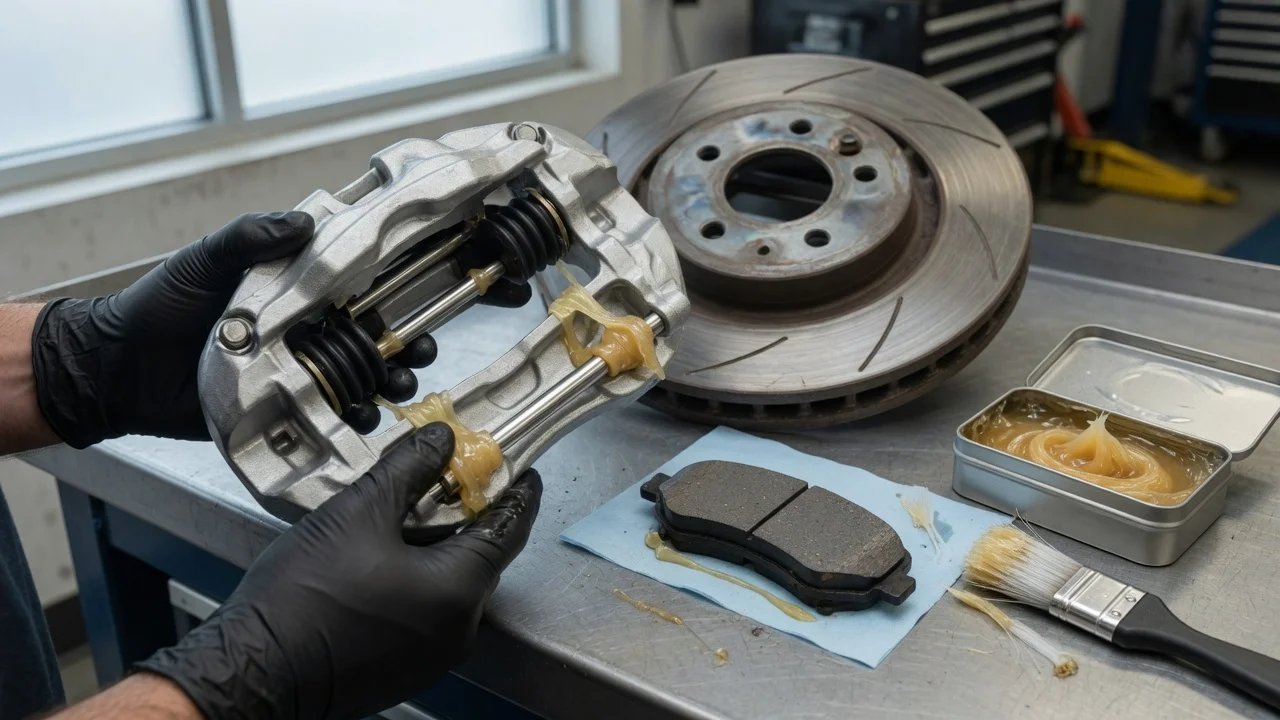
Ultra disc brake caliper lube is a specialty grease sold for the moving and contact parts of a disc brake caliper, chiefly the slide pins (the guide bolts the caliper floats on) and the rubber bushings and boots around them. It is meant to keep the caliper sliding freely so the pads apply and release evenly, and to reduce noise from parts that touch. It is not a general-purpose grease, and it must never touch the pad friction material or the rotor surface.
Two conditions change whether it is the right choice for your car. First, your vehicle's service information may specify a particular lubricant for the slide pins or for the pad contact points; if it does, that specification takes priority over any general advice. Second, the product label defines which parts it is approved for. If the label does not list a location you plan to grease, such as pad abutment clips or shims, confirm compatibility before using it there.
Where caliper lube typically belongs
Caliper slide pins or guide pins, where the caliper body moves as the pads wear; Rubber bushings, sleeves and dust boots that seal the slide pins, if the label states it is safe for rubber; Pad contact points on the caliper bracket, such as abutment surfaces or anti-rattle clips, only where the label and vehicle service information allow it; Back of the pad backing plate or shims, only if the product is approved for that use and the pad maker does not advise against it
Where it must not go
Pad friction material: grease contaminates the pad and reduces braking performance, and contaminated pads generally need replacing; Rotor braking surfaces: clean off any accidental contact with a suitable brake cleaner before driving; Inside the hydraulic system: caliper lube is not brake fluid and should not enter the piston bore, bleeder or lines; Threads of fasteners that have a specified torque, unless the service information calls for lubricant there
Why the type of grease matters
Caliper slide pins usually sit in rubber bushings and boots. Some petroleum-based greases can cause certain rubber compounds to swell or soften, which can make a pin bind instead of slide. That is why brake-specific lubricants are commonly formulated with synthetic or silicone bases intended to be compatible with rubber. Metal-to-metal contact points, such as pad clips, face a different job: holding up under heat and pressure without washing away. A single product may or may not be approved for both roles, so check the label rather than assuming.
Checks before you buy or apply it
What to check | Why it matters | Where to find it; Vehicle-specified lubricant | Some manufacturers call for a specific grease on slide pins or pad contact points | Service manual or repair information for your exact model year, market, trim and brake package; Rubber compatibility | Slide pin bushings and boots can be damaged by an incompatible grease | Product label or technical data sheet; Approved application points | Determines whether it can go on clips, shims or backing plates as well as pins | Product label; Temperature rating | Brake parts run hot, and lubricant must stay in place under that heat | Product label or technical data sheet; Pad or hardware maker guidance | Some pads and hardware kits arrive pre-lubricated or advise a specific product | Pad or hardware kit instructions
Brake hardware can differ within the same model, for example between trims, powertrains or optional brake packages, and between front and rear axles. Confirm the caliper design on your car rather than relying on a general model match.
What this guide does not confirm
No product data sheet, label text or vehicle-specific service information was available for this article. It therefore does not state the product's base chemistry, temperature range, package sizes, part numbers or pricing, and it does not confirm fitment for any particular vehicle. Read those details from the current product packaging or the manufacturer's technical data before purchase, and treat your vehicle's service information as the deciding reference.
Choosing your next step
If you are servicing slide pins with rubber boots and your vehicle's service information does not specify a different product, a brake-specific caliper lube that the label marks as rubber-safe is a suitable choice. If you also plan to grease pad clips or shims, confirm that the same product is approved for those points, or use the lubricant your service information or pad kit specifies. Apply only a thin film, keep it away from friction surfaces, and check that the caliper slides freely by hand before reassembly.