How Does a Disc Brake Work?
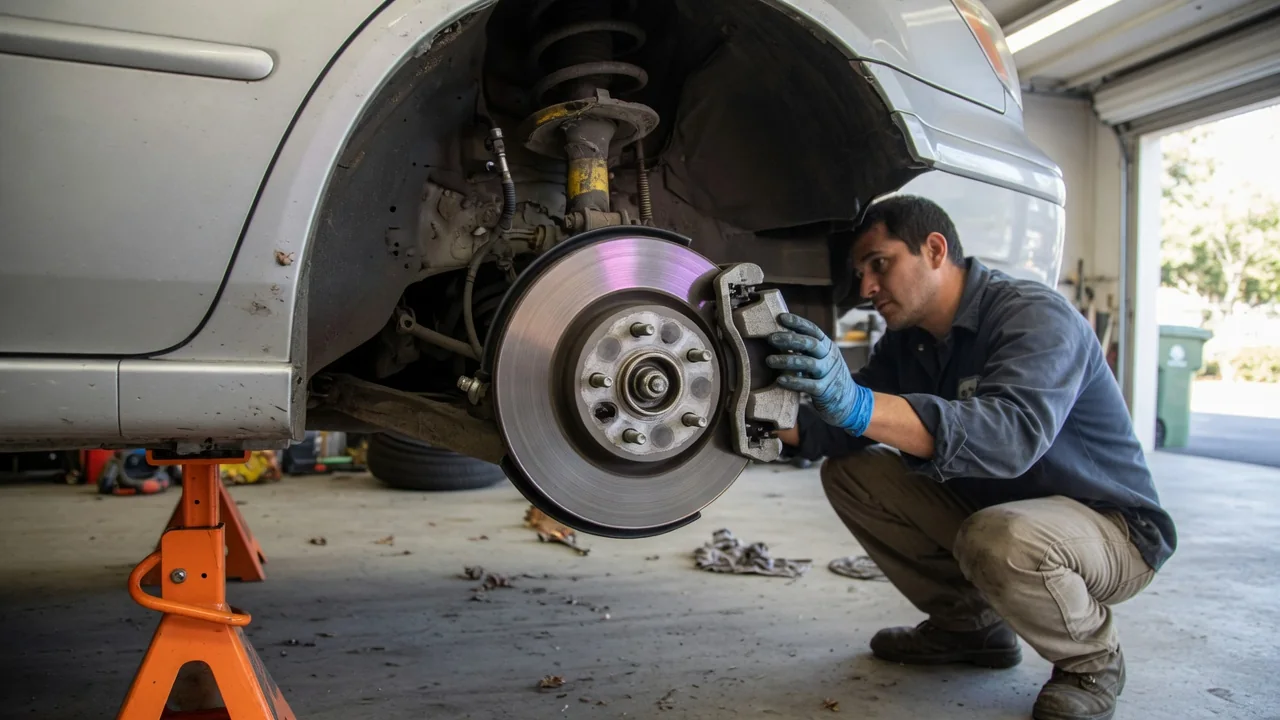
Anyone asking how does a disc brake work is really asking how a light push from a foot can stop a vehicle weighing thousands of pounds. The answer lies in hydraulic pressure, a caliper that squeezes two pads against a spinning rotor, and the conversion of motion into heat. Each stage is simple alone, yet they depend on one another completely.
Pedal pressure
Braking begins at the pedal, which acts as a lever that multiplies the force of the driver's foot. On most passenger vehicles a brake booster, using engine vacuum or an electric or hydraulic assist unit, adds further force before it reaches the master cylinder. Inside the master cylinder, pistons push brake fluid into the lines. Because the fluid is practically incompressible, pressure created at the pedal arrives at each wheel almost instantly and with equal intensity throughout a given circuit.
At the wheel, that pressure acts on one or more pistons inside the caliper. The caliper piston has a much larger area than the master cylinder piston, so the same pressure produces a far greater force, traded for a shorter distance of travel. Drivers feel this relationship as a firm pedal that moves only a little. Pedal feel varies by vehicle, since booster design, piston sizes, and electronically controlled brake-by-wire systems on some hybrids and electric models all shape how the pedal responds.
Clamping
The caliper straddles the rotor, a metal disc bolted between the hub and the wheel so that it turns at wheel speed. A brake pad sits on each side, made of friction material bonded to a steel backing plate. When hydraulic pressure rises, the piston pushes the inboard pad against the rotor face. The friction between pad and rotor resists rotation, and because the tire grips the road, that resistance slows the whole vehicle.
How the outboard pad gets applied depends on the caliper design. A floating, or sliding, caliper has pistons on one side only; once the inner pad makes contact, the caliper body slides on pins and pulls the outer pad into the opposite face. A fixed caliper stays rigid and uses opposing pistons on both sides. When the pedal is released, the piston's square-cut seal relaxes and draws the piston back slightly, leaving the pads resting just clear of the rotor, with no return spring needed.
Heat release
Friction does not make motion disappear; it turns the vehicle's kinetic energy into heat at the pad and rotor surfaces. A hard stop from highway speed can raise rotor temperature by hundreds of degrees in seconds. The rotor serves as the main heat sink, absorbing that energy into its mass and then shedding it to passing air. Its exposed position in the wheel is a key advantage of disc brakes over enclosed drum designs, which trap heat inside.
Many front rotors are vented, with two friction faces separated by internal vanes that pump air outward as the disc spins. Rear rotors are often solid because they typically handle less of the braking load, though this varies by vehicle. Some performance rotors add slots or drilled holes intended to clear gas, dust, and water. After a spirited drive or a long downhill stretch, drivers may notice warmth radiating from the wheels or a faint hot smell, which is that released energy.
Everyday Use and Observations
In normal driving, a healthy disc brake works quietly and predictably. The pedal should feel firm, engage at a consistent height, and slow the vehicle in a straight line. Through the spokes of many wheels, the rotor's shiny friction surface and the caliper clamped over it are plainly visible, and the outer pad's remaining friction material can sometimes be seen as well. Dark dust collecting on the wheels is simply worn pad material and a normal byproduct of the pads rubbing the rotor.
Changes in sound and feel reveal how the three parts are interacting. A high-pitched squeal may come from a metal wear indicator touching the rotor on vehicles so equipped, while others use an electronic sensor and a dashboard warning. Grinding suggests friction material may be gone and the backing plate is contacting the rotor. A pulsing pedal often points to uneven rotor thickness or pad deposits, and a pull to one side can indicate a caliper that is sticking or applying unevenly.
Limits and Next Steps
Disc brakes have limits set by heat and by tire grip. Under repeated heavy braking, such as towing down a mountain grade, pads can exceed their effective temperature range and lose friction, a condition known as brake fade. Extreme heat can also boil moisture-contaminated brake fluid, creating compressible vapor and a soft, sinking pedal. Selecting a lower gear on long descents lets engine braking share the work. And no caliper can stop a vehicle faster than its tires can grip the pavement.
Pads and rotors are wear items, and their lifespan depends on driving style, vehicle weight, and materials, so the owner's manual and a physical inspection are better guides than any general rule. A brake warning light, a spongy or low pedal, fluid leaks, or grinding deserve prompt attention from a qualified technician, because the cause needs to be confirmed rather than assumed. Since brakes are safety-critical, work beyond visual checks is best left to someone with proper training, tools, and vehicle-specific service information.