Wilwood Disc Brake Conversion Kits: Are They the Right Choice for Your Vehicle?
The short answer
A Wilwood disc brake conversion kit can be a good way to replace drum brakes, or upgrade an existing disc setup, on many classic, street and performance vehicles. Whether one suits you depends on a few conditions. The kit must be listed for your exact vehicle, including model year, chassis, suspension and axle. It must clear the wheels you plan to run. The rest of the brake system, especially the master cylinder and brake proportioning, must match the new hardware. If any of these doesn't line up, a kit that is fine for another car may be wrong for yours.
What a conversion kit replaces
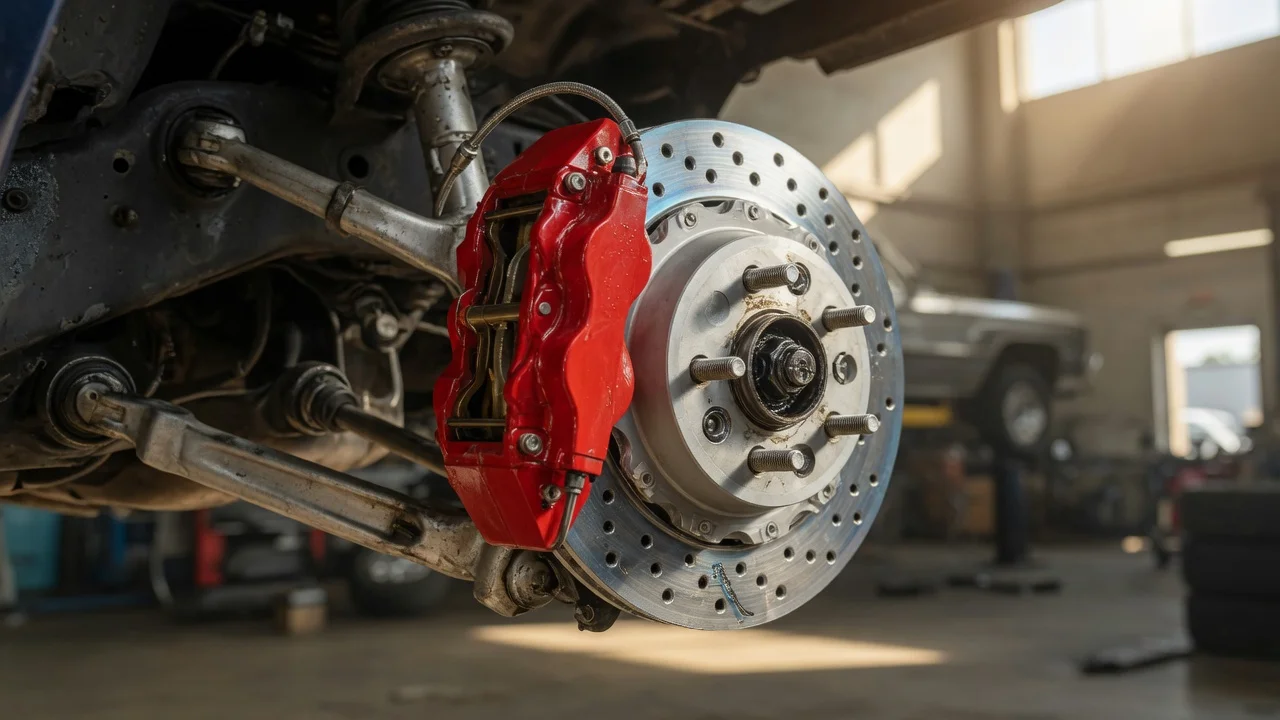
Drum brakes press shoes outward against the inside of a spinning drum. Disc brakes use a caliper, the clamp that holds the brake pads, to squeeze pads against a rotor, the flat disc that turns with the wheel. A conversion kit supplies the parts needed to change from one system to the other at a given axle, or to replace an existing disc setup with a different caliper and rotor package. Depending on the kit, this can include calipers, rotors, mounting brackets, hubs or hats, pads, and brake hoses. Kit contents vary, so check the listed component breakdown before assuming any part is included.
Conditions that change the answer
Exact vehicle fitment: Compatibility is tied to model year, body or chassis code, original spindle or axle type, and sometimes trim or drivetrain. Vehicles sold under the same name can use different suspension or axle parts in different years or markets. Front versus rear: Front and rear kits are typically sold separately. Converting only the front is common, but it changes the front-to-rear brake balance. Wheel clearance: Larger rotors and calipers need enough room inside the wheel. Original or small-diameter wheels may not clear a given kit, so check the manufacturer's clearance information against your wheel. Master cylinder and booster: The master cylinder converts pedal force into hydraulic pressure. Disc brakes often need a different master cylinder bore size or fluid volume than drums, and the existing booster may affect pedal feel. Proportioning and residual pressure valves: A proportioning valve sets how much pressure goes to the rear brakes. Changing the front or rear brake type can upset that balance, so an adjustable or different valve may be needed. Parking brake: On rear conversions, check whether the kit provides a parking brake and what type it uses, since this varies by design. Intended use: A kit sized for street driving may not suit sustained track use, and the reverse can also be a poor match.
How to confirm a kit fits your vehicle
Start by recording your vehicle's model year, market, chassis or body designation, original brake type at each axle, spindle or axle details, and the wheel size you intend to use. Compare those details with Wilwood's application listing for the specific kit, not just the vehicle name. Where the listing names a particular spindle, axle or hub, confirm your car actually has that part. Previous owners may have swapped parts, so what's on the car may not match the factory specification. If you're unsure, ask the manufacturer or an experienced brake specialist and give them those details.
Ownership trade-offs to weigh
Disc brakes are generally valued for consistent performance under repeated use and easier pad inspection and replacement. A conversion can also involve more than the kit price. You may need hydraulic parts, different wheels, new brake lines, and professional installation or bleeding. Performance-oriented calipers and pads may also differ from standard parts in how easy they are to find locally. Think about how you drive and how long you plan to keep the vehicle before choosing a kit.
What this guide cannot confirm
No specific fitment lists, part numbers, prices, stopping-distance figures, rotor sizes or availability details were available for this article, so none are stated here. Check those details against current manufacturer documentation for your exact vehicle before you buy. Brakes are a safety-critical system, so have the finished installation checked by a qualified technician if you have any doubt about the work.