TVS Ntorq 125 engine oil capacity
How much oil the Ntorq 125 takes
For a routine engine-oil change on the TVS Ntorq 125, the quantity most often printed in TVS owner and service literature is 800 ml (0.8 litres). That figure is the drain-and-refill volume for the 124.8 cc air-cooled, single-cylinder, four-stroke engine used across the Ntorq 125 family. It applies when the old oil has been fully drained from a complete, already-run engine and fresh oil is poured back to the specified level. The scooter’s own handbook for that model year and market remains the controlling document if the printed number differs.
What that 800 ml figure covers
The Ntorq 125 has been sold in several trims and emissions stages, including standard, Race, Race XP and special editions, in BS4 and BS6 form depending on year and market. Those variants share the same engine family, so the refill volume is treated as common unless a specific handbook says otherwise. The 800 ml quantity is a service fill after draining the sump. A first fill on a dry, freshly assembled engine is a larger volume and is given in workshop literature rather than in most owner handbooks. After any fill, the dipstick or level window is the final check: pour the specified amount, idle the engine briefly, wait for the oil to settle with the scooter upright, then bring the level to the upper mark in small additions.
Routine oil change after a full drain: 800 ml is the commonly specified refill for the 124.8 cc Ntorq 125 engine. Level after filling: use the dipstick or crankcase level marks on an upright scooter; the marks override a small difference between the measured pour and the actual sump level. Dry fill after engine work: a higher volume than 800 ml; use the workshop procedure for that engine, because owner literature often omits a dry-fill number. Replaceable-filter extra: TVS owner literature for this scooter does not consistently publish a separate “with filter” volume. Many Ntorq 125 engines use a centrifugal oil filter, so a cartridge-style extra quantity may not apply. Follow the procedure printed for that year.
Fill situation Volume to use; Drain and refill at a normal service 800 ml as commonly specified, then set to the level marks; Top-up between services No fixed quantity; add only enough to reach the upper mark; First fill on a dry engine after overhaul Workshop-manual quantity for that engine; owner books often skip this figure
Grade that goes with the fill
TVS typically specifies SAE 10W-30 engine oil meeting API SL (or a later petrol API grade) and JASO MB for the Ntorq 125. JASO MB is the scooter classification for engines whose transmission is a separate CVT case; it is the grade written for this layout. Capacity and grade are independent: using the right viscosity and specification still requires the 800 ml drain-and-refill quantity and a final check on the level marks. Ambient climate can justify a different viscosity only when the handbook for that market lists one.
How to confirm the level on the scooter
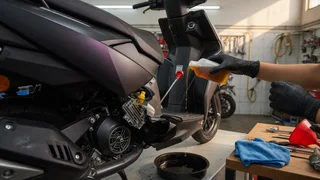
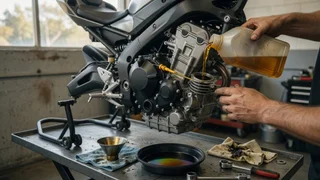
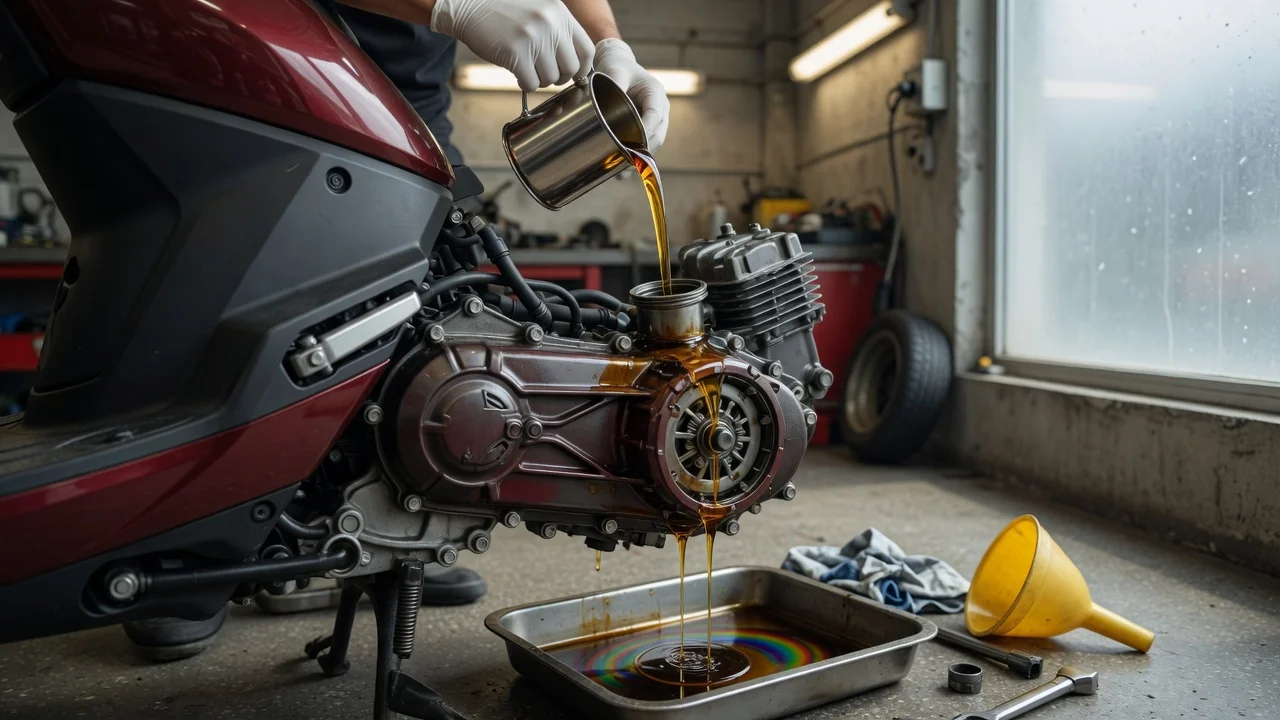
Warm the engine so the oil flows, then drain it with the scooter on its stand and the drain plug fully removed until the stream slows to drips. Refit the plug with a new crush washer if the procedure calls for one, and tighten to the handbook torque. Pour in 800 ml of the specified oil, start the engine for a short idle, switch off, and wait a minute for the oil to return to the sump. With the scooter upright, wipe the dipstick, seat it as the handbook describes (some TVS dipsticks are checked screwed in, others rest in the hole), and read the film. Add oil in small amounts until the level sits at the upper mark. Overfilling raises crankcase pressure and can wet the breather; underfilling starves the big-end and cam at sustained speed. Recheck after the first short ride, because residual oil in galleries can change the reading by a small amount.
Gaps in published figures
A factory dry-fill volume, a published extra quantity for a replaceable cartridge (where fitted), and any market-specific reprint that differs from 800 ml were not supplied as source documents for this article. Export-market handbooks and later special editions can carry a different printed number even on the same 124.8 cc family. If the dipstick reading and the poured 800 ml disagree, trust the level marks and the handbook packed with that vehicle, or the quantity on a TVS dealer job card for that VIN. Those sources also give the drain-plug torque, the exact dipstick method, and the oil-change interval, which sit outside the capacity figure itself.