Truck Clicking Noise When Trying to Start: What It Usually Means
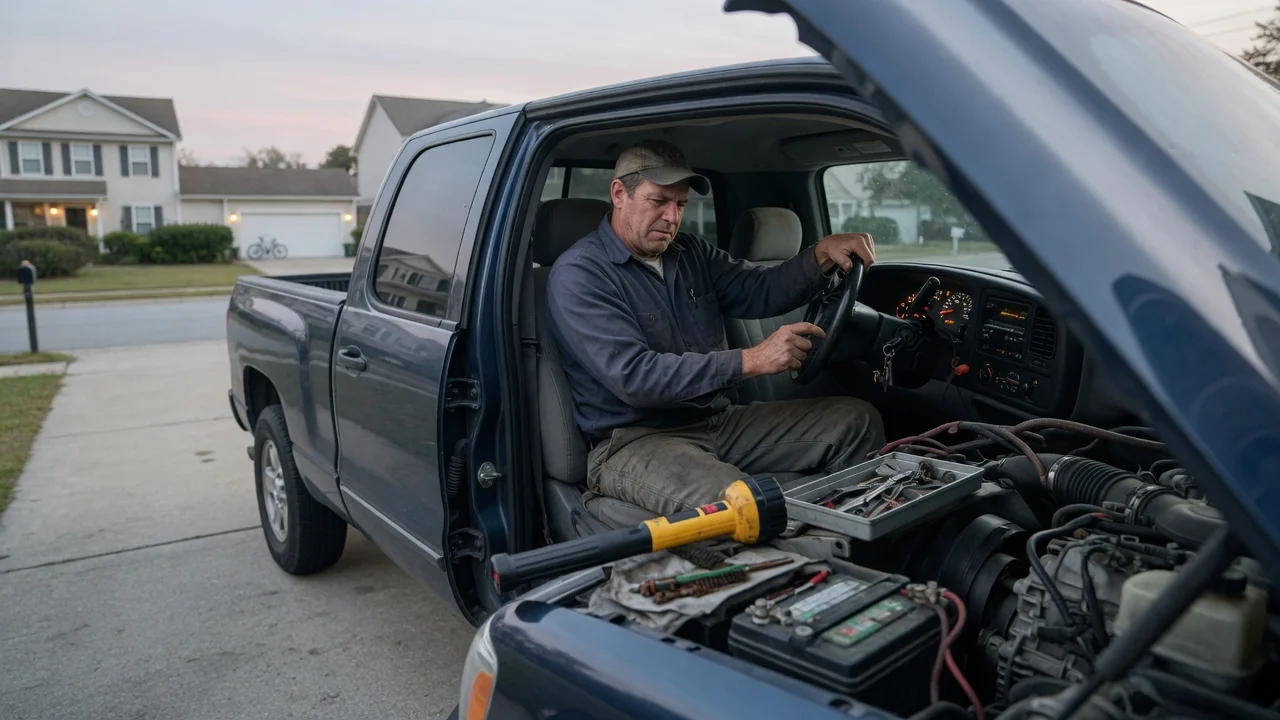
The short answer
When a truck clicks but the engine does not crank, the starting circuit is usually not delivering enough current to turn the starter motor. The most common causes are a discharged or failing battery, a loose or corroded battery cable connection, and a faulty starter motor or starter solenoid. The solenoid is the electrically operated switch that sends battery power to the starter and pushes its gear into the engine's flywheel. The kind of click you hear is the most useful clue for telling these causes apart.
Rapid clicking versus a single click
A rapid, repeated clicking or chattering sound usually points to low battery voltage or a poor connection. The solenoid engages, the voltage drops as soon as the starter draws current, the solenoid releases, and the cycle repeats. Dimming dashboard lights or headlights while you turn the key support this diagnosis.
A single loud click with no cranking, especially when the lights stay bright, more often points to the starter itself. Possible causes include a worn starter motor, a failing solenoid, or a high-resistance connection at the starter. A battery that is weak but not fully drained can sometimes produce the same symptom, so check the battery before replacing parts.
Repeated faint clicks coming from under the dash or the fuse box, without a click from the engine bay, can come from a relay rather than the starter. Relay layout varies by make, model and model year.
Sensible first checks
Look at the battery terminals for looseness or white, green or bluish corrosion, and confirm the clamps cannot be turned by hand. Check whether the interior and exterior lights dim sharply or go out when you try to start. Measure the battery voltage with a multimeter if you have one, and compare the reading with the specification for your battery or truck. Try a jump start or a known-good battery. If the truck then cranks normally, the battery or its charging is the likely cause. Inspect the ground cable between the battery, engine block and frame. A poor ground can mimic a dead battery.
If a jump start works, the battery may simply have been drained, for example by lights left on. It may also be at the end of its life, or the alternator may not be recharging it. A battery and charging-system test at a parts store or repair shop can tell these apart. If the truck still only clicks with a good battery and clean, tight connections, the starter or solenoid becomes the main suspect.
Qualifications that change the answer
Some trucks, particularly certain diesel models, use two batteries wired together. One weak battery or one bad connection can produce clicking even if the other battery tests fine. On these trucks, check both batteries and every cable. Many newer trucks also use push-button start, immobilizer systems or software that limit when the starter is allowed to engage. On these vehicles a clicking-but-no-start symptom can involve key fob, security or control-module faults, which a scan tool may be needed to identify.
No make, model, model year or powertrain was specified for this guide. Component locations, battery specifications and starting-system design vary across trucks. Your owner's manual or the service information for your specific truck is the authority for test values and procedures.
When to stop and get help
Stop trying to start the truck if you smell burning or see smoke, or if the cables or starter become hot. Do the same if the clicking continues after you have confirmed a good battery and clean connections. Repeated start attempts in these conditions can damage the starter or wiring. Take care when working on the battery and starter, because they can deliver very high current. Remove metal jewelry and avoid letting tools bridge the battery terminals.