Transmission Valve Body Price: Buying the Assembly
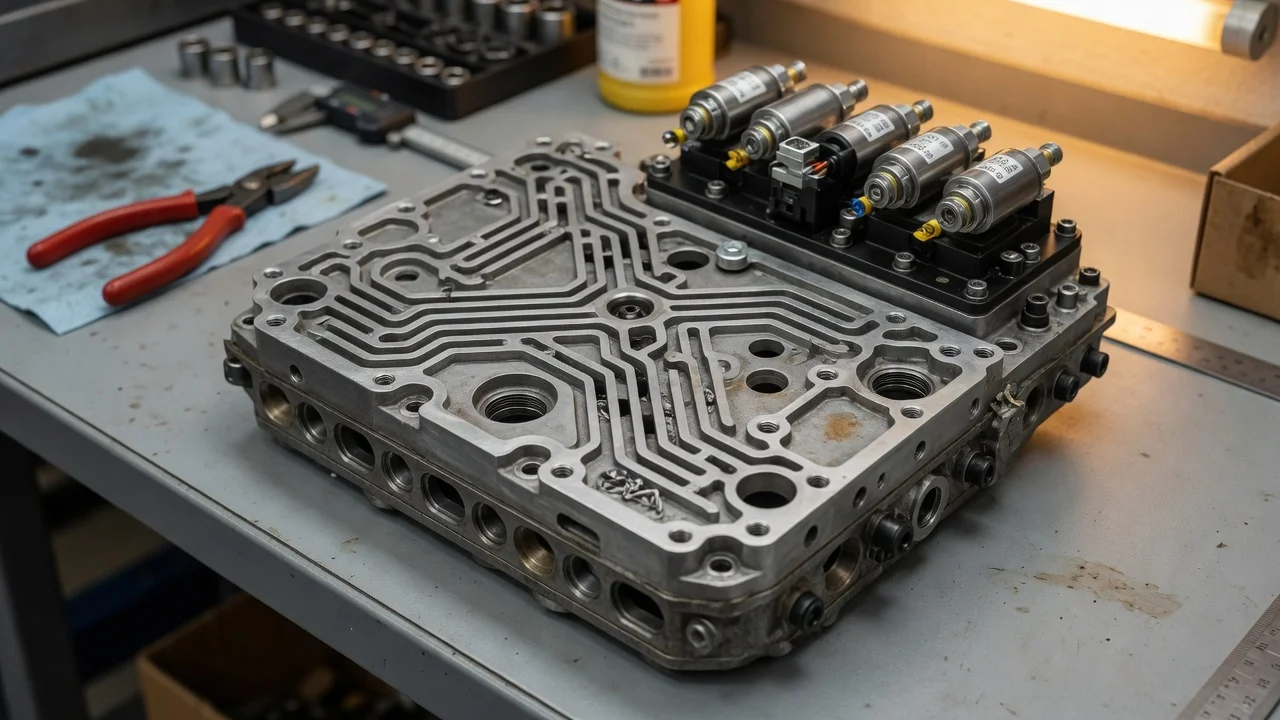
The valve body is the hydraulic control center of an automatic transmission. It routes pressurized fluid through passages, valves and solenoids to apply the clutches and bands that select each gear. What it costs depends less on the casting itself than on what a quote actually covers and which transmission it fits. Before comparing offers, confirm that a valve body fault has been diagnosed rather than assumed, and that the assembly you are pricing matches your exact unit.
What the estimate includes
A valve body price can describe very different things. Some sellers list only the bare assembly with its valves, springs and check balls. Others include the solenoid pack, separator plate, gaskets and filter. On some transmissions the electronic control module is mounted on the valve body, often called a mechatronic unit, and the price may or may not include that controller and its programming. Some manufacturers do not sell the valve body separately at all and supply it only as part of a larger assembly.
A parts-counter figure covers the component only. A shop total usually adds labor, fluid, a pan gasket or filter, any required programming or adaptive relearn, and a road test. When you see a low number, ask whether it is a part-only price, whether solenoids are included, and whether a refundable core charge applies. A meaningful comparison starts with the same scope written down for every offer.
What changes the cost
The first driver is the transmission type and its exact configuration. The same vehicle model can use different transmissions depending on engine, drivetrain and model year, and even one transmission family may use several valve body versions with different calibrations, solenoid styles or connector layouts. Identify the transmission model code from the tag on the case, the vehicle build data or a VIN lookup at a parts counter. Fitment mistakes are a common reason valve bodies get returned or fail to shift correctly after installation. Units with integrated electronics generally need to be programmed to the vehicle, which may require a factory-level or compatible scan tool and adds to the bill.
Labor varies with layout. On many rear-wheel-drive transmissions the valve body sits under the oil pan and is comparatively accessible. On many front-wheel-drive transverse units it is behind a side cover, which can require removing other components to reach. Local labor rates also differ widely by region and by shop type. Fluid adds cost too: many modern transmissions require a specific fluid specification and a fill procedure that checks level at a set temperature, sometimes with a scan tool. Finally, the source of the part, whether new from the manufacturer, remanufactured, aftermarket or used, changes the price and the risk you take on.
Compare like-for-like options
Repair options usually fall into a few groups. A new assembly from the manufacturer offers known calibration and fitment. A remanufactured valve body has been disassembled, cleaned and rebuilt, ideally with worn bores corrected and the unit tested on a bench; ask what testing was actually done. A used valve body from a salvage vehicle is often the cheapest but comes with unknown mileage, possible debris contamination and limited warranty. Repairing your existing valve body is another route: a transmission specialist may replace individual solenoids or install oversized valve kits in worn bores, which can address specific known wear patterns.
Compare these on equal terms. Look at warranty length, whether it covers labor or only the part, and conditions such as a required cooler flush or proof of correct fluid. Consider associated work each option needs, like programming, relearn procedures or a new filter. Also keep the diagnosis in view: harsh shifts, slipping or delayed engagement can come from low or degraded fluid, wiring faults, software, or internal clutch wear. If metal debris or burnt friction material is present, the valve body may not be the root cause, and a rebuilt or replacement transmission could be the relevant comparison instead.
Read an itemized quote
A useful written quote names the exact part number and the transmission code it fits, the part source and condition, and what the assembly includes. Labor should be shown as hours and rate rather than a single lump figure. Fluid should be listed by type and quantity so you can confirm it matches the required specification. Look for separate lines covering the filter, gaskets, programming or relearn, diagnostic fees and whether those fees are credited toward the repair, core charges, shipping, shop supplies, disposal fees and taxes.
Pay attention to exclusions. Phrases such as additional damage found during disassembly mean the final total can rise, so ask how the shop will contact you and get approval before doing extra work. Request the diagnostic codes that were stored, along with the test results that point to the valve body, such as solenoid resistance checks, line pressure readings or observed shift behavior on a scan tool. A quote supported by specific findings is easier to trust and compare than one built only on a description of symptoms.
Decide the next step
Start by confirming the diagnosis with codes, fluid condition and appropriate pressure or electrical tests, and gather your service history, including past fluid changes and any earlier transmission work. Identify the transmission code and confirm fitment by VIN before buying anything. Get two or three written quotes on the same scope, part source and warranty terms, and compare totals rather than headline part prices.
Avoid shortcuts that tend to cost more later: buying a used valve body only on price without matching the part number, skipping required programming or relearn, using a universal fluid where a specific specification is called for, or replacing the valve body when debris in the pan suggests deeper mechanical wear. If you plan to supply your own part, ask the shop beforehand whether they will install it and how that affects their warranty. Taking these steps gives you an estimate that applies to your vehicle rather than a number that only looks comparable.