Transmission Limp Mode: Meaning, Symptoms and Diagnostic Checks
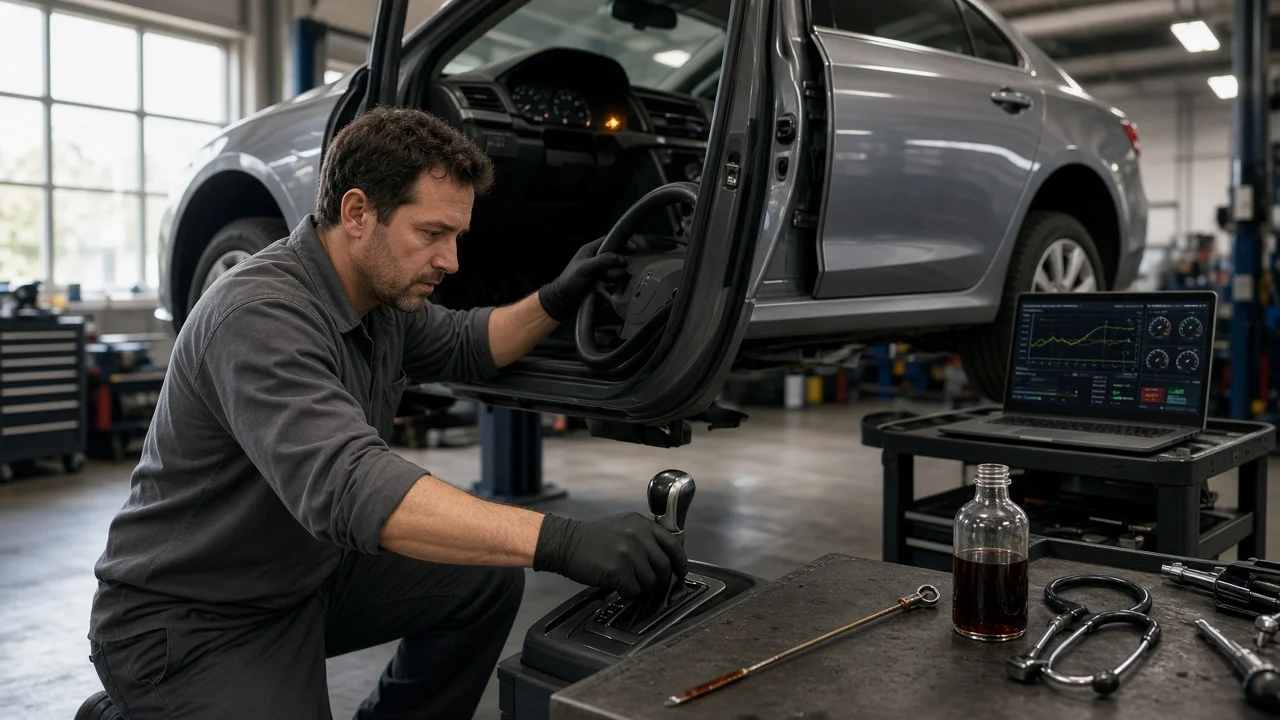
Transmission limp mode is a protective state the control module enters when it detects a condition it considers unsafe for normal operation. It restricts the transmission, usually holding one gear or a narrow range, and sometimes limits engine power, so the vehicle can still move with reduced capability. Limp mode is a response, not a diagnosis. The trigger can be electrical, hydraulic, mechanical or thermal, and the right checks depend on the transmission type and configuration.
Establish the symptoms
On a conventional automatic transmission, limp mode usually means the transmission stops shifting and stays in a single forward gear, commonly a middle gear. Acceleration from a stop feels sluggish, and engine speed runs high at highway speed. A warning light or message may appear, throttle response may be reduced, and engagement into drive or reverse may feel harsh. Sometimes the condition disappears after the engine is switched off and restarted, then returns. Other designs behave differently. A CVT may hold a fixed ratio or cut power, and a dual-clutch unit may lock out some gears.
Before anything is replaced, record the context. Note when the problem occurs: cold start, after a long drive or towing, in hot weather, or at a particular speed or shift. Note any warning lights, noises, smells or fluid spots. Also list recent changes such as a fluid service, battery replacement, jump start, curb strike, aftermarket electrical installation, software update or repair work near the wiring. Describe the shift behavior before limp mode began, including slipping, flares, delayed engagement or shudder. These details narrow the possible causes considerably.
Distinguish plausible causes
Fluid-related causes include low level from a leak, fluid that does not meet the required specification, degraded fluid and overheating. Evidence that supports this group includes visible leaks, a recent service with an unknown fluid, symptoms that appear after hard use or towing, and temperature-related diagnostic codes. A correct level and good condition, verified with the proper procedure for that transmission, weakens it.
Electrical and sensor causes include faulty speed or range sensors, solenoid circuits, damaged wiring, corroded connectors, poor control module power or ground, and low system voltage. Sudden onset, intermittent behavior that clears on restart, circuit-type codes, recent battery work, water exposure or several unrelated warnings appearing together all point this way. Some engine or throttle faults can also trigger a reduced-power state that feels like a transmission problem.
Internal hydraulic or mechanical causes include valve body problems, worn clutches, torque converter faults and pump issues. Supporting signs are progressive slipping or flaring before limp mode, gear ratio or slip codes, debris in the fluid and a burnt smell. Clean fluid and purely circuit-related codes weaken this explanation. Ratio codes can also result from sensor faults or low fluid, so they do not prove internal failure.
Checks in a useful order
Start with checks an owner can do safely. Note every warning light and message. With the vehicle parked on level ground and the engine off, look underneath for fresh fluid drips. Check that the battery terminals are clean and tight. Then read the diagnostic codes with a scan tool. Basic code readers may show only generic powertrain codes, while manufacturer-specific transmission codes and freeze-frame data often require an enhanced tool that can query the transmission module. Write the codes down before clearing anything, because clearing erases useful evidence.
How you check the fluid depends on the design. Some transmissions have a dipstick with a specified procedure, such as checking at operating temperature with the engine running. Many modern units have no dipstick and are checked at a fill or level plug, with the vehicle level and the fluid within a specified temperature range, which usually requires a scan tool to read. Use only the fluid specification listed for the exact transmission, because the wrong fluid can cause shift problems on its own. If the procedure is unclear, leave this check to a technician.
The next tests need tools, specifications or a qualified technician. These include reviewing live data such as input and output speeds, commanded gear, fluid temperature and solenoid states, testing circuits against published values, measuring line pressure, checking for service bulletins or software updates, and road testing under the conditions that triggered the fault. If parts are needed, confirm fitment against the transmission code and vehicle identification, not only the model and year.
Interpret the findings
A diagnostic code identifies the circuit or condition the module flagged, not the failed part. A solenoid circuit code may come from the solenoid, its connector, the harness or the module. A speed sensor code may come from the sensor, its wiring or the part it reads. Each possibility should be confirmed by testing before money is spent on replacement parts.
Low fluid confirms a deficit, but the leak still has to be located. Topping up without a repair only delays the next episode. Dark, burnt-smelling fluid or visible debris suggests internal wear. A small amount of fine material can be normal, so the amount and type of debris need a technician's judgment. If limp mode clears after a restart, the module has reset; the fault has not necessarily gone away. After any repair, verify the result under the original triggering conditions.
If limp mode occurs with no codes stored, the fault may be intermittent, or the code may sit in another module. A full scan of all modules is more useful than repeated readings of the engine module alone.
Urgency and next action
Stop driving and arrange a tow if any of these occur: drive or reverse will not engage, the engine revs without matching acceleration, there is grinding or banging, there is a burning smell or smoke, fluid is leaking heavily, a transmission overheating warning appears, or the vehicle cannot hold a safe speed in traffic. Limp mode exists to get the vehicle off the road, not to support continued driving. There is no reliable way to predict how far a vehicle in this state can travel without further damage.
Give the repair shop the vehicle year, make, model, engine and identification number, along with the transmission type and code if known, the mileage, and the service history, including the last fluid change and the fluid used. Also provide the recorded codes with freeze-frame data, the conditions when limp mode occurs, and any recent work. Ask for a confirmed diagnosis before discussing repair options. Depending on the cause, these can range from a wiring or connector repair, sensor or solenoid replacement, fluid correction or software update to valve body work, a rebuild or a replacement transmission.