Toyota Tundra Brake Pads: How to Find the Right Fit and Compound
The short answer
The right brake pads for a Toyota Tundra depend first on which Tundra you have. Pad shape, size and mounting hardware changed between generations, and front and rear pads are different parts. Confirm the exact fitment for your truck by model year, cab and bed configuration, drivetrain and powertrain, ideally by checking against the VIN. After that, choose a pad compound that matches how the truck is used: mostly unloaded commuting, regular towing and hauling, or off-road driving.
Two conditions change the answer most. The first is generation: a pad listed for one Tundra generation should not be assumed to fit another. The second is powertrain on newer trucks: the hybrid i-FORCE MAX models use regenerative braking alongside the friction brakes, so confirm that any pad you choose is listed specifically for the hybrid rather than assuming the non-hybrid part applies.
Match pads to your Tundra's generation
The Tundra has been built in three broad generations. Brake components were redesigned between them, so the generation is the first filter when you shop.
Generation | Approximate model years | What to confirm before buying; First generation | 2000–2006 | Whether your truck has rear disc brakes or rear drums, since rear brake design varied in this period; confirm front pad fitment by year and configuration; Second generation | 2007–2021 | Front and rear pad part numbers for your exact year and trim; check whether a catalog lists any split within the run; Third generation | 2022 onward | Whether the truck is a conventional i-FORCE or hybrid i-FORCE MAX model, and the trim, since listings may differ
Within a generation, trim, drivetrain and factory packages can still affect brake hardware. If a parts listing asks for production date, trim or package details, answer them rather than skipping the question. When a catalog shows more than one option for your year, that usually signals a real difference in hardware, not a duplicate listing.
Choosing a pad compound
Once fitment is settled, the main decision is the friction material, often called the compound. Each type trades off noise, dust, heat tolerance and rotor wear differently.
Ceramic: generally quieter and lower in visible dust, and well suited to everyday driving. Check that a ceramic pad is rated for towing if you pull heavy loads, since heat tolerance varies by product. Semi-metallic: contains metal fibers that help manage heat under repeated hard stops, which makes this type a common choice for towing and hauling. Expect more dust and noise, and potentially faster rotor wear. Organic (non-asbestos organic): soft and quiet, but usually less suited to a heavy truck that works hard. These are less commonly recommended for full-size pickups that tow.
For a Tundra that regularly tows a trailer or carries heavy loads in the bed, prioritize heat resistance and look for pads the manufacturer describes as suited to towing or severe duty. For a Tundra used mostly as a daily driver, a ceramic pad is a common choice for lower noise and dust. Original-equipment pads from Toyota are designed around the factory brake system and are a reasonable baseline if you are unsure.
What to check during a pad replacement
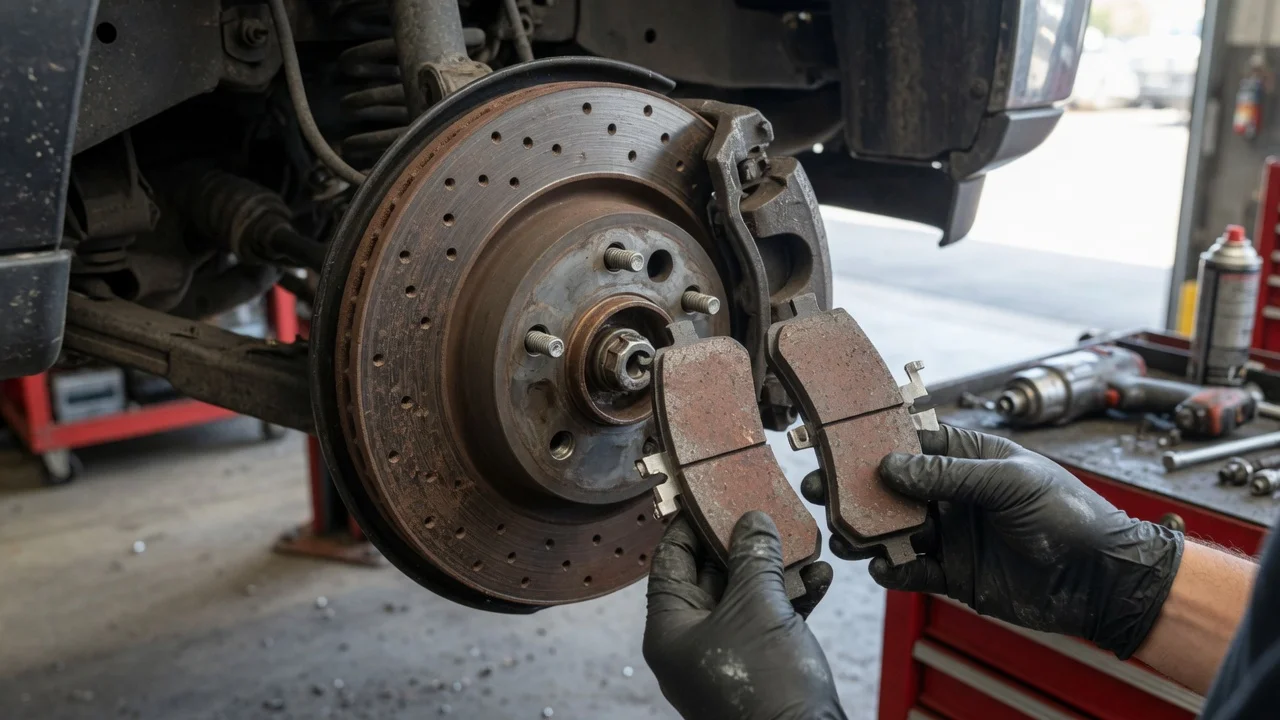
Replace pads in axle sets: both front wheels together, or both rear wheels together, so braking stays balanced side to side. Inspect the rotors: check for scoring, uneven wear or vibration under braking. Rotors below the minimum thickness stamped on them or listed in the service manual should be replaced, not reused. Check the hardware: abutment clips, shims and wear indicators should be in good condition; many pad sets include new hardware. Inspect the caliper slide pins and pistons: sticking components cause uneven pad wear and can shorten the life of new pads. Follow the bed-in procedure: most pad makers specify a sequence of moderate stops to transfer friction material evenly onto the rotor. Use the procedure supplied with your pads. Use the factory torque specifications: tighten caliper bolts and wheel lug nuts to the values in the service information for your specific model year.
Signs your Tundra needs new pads
Common indicators include a high-pitched squeal from the pad wear indicators, a grinding noise that suggests metal-to-metal contact, a longer pedal travel or reduced braking response, and a brake warning on the dash where equipped. Grinding in particular means you should inspect the brakes promptly, because worn-through pads can damage the rotors.
Gaps to resolve before you buy
This guide does not provide part numbers, pad dimensions, prices, expected pad life or independent test results, because none were available to verify. Those details vary by year, configuration and manufacturer. Before ordering, confirm fitment for your specific truck using the VIN with a parts retailer or a Toyota dealer, and check the pad maker's own application listing and duty rating. If your truck has aftermarket wheels, a lift or a brake upgrade, factory fitment listings may not apply.