Finding the Correct Toyota Rear Brake Proportioning Valve
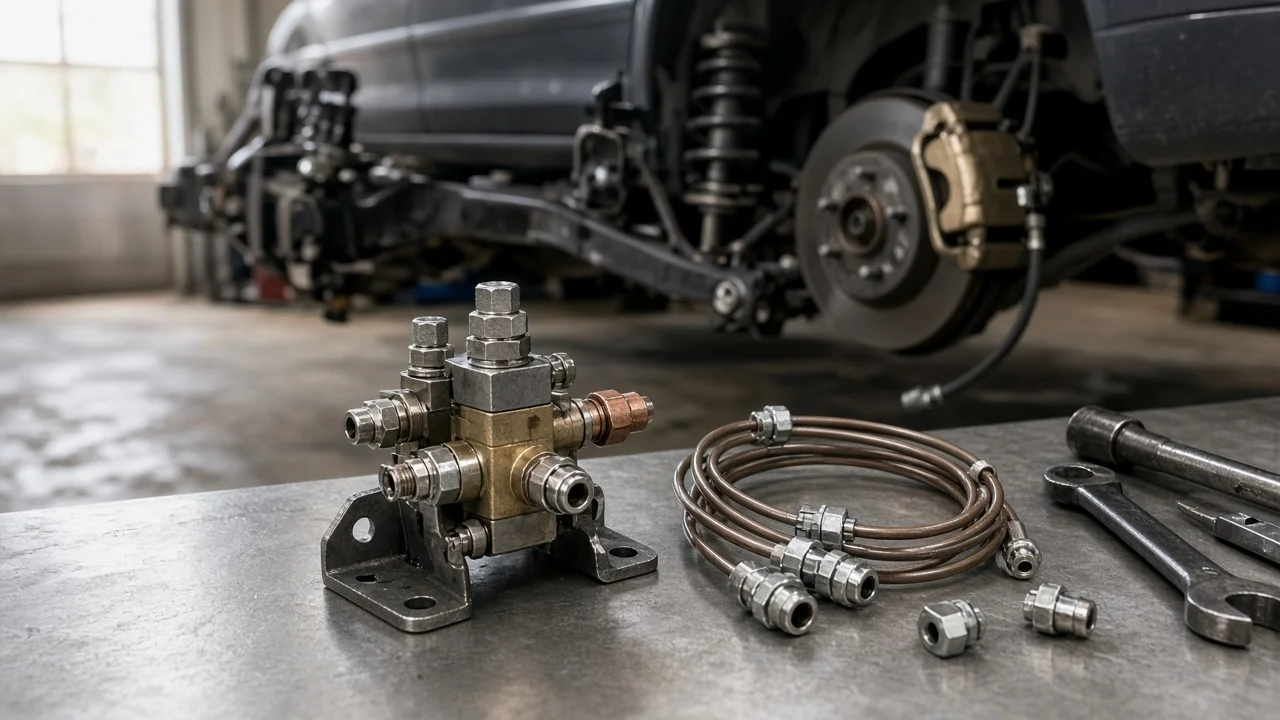
A Toyota rear brake proportioning valve is not a one-size part. The right valve depends on the exact model, year, drivetrain and brake configuration. On many trucks and SUVs it is a load-sensing unit that has to be adjusted after installation. This guide explains how to identify the correct valve, what it does, which details change the answer, and when a braking fault means the vehicle should stay parked.
The Short Answer: Match the Valve to Your VIN
The correct proportioning valve is the one listed for your vehicle identification number in Toyota's parts catalog or in a parts system that decodes the VIN. Model name and year alone are often not enough. The same model can use different valves depending on 2WD or 4WD, cab and bed configuration, payload rating, engine, ABS, and whether the rear brakes are drums or discs. If the part number stamped or tagged on the old valve is still legible, compare it with the catalog result before ordering.
First confirm that your vehicle has a separate valve at all. Many newer Toyotas with ABS proportion rear braking electronically through the ABS actuator, so there is no standalone rear valve to buy. On those vehicles, a complaint about rear brake balance calls for diagnosis of the ABS system, the hydraulics or the brake hardware itself. Replacing a valve is not the fix.
How a Proportioning Valve Works
When you brake hard, weight shifts forward and the rear wheels carry less load. If the rear brakes received the same pressure as the fronts, they could lock first, and rear-wheel lockup makes a vehicle unstable. A proportioning valve lets rear line pressure rise normally during light braking. Above a set point, it limits how quickly rear pressure increases compared with the front. During hard stops the front brakes do most of the work, which is how the system is designed.
On many Toyota pickups and some SUVs, the rear valve is load-sensing and is often called an LSPV. It is usually mounted on the frame near the rear axle and connected to the axle by a lever and a spring or link. As the vehicle is loaded and the springs compress, the linkage moves and the valve allows more rear pressure. With an empty bed, the valve holds rear pressure lower to prevent lockup. The valve, its linkage and the ride height therefore work as one system.
What Changes Which Valve You Need
Body style and drivetrain are the biggest variables. The 2WD and 4WD versions of the same truck can have different axle heights and spring rates, so the load-sensing valve or its linkage can differ. Payload packages, heavy-duty springs and cab-chassis versions may also be calibrated differently. ABS matters too. Some ABS-equipped generations keep a load-sensing valve while others rely on electronic distribution, and a valve used with ABS may not interchange with a non-ABS valve.
Passenger cars add another layer. Some older Toyota cars have proportioning valves built into or threaded onto the master cylinder, sometimes one per rear circuit. Others use a separate combination valve. In those designs the correct replacement may be the master cylinder assembly or a specific valve body rather than a standalone rear part. Mid-production changes are common enough that the VIN or production date can decide between two otherwise identical listings.
Modifications also change the answer. A lift kit, lowering, aftermarket springs or a different tire diameter all alter the relationship between the axle and the frame. The valve then reads the truck as more or less loaded than it really is. That can reduce rear braking or make the rear more prone to lockup. Relocation brackets are sold for lifted trucks, but the goal should be to restore the factory geometry and setting, never to defeat the valve.
What You Can Check and Do as an Owner
Start with inspection. Look for brake fluid wetness at the valve body and line fittings, a seized or rusted lever, a broken spring or link, and a bent or missing bracket. On a load-sensing valve, a seized pivot commonly makes the rear brakes feel weak or lock unexpectedly. Note the symptoms, such as rear wheels locking early on an empty truck, instability during hard stops, or a soft pedal together with a leak. Also check brake pads, brake rotors, drums, shoes, the caliper and wheel cylinders against their wear limits. Worn or contaminated friction material and sticking hardware cause many of the complaints that get blamed on the valve.
When buying, give the parts supplier your VIN and confirm that the listing matches your drivetrain, ABS status and production range. Even when vehicle fitment is confirmed, a load-sensing unit still needs its linkage adjusted on the vehicle after installation. Avoid used valves of unknown history. Internal corrosion cannot be seen from outside, and a faulty valve can look perfectly normal.
Installation involves opening hydraulic lines, bleeding the system and, for a load-sensing valve, setting the linkage to the factory specification. Some procedures call for checking front and rear pressures with gauges. Use the brake fluid type specified on the reservoir cap and follow the bleed sequence in the service manual, because some valves have their own bleeder screw. If you lack the manual, the gauges or the experience, take the job to a brake shop.
Limitations and When to Stop Driving
This guide cannot tell you which part number fits your vehicle or give adjustment values. Those depend on the exact model, year and configuration, and Toyota publishes them in its parts and service information. Be cautious with any listing that claims to fit a broad range of Toyota trucks until you have confirmed it against your VIN.
Some braking faults call for parking the vehicle rather than ordering parts. Stop driving and arrange professional service if you find a fluid leak, if the brake warning light stays on, if the pedal sinks or feels soft, or if the rear wheels lock during normal stops. A wrong or misadjusted proportioning valve can lengthen stopping distances or make the vehicle spin under hard braking. A shop that follows the correct procedure can verify the repair before the vehicle goes back on the road.