Toyota RAV4 Brake Pads: How to Choose the Right Set
The short answer
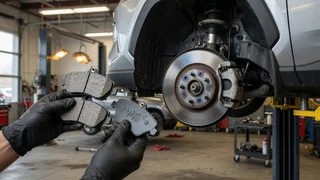
The right brake pads for a Toyota RAV4 are the ones listed for your exact model year, powertrain (gas, hybrid or plug-in) and axle (front or rear), in a compound that suits how you drive. For most daily-driven RAVs, a quality ceramic or OE-style pad is a sensible default. Semi-metallic pads make more sense if you tow, carry heavy loads or drive steep terrain often and can accept more dust and noise. Fitment is the condition that changes everything: RAV4 brake hardware has differed between generations, and sometimes within a generation by trim or powertrain, so never buy by model name alone.
What determines whether a pad fits your RAV4
Brake pads are shaped to match a specific caliper. If the caliper differs, the pad differs, even when two vehicles look identical from the outside. For the RAV4, the factors that matter most are:
Model year and generation: the RAV4 has gone through several generations in the US, and caliper and rotor designs changed along the way. Powertrain: gas, hybrid, plug-in hybrid (RAV4 Prime, later sold as the Plug-in Hybrid) and the short-lived early-2010s RAV4 EV may not share brake components with the gas model of the same year. Trim and package: some trims or performance-oriented packages may use different brake sizes. Treat this as something to confirm rather than assume. Axle: front and rear pads are different parts and are usually sold as separate per-axle sets. Rear brake type: depending on year and trim, some older RAV4s may use rear drum brakes, which take brake shoes rather than pads. Check what is actually on your vehicle before ordering rear parts. Market: a RAV4 built for another region can differ from a US-market vehicle.
The most reliable way to confirm fitment is to look up parts by your VIN (the 17-character vehicle identification number on your registration, insurance card or the driver-side dashboard). Most parts retailers and dealer parts counters support VIN lookup. If a listing only says "fits RAV4" without a year range and powertrain, keep looking.
Choosing a pad compound
The compound is the friction material bonded to the pad's steel backing plate. Different formulations trade off noise, dust, pad life, rotor wear and performance under heat. Results vary by brand, so read these as general tendencies, not guarantees.
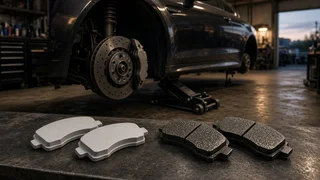
Compound | Typical strengths | Typical trade-offs | Good fit for; Ceramic | Quiet, low and light-colored dust, smooth feel, gentle on rotors | Usually costs more; may not suit sustained heavy heat as well as semi-metallic | Commuting, highway driving, most family use; Semi-metallic | Strong bite, handles heat well, tolerant of hard use | More dust, more noise possible, can wear rotors faster | Towing, heavy loads, mountain driving; Organic (NAO) | Quiet, soft feel, often inexpensive | Tends to wear faster and generate more dust; less heat tolerance | Light-duty use where low cost matters most; OE-style / OEM | Designed to match the original feel and noise behavior | Selection may be narrower; brand pricing varies | Owners who want factory-like braking
Many brands also sell "low-metallic" or blended formulations that sit between ceramic and semi-metallic. If a product description is vague, look for the stated compound, intended use and whether the pad is marketed for daily driving, severe duty or towing.
Hybrid and plug-in RAV4s
Hybrid and plug-in RAV4s use regenerative braking, where the electric motor slows the vehicle and recovers energy before the friction brakes do much work. As a result, pads on these models often last longer than on a comparable gas vehicle. The flip side is that lightly used brakes can develop problems from inactivity, such as rust on rotor surfaces or sticking caliper slides, so condition checks still matter even when pad material looks thick.
Toyota hybrids also use an electronically controlled brake system that can build pressure on its own, for example when a door opens or the vehicle powers up. Service procedures for these models typically include steps to put the brake system into a safe state before work begins. If you plan to replace pads yourself on a hybrid or plug-in, follow the procedure for your specific year rather than a generic gas-model guide.
When shopping, make sure the pad is explicitly listed for the hybrid or plug-in version. Do not assume a gas-model listing applies.
OEM versus aftermarket
Genuine Toyota pads are designed to reproduce the factory feel, noise behavior and wear characteristics. Reputable aftermarket brands offer a wider range, from budget pads to premium ceramic and severe-duty options. Either route can work well. The practical difference usually comes down to:
Noise control: better pads typically include shims, chamfers and slots that reduce squeal. Budget pads may skip some of these. Included hardware: some sets come with new abutment clips, shims and lubricant; others include only the pads. Wear indicators: many RAV4 pads use a small metal tab that squeals when the pad gets thin. Check that the replacement has one if your originals did. Warranty terms: these vary widely, and "lifetime" warranties often cover only the pads, not labor. Material markings: in the US, brake pads commonly carry markings that indicate copper content under state regulations. Low-copper or copper-free pads are now widely available.
Rotors and hardware: what to check alongside pads
New pads perform best on rotors in good condition. Rotors are the metal discs the pads clamp against. Before or during a pad job, check for:
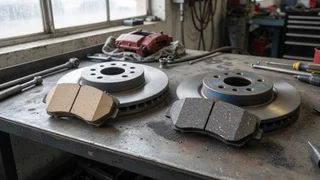
Thickness: every rotor has a minimum thickness, usually stamped on the rotor itself. A rotor at or below that limit should be replaced. Deep grooves, a raised lip at the outer edge, cracks or heavy rust. Vibration or pulsing in the brake pedal or steering wheel when stopping, which often points to uneven rotor thickness or pad deposits. Caliper slide pins that move freely and are properly lubricated. Abutment clips that are intact, not corroded or bent. Brake fluid that is at the correct level and not overdue for replacement according to the maintenance schedule.
Some owners resurface rotors; others replace them because many modern rotors have little material to spare. Either way, pads and rotors are matched per axle, and both sides of an axle should always be serviced together.
Signs your RAV4 needs new pads
A high-pitched squeal when braking, often from the wear indicator. Grinding or scraping, which can mean the pad material is gone and metal is contacting the rotor. Stop driving and inspect promptly. Visibly thin pad material when viewed through the wheel. Longer stopping distances or a softer pedal. The vehicle pulling to one side under braking, which can also indicate a caliper problem. A brake warning light, which can have several causes and should be checked rather than ignored.
DIY or shop installation
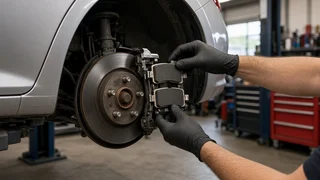
A front or rear pad replacement on a gas RAV4 is a common DIY job for owners with basic tools, a torque wrench and safe lifting equipment. Correct torque on caliper bolts and lug nuts matters, as does cleaning and lubricating contact points without getting lubricant on the friction surfaces. Hybrids and plug-ins add the brake system preparation step described above. Rear calipers with an integrated electric parking brake, used on some later models, may need a scan tool or a specific procedure to retract the piston. If any of these steps are unfamiliar, a shop installation is the safer choice.
After installation, new pads need to be bedded in: a series of moderate stops from speed that transfers an even layer of pad material onto the rotor. Follow the pad maker's instructions if they are provided. Until bedding is complete, braking may feel slightly different.
Buying checklist
Confirm model year, powertrain and trim, ideally with a VIN lookup. Decide which axle you need. Front pads usually wear faster than rears on gas models. For rear brakes on older vehicles, confirm discs rather than drums. Pick a compound that suits your driving: ceramic or OE-style for most daily use, semi-metallic for towing or heavy loads. Check whether shims, clips and wear indicators are included. Inspect rotors and decide whether they need replacement at the same time. On hybrids and plug-ins, make sure the part is listed for that powertrain and plan for the correct service procedure. Compare warranty terms, noting what they actually cover.