Toyota 4Runner Brake Pads: How to Choose the Right Set
The short answer
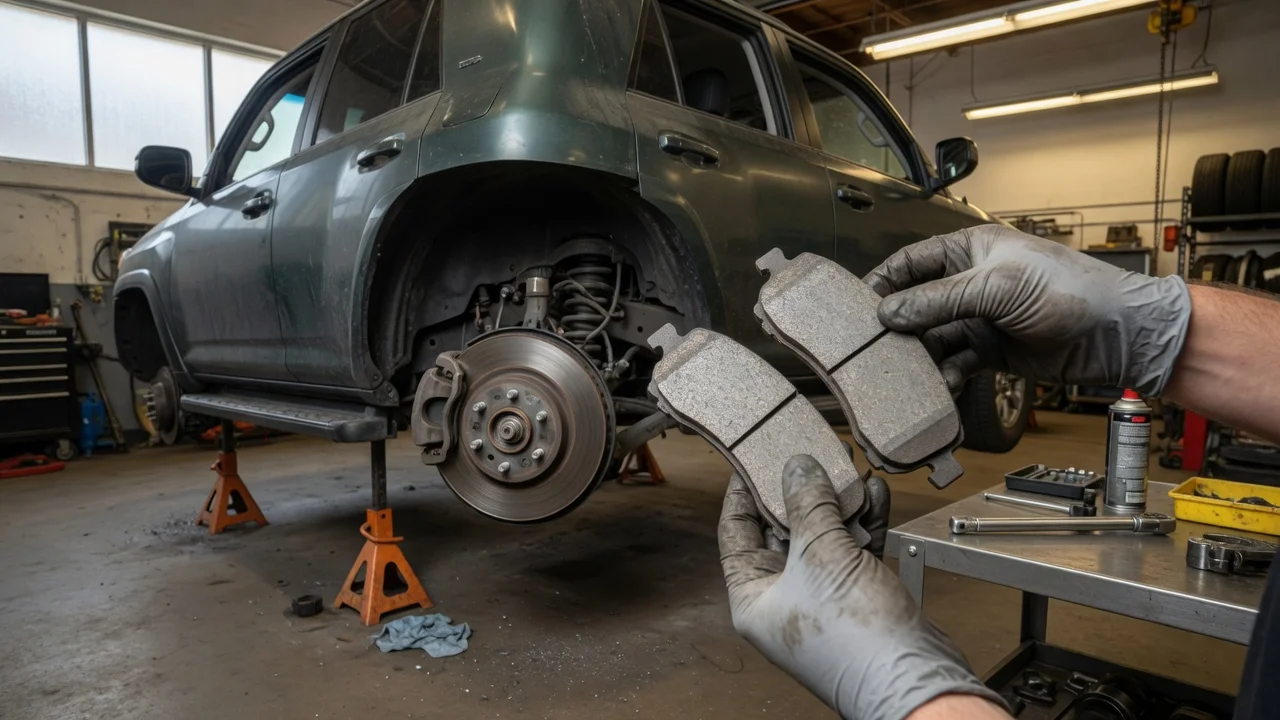
Pad choice for a Toyota 4Runner depends on three things: the model year, which identifies the generation and brake hardware; the axle, since front and rear pads are different parts sold separately; and how the vehicle is used. For mostly paved daily driving, a ceramic pad is the usual choice because it tends to produce less dust and noise. For frequent towing, heavy loads, or long steep descents, a semi-metallic pad is often preferred because it generally tolerates heat better. Before buying anything, confirm fitment against your exact model year, trim and, ideally, your VIN, because 4Runner brake hardware is not the same across all years.
Fitment depends on generation, year and axle
The 4Runner has been built across several generations, and brake components have changed between them. A pad that fits one generation should not be assumed to fit another, even if the vehicles look similar. Within a generation, fitment is usually consistent across trims, but that should still be confirmed rather than assumed, particularly for performance-oriented or off-road trims and for the redesigned generation introduced for the 2025 model year, which uses a new platform and offers a hybrid powertrain.
Some older 4Runners use drum brakes on the rear axle for some years or trims, which means they take brake shoes rather than rear pads. If you own an older model, check whether your rear brakes are disc or drum before ordering. No year-by-year breakdown of rear brake type was supplied for this article, so verify it with the parts catalog for your vehicle or by inspecting the rear wheels.
Model year: the most important single detail for matching pads. Axle: front and rear pads are separate parts and are usually sold as separate axle sets. Trim and powertrain: confirm whether your trim or powertrain uses different brake hardware, especially on newer models. VIN lookup: the most reliable way to resolve mid-year changes or market-specific differences. Market: vehicles sold outside North America may use different parts; confirm fitment for your region.
Choosing a pad compound
The compound is the friction material bonded to the pad's steel backing plate. It largely determines how the pad behaves in terms of noise, dust, heat tolerance and wear on the rotors (the discs the pads clamp against). The three main types are described below in general terms; individual products vary, and no test results comparing specific brands were supplied.
Ceramic: generally quieter and lower in visible dust, with smooth everyday braking. A common choice for commuting and highway driving. Semi-metallic: contains metal fibers that help with heat handling and consistent bite under heavier use such as towing or carrying loads. Often noisier and dustier, and may wear rotors faster. Organic (non-asbestos organic): typically softer and quiet, but generally less suited to heavy or high-heat use. Less common as an upgrade choice for a truck-based SUV.
Matching pads to how you drive
Think about the hardest braking your 4Runner regularly does, not the average trip. A vehicle that commutes all week but tows a trailer through hills a few times a year places very different demands on its brakes than one that never tows.
Daily driving and highway use: ceramic pads are a sensible default for low noise and cleaner wheels. Regular towing or heavy cargo: consider semi-metallic or a pad marketed specifically for towing and severe duty. Off-road use with mud, water or grit: a durable pad matters, and inspecting pads and rotors more often after rough trips is worthwhile. Larger or heavier aftermarket tires and wheels: added mass increases the work the brakes do; a heavier-duty pad may help, but larger tires can also call for brake upgrades beyond pads alone. Original-equipment feel: genuine Toyota or OE-equivalent pads aim to replicate factory behavior if you were satisfied with it.
What to check before and during replacement
Rotor condition: grooves, warping symptoms such as pedal pulsation, or rotors below their minimum thickness mean they should be resurfaced or replaced along with the pads. The minimum thickness is usually stamped on the rotor or listed in the service manual. Replace by axle: pads should be replaced on both sides of the same axle at once to keep braking balanced. Hardware: new clips, shims and anti-rattle hardware help prevent noise; check whether your pad set includes them. Wear indicators: many pads include a small metal tab that squeals when the pad is nearly worn; a new set should include indicators if your vehicle uses them. Bedding-in: most manufacturers specify a break-in procedure to transfer friction material evenly onto the rotor. Follow the instructions supplied with your pads. Torque values and procedures: use the figures in the service manual for your model year; they were not supplied here and should not be guessed.
Signs your pads need attention
A high-pitched squeal from the wear indicator, grinding noises, a longer stopping distance, a pull to one side under braking, or a brake warning on the dashboard are all reasons to inspect the brakes promptly. Grinding in particular can mean the friction material is gone and the backing plate is contacting the rotor, which damages the rotor and reduces braking performance. Pad wear rate varies widely with driving style, load and terrain, so there is no single mileage interval that applies to every 4Runner.
Information not covered here
No specific part numbers, prices, pad thickness measurements, brand comparisons or independent test results were available for this article. For exact fitment, rely on a VIN-based parts lookup or a Toyota parts counter, and check the service manual for your model year for specifications such as minimum pad and rotor thickness and fastener torque. If you are unsure about the condition of the calipers, brake lines or fluid, have the system inspected rather than replacing pads alone.