Towing a Car with a CVT
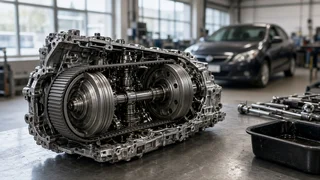
Towing a car with a CVT transmission presents a different risk profile than moving a vehicle equipped with a conventional geared automatic or manual gearbox. The continuously variable design uses a belt or chain running between adjustable pulleys, and that internal friction depends on the engine-driven pump for lubrication. If the drive wheels rotate while the engine is off, those spinning components may turn without adequate fluid pressure. That can generate concentrated heat and wear even over a modest distance. The essential concern is not the tow bar or hitch capacity, but how the transmission type reacts to being rotated from the wheels. Flat towing, dolly towing, and full-trailer transport each expose the CVT to different conditions, so the safest choice depends on which wheels are moving and how the vehicle is supported.
Essential answer
The direct answer is that many CVT-equipped vehicles should not be flat towed with the drive wheels on the ground unless the manufacturer specifically approves recreational towing for that model. When the engine is off, the transmission pump is also off. Rotating the output side through the wheels can spin internal parts without the pressurized fluid supply that normally cools and lubricates the belt, pulleys, and bearings. Even though the transmission is in neutral, residual motion through the driveline may create friction points that are not protected under non-running conditions. That is why the transmission type changes the answer compared with a manual gearbox or a conventional automatic that may have a rear pump or an approved flat-towing procedure.
A safer general approach is to carry the vehicle on a full trailer or use a tow dolly that lifts the drive wheels. If only the rear wheels or front wheels are driven, lifting those wheels removes the main source of rotation from the CVT. Flat towing with all four wheels rolling is the method that most directly risks unlubricated rotation. Some vehicles may permit flat towing only after specific steps such as placing the transmission in a prescribed position, disconnecting a battery, or following a speed and distance limit shown in the owner's manual. Without that confirmed vehicle-specific approval, the conservative answer is to assume a CVT-equipped car should be transported with its drive wheels off the ground.