Tire Bead Sealer Substitutes (Silicone and Others)
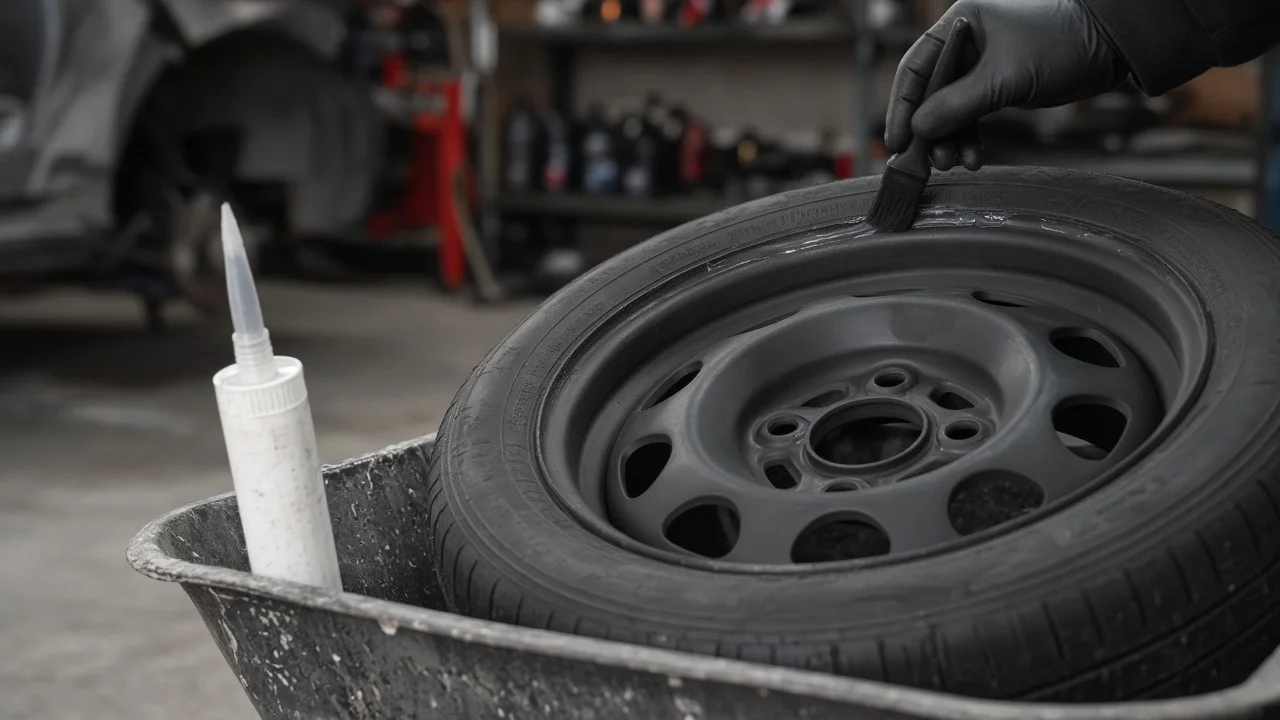
A slow rim leak often traces back to the tire bead, where the rubber edge meets the wheel flange. Corrosion, light pitting, or dried mounting lubricant can open a path for air even when the tire size, load index, and speed rating are correct for the vehicle. Drivers looking for a substitute for tire bead sealer sometimes consider silicone because it is already on the shelf, but its working properties differ from a dedicated bead sealer. Understanding what the material must do at that interface helps separate a practical temporary fix from a repair that may fail under inflation pressure and heat.
Essential answer
Sealing a tire bead with silicone can sometimes stop a minor rim leak temporarily, but it is not a true substitute for tire bead sealer. A purpose-made bead sealer stays somewhat flexible after it skins over, fills shallow flange pitting, and is formulated not to attack the rubber seating area. Common RTV silicone cures into a rubbery film, yet it may release acetic acid during curing, retain too much thickness, or peel away from a smooth wheel surface under tire flex and heat cycling.
Before using any alternative, inspect the tire and wheel carefully. The real problem may be low inflation pressure, a damaged valve stem, a cracked wheel, or a tire with tread depth worn far enough to affect bead stability. Confirm the tire matches the vehicle placard and drivetrain compatibility requirements, because an incorrect size or load rating can also produce bead stress. Silicone spread thinly over a clean, dry bead seat may hold long enough for testing, but a persistent leak usually calls for proper bead sealing compound and wheel preparation.