Timing Chain Guides: Wear Signs and Replacement Cost
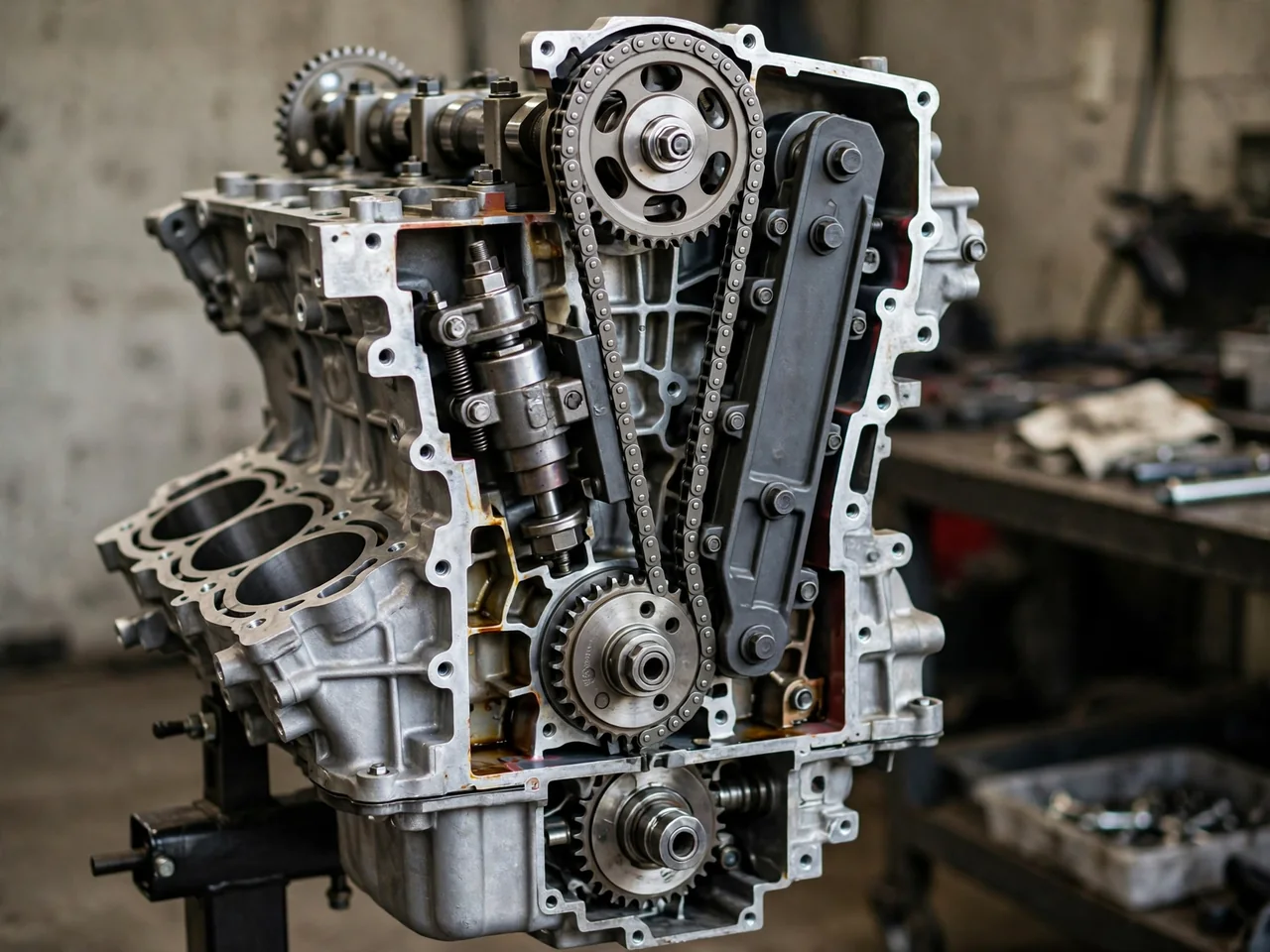
A timing chain guide keeps the chain on a controlled path as it links crankshaft rotation to camshaft timing. Drivers looking up a guide timing chain typically want wear signs, inspection clues, and what timing chain guide replacement involves. Timing chain and guides work with a tensioner and sprockets, and construction varies by engine, so diagnosis and cost depend on the specific vehicle.
How Timing Chain Guides Support the Chain
Inside a chain-driven engine, the timing chain transfers rotation from the crankshaft sprocket to the camshaft sprockets so valves open and close with piston travel. Guide rails sit along that route and keep the chain from wandering, slapping, or jumping teeth as speed and load change. A timing chain guide does not drive the cams; it supports and shapes the chain's path so camshaft timing stays consistent. Layouts differ: some engines use several rails while others use a simpler arrangement on each side of the chain.
The chain, sprockets, guide rails, and chain tensioner work as a set of timing components. Sprockets set the mechanical ratio, the chain carries motion, and the tensioner takes up slack so the chain stays seated. Guides present a stable surface the chain can slide against. Some guide surfaces use a wear-resistant polymer or similar guide material on a metal or composite body; other engines use different constructions. The timing cover hides this assembly, so owners cannot judge guide condition from outside without engine-specific service information.
How Guide Surfaces Wear or Break
Guide surfaces wear because the chain rubs them continuously while the engine is hot. Repeated contact polishes, grooves, or thins the facing, and heat plus material aging can make polymer faces brittle, cracked, or chunked. A timing chain guide that has lost its facing no longer holds the chain on a tight path. Inadequate lubrication, low oil pressure, dirty oil, or a weak chain tensioner can raise sliding stress and allow extra slap, accelerating that damage. Wear often starts on the surfaces that see the most chain load.
Once a rail breaks or the facing peels, the chain can whip, skip, or ride off its intended line. Fragments of guide material may travel with oil through galleries and screens, which can affect lubrication elsewhere. Damaged timing chain guides are more than a noise issue: uncontrolled chain movement can disturb camshaft timing and scatter debris inside the engine. Guide life still depends on engine design, operating conditions, oil-change habits, and maintenance history. There is no universal replacement mileage, so condition is judged by inspection rather than a calendar interval.
Symptoms That Warrant Timing-System Inspection
An engine rattle at cold start, a metallic slap that fades as oil pressure builds, or a noise that continues while driving can all point toward the timing assembly. Those sounds still cannot identify a failed timing chain guide on their own. Accessory belts, a worn tensioner pulley, valvetrain lash, and exhaust leaks can produce similar rattles. Rough running, hard starting, or a warning light may accompany a timing problem, yet those symptoms also have many other causes. Treat them as reasons for inspection, not as proof the guides have broken.
Useful notes for a shop include when the noise happens, whether it changes with temperature or idle, which warning lights appeared, and what oil service was done recently. Record that history without removing the timing cover or approaching moving parts. If rattling is severe and persistent, an oil-pressure warning appears, or the engine suddenly runs poorly, stop safely and arrange professional assessment. Continued driving with a loose chain can allow further guide damage or timing shift. That documentation helps a technician decide whether diagnostic labor should focus on the timing chain and guides or on other systems first.
How a Shop Confirms Guide Damage
A technician starts with the symptom history, then checks oil level and condition because sludge or thinning oil can starve the chain tensioner and the guide faces. Scan data and freeze-frame information may show misfires, cam-crank correlation faults, or oil-pressure concerns, but a fault code is evidence to interpret, not proof a guide has failed. Manufacturer-dependent codes still need vehicle-specific confirmation. Engine-specific service information tells the shop how that timing layout is built and which tests apply. Unusual sounds plus a stored code can justify further inspection; they do not, by themselves, confirm a broken timing chain guide.
Confirmation often requires access to concealed timing components behind the timing cover so the chain, guides, and tensioner can be inspected together. A worn rail, missing facing, cracked body, stretched chain, or weak tensioner may appear only after that cover is removed. If debris is suspected or camshaft timing looks shifted, the shop may add oil-pressure testing, further internal inspection, or checks for damage downstream of the galleries. Those extra steps assess lubrication concerns and whether fragments have already caused harm. Until that inspection is done, the cause remains a possibility rather than a confirmed guide failure.
What Timing Chain Guide Replacement Involves
Timing chain guide replacement, at a high level, means gaining access to the timing assembly, inspecting what is worn or broken, replacing confirmed damaged components, and verifying stable operation afterward. For owners, a useful timing chain replacement guide is that same outline, because the work uses precise timing alignment and specialized procedures that belong in a shop. Replacing timing chain guides is not a swap of one rail in isolation when neighboring parts share the same access. After inspection, the technician decides which pieces of the set come out based on condition and the engine's service procedure.
Shops often recommend associated timing components when inspection shows matching wear or when the engine-specific procedure treats the chain, tensioner, and guides as a matched group that shares labor. Replacing only a broken rail while leaving a stretched chain or weak tensioner can return the same slap. The estimate should identify which guides are included, which other timing parts are proposed, which seals and fluids are in the job, and any additional diagnostic work already performed or still needed. Approval should rest on that list so the owner knows what the job covers before work begins.
What Determines Timing Chain Guide Replacement Cost
Timing chain guide replacement cost depends on engine layout, access to the timing cover, local labor rates, and how much damage inspection finds. A cramped accessory stack can add hours of access labor even when the rails themselves are inexpensive. Diagnosis is a separate line from parts and from the access and installation labor that follows. Seals and fluids belong on the estimate because the cover must be resealed and the lubrication system refilled. Split those categories so a single bottom-line number does not hide where the money goes.
Inspection can expand the job if the chain is stretched, sprockets are worn, debris is present, or internal damage appears after the cover is off. Those findings are why shops ask for approval terms before extra work proceeds. When requesting an itemized estimate, give the vehicle year, make, model, engine, and a clear description of noises, warning lights, and recent oil service. That information lets the shop pull the correct procedure and quote diagnostic labor realistically. Ask what is included, what would trigger additional authorization, and how camshaft timing will be verified after timing chain guides replacement.