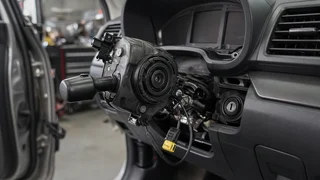
Subaru Outback 2009 steering angle sensor

The steering angle sensor in a 2009 Subaru Outback is a small but important input for stability control, traction control, and headlight aiming. When it drifts, fails, or loses its zero point, the dashboard can light up and the wagon may feel oddly resistant during cornering. Understanding how this sensor reports steering wheel position helps owners separate a simple relearn procedure from a component that genuinely needs replacement. Because the 2009 Outback uses the sensor’s signal to interpret driver intent, even subtle errors can alter braking and throttle behavior.
Essential answer
The 2009 Subaru Outback steering angle sensor measures the rotation and position of the steering wheel so the vehicle stability system can compare the driver’s intended direction with the car’s actual yaw and wheel speeds. It sits within or near the steering column assembly, often as part of a clockspring or contact module. A failed or uncalibrated sensor commonly triggers the traction control and stability warning lamps. The core issue is not always the sensor itself; a recent alignment, lifted ride height, or work around the column can push the stored center point outside the acceptable range.
A useful starting point is to treat the sensor as a reporter rather than a stand-alone fault. If the steering wheel is off-center after wheel alignment service, the sensor may be reading straight-line travel as a constant turn request. Ball joint play or worn mounting points can also introduce small steering wander that the module tries to correct. Before condemning the part, the sensor’s zero calibration and the mechanical condition of the front end should be checked together. Proper vehicle support and safe inspection allow confirmation of joint play, ride height consistency, and mating fastener condition.