Steering Linkage Arms: Identification and Fitment
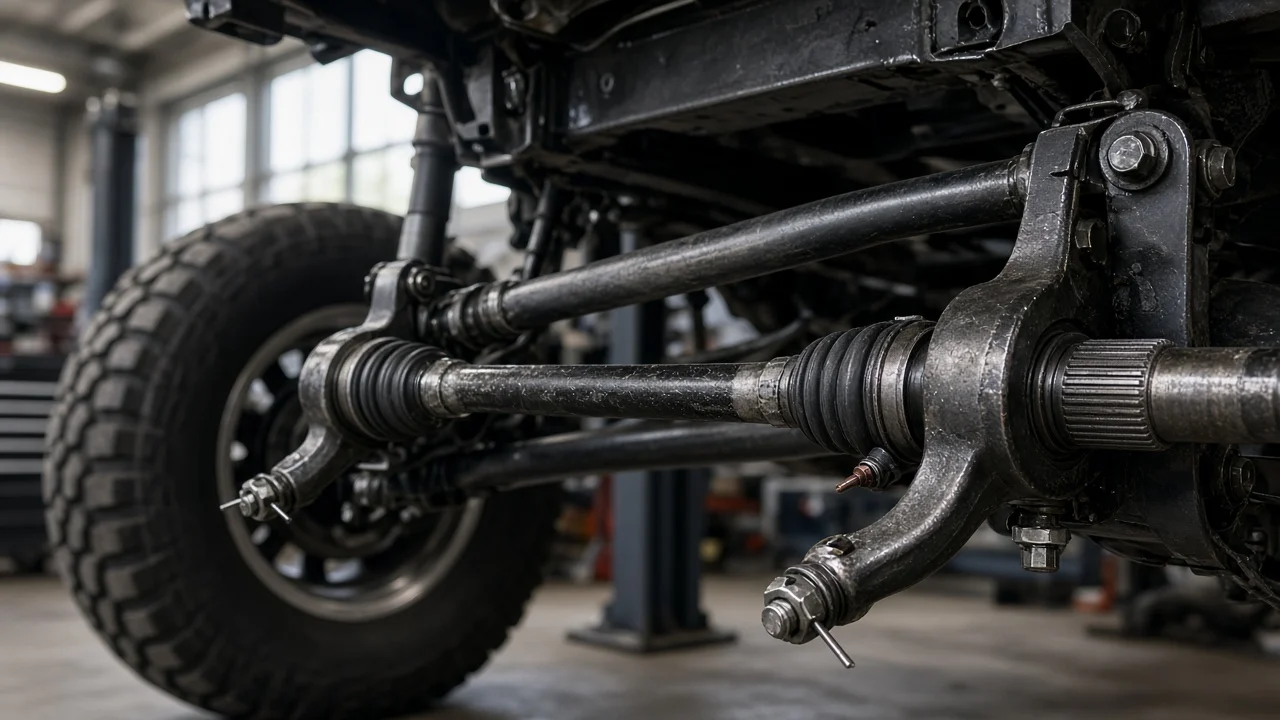
A steering linkage arm transfers motion from the steering gear to the front wheels. Buying the wrong one can leave the steering wheel off-center, alter the steering geometry or simply refuse to install. Before ordering, it helps to know which arm your vehicle actually uses, where it mounts and which details decide fitment. This guide covers identification, signs of a worn arm and the checks to make before and after replacement.
Which steering arm does your vehicle use?
The phrase steering linkage arm usually refers to one of three parts. The pitman arm is splined to the output shaft of a steering gearbox and swings as the wheel turns. The idler arm is bolted to the frame on the opposite side and supports the other end of the center link, following the same arc as the pitman arm. The steering arm, sometimes called a knuckle arm, connects the tie rod end to the steering knuckle or spindle. On many vehicles it is cast or forged as part of the knuckle rather than sold separately.
The quickest way to tell which arms you have is to look at the steering gear. A box-type gear mounted on the frame rail, common on older trucks, full-size SUVs and some vans, points to a parallelogram or drag link system with a pitman arm and often an idler arm. A rack-and-pinion assembly, used on most modern cars and crossovers, has no pitman or idler arm; the tie rods attach directly to steering arms on the knuckles. The correct replacement is the one that matches your exact steering layout, mounting points and drivetrain, not a generic part that looks similar.
How the linkage arms move the wheels
In a parallelogram system, turning the steering wheel rotates the gearbox sector shaft, which swings the pitman arm. The pitman arm pushes and pulls the center link, the idler arm keeps that link level as it moves, and inner and outer tie rods carry the motion to the steering arms on each knuckle. Many solid-axle 4WD trucks use a different arrangement: the pitman arm drives a drag link to one knuckle, and a tie rod connects the two knuckles.
Each arm sits within a set geometry. Its length, the angle at which it hangs and the height of its tapered stud determine how far the wheels turn for a given input and how the linkage behaves as the suspension moves. An arm that is too long, too short or set at the wrong height can change the steering ratio, cause bump steer, where the wheels steer themselves over bumps, or leave a steering wheel that no longer sits straight. That is why a part that bolts on is not automatically a correct fit.
Details that decide whether an arm fits
Year, make and model are only the starting point. The same truck can use different pitman arms depending on 2WD or 4WD, manual or power steering, heavy-duty or towing packages, and the gearbox fitted during that production run. Pitman arms also differ in spline count and in whether the splines include a master or blind spline that sets the arm's orientation. Idler arms vary in bolt pattern, bracket shape and whether the pivot uses a rubber bushing or a bearing. Knuckle-mounted steering arms differ by side, taper size and the angle of the eye that receives the tie rod end.
Ride height changes the picture further. Lifted vehicles often need a drop pitman arm to bring the drag link back toward its original angle, and lowered vehicles may use different steering arms or tie rod ends to limit bump steer. These parts are designed for specific lift or drop ranges, so a stock arm on a modified vehicle, or a drop arm on a stock one, can create the very handling problems it was meant to solve. If the suspension has been modified, the kit maker's parts list is usually more relevant than the factory catalog.
The most reliable fitment check combines a VIN lookup or production date, the part number stamped or cast on the old arm when it is legible, and a side-by-side comparison of length, taper, splines and bolt holes once the old part is off.
Checking and replacing a linkage arm
Inspect the linkage with the vehicle sitting on its wheels, since steering parts should be checked under normal load. With the transmission in park and the parking brake set, have a helper rock the steering wheel back and forth a short distance while you watch each joint and pivot. Visible lag between connected parts, a knock you can feel by hand, a torn boot, or a pitman or idler arm that moves up and down at its pivot all indicate joint play worth further diagnosis. Bent arms, cracks, fresh rub marks and a steering wheel that sits off-center after an impact are also warning signs.
If you need to raise the vehicle, use proper vehicle support: a jack at the manufacturer's lift points and rated jack stands on solid structure, never the jack alone. Pitman arms are normally removed with a dedicated puller because they are pressed onto tapered splines; striking or prying against the gearbox can damage it internally. Tapered studs need clean, dry seats, the correct new hardware and the fastener specification from the service information for your vehicle, followed by any cotter pin or locking device the design calls for. Do not heat, bend or straighten a steering arm; replace it if it is damaged.
When fitting a pitman arm, center the gearbox and align the arm with the master spline or index marks so the steering wheel and front wheels agree. After any linkage arm replacement, have the wheel alignment checked. Toe in particular can shift, and an off-center steering wheel is a common sign that adjustment is needed. Confirm every fastener is secured, then test-drive at low speed in a safe area before normal use.
When to rely on factory data or a shop
This guide explains how linkage arms are identified, but it cannot confirm which part your specific vehicle needs, how much play your joints can safely have or which tightening and alignment values apply. Those depend on the manufacturer's service information, your VIN and any modifications. Parts catalogs sometimes list several arms for one model, and only the production date, option codes or a physical comparison will settle it. Where the steering arm is integral to the knuckle, a simple arm swap becomes a larger job involving brake and hub components.
Get professional help if free play is increasing, steering clunks, the vehicle wanders, a pull develops after hitting a curb or pothole, or any arm looks bent or cracked. Steering faults affect control of the vehicle, so have these signs inspected before further driving. A suspension and steering shop can measure play correctly, confirm the right part and complete the alignment afterward.