Steering Angle Sensor Repair: What It Involves and What to Expect
Direct Answer: Scope of the Repair
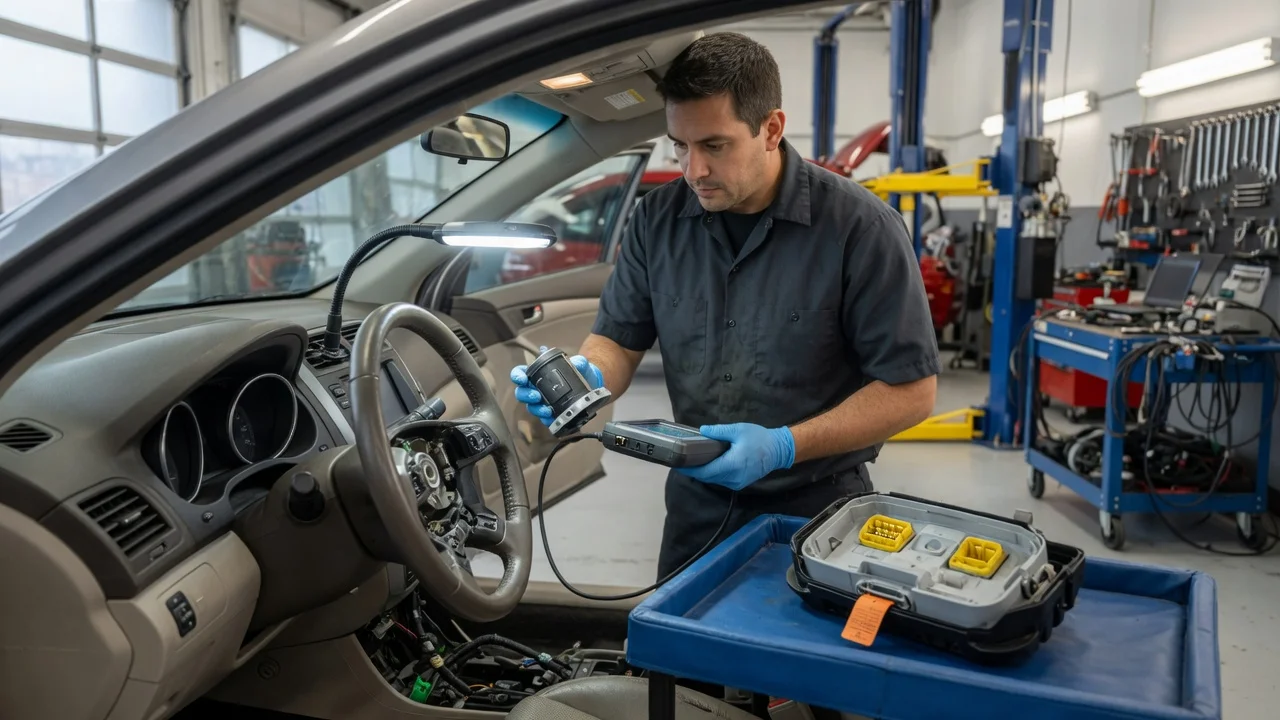
Steering angle sensor repair typically means replacing or recalibrating the electronic sensor that measures steering wheel position. The sensor itself is rarely opened and rebuilt; the widely accepted service procedure is to remove the faulty unit and install a new or factory-remanufactured part, then perform a calibration routine so the stability control, electric power steering, and driver assistance systems receive correct data. A complete repair also includes clearing fault codes, verifying communication with other modules, and test-driving to confirm that steering-dependent functions operate normally.
What the Sensor Does and Why Repair Requires Calibration
The steering angle sensor reads the rotational position, direction, and rate of the steering wheel. This data is shared with the anti-lock brake system, electronic stability control, adaptive headlights, lane-keeping assistance, and other features. The sensor may be a standalone component on the steering column, or it may be integrated into the clock spring, steering column control module, or electric power steering rack. Because the system compares steering angle with yaw rate and wheel speed, a new or disturbed sensor must be taught its zero point and end stops through a scan tool calibration procedure.
Recognizing a Possible Steering Angle Sensor Fault
A common first indication is an illuminated stability control, traction control, or power steering warning light. Diagnostic trouble codes related to steering angle signal plausibility, internal sensor failure, or calibration may also be stored. Some vehicles activate a limp mode that reduces power steering assistance or disables stability control. A fault code is evidence that directs diagnosis; it does not by itself prove the steering angle sensor is defective, because wiring, connector corrosion, low battery voltage, or a recently performed wheel alignment can produce similar codes.
Diagnostic Checks Before Repair
Scan all modules for fault codes and record freeze-frame data. Check battery and charging voltage; low or unstable voltage can create false steering sensor codes. Inspect the wiring and connector at the steering column for damage, looseness, or corrosion. Verify whether the steering wheel is centered and whether recent alignment, suspension, or column work occurred. Use a scan tool to view live steering angle data while turning the wheel slowly from lock to lock. Compare the displayed angle with physical wheel position and look for dropouts, stuck values, or implausible readings.
If live data is smooth and matches wheel movement, the fault may be a lost calibration rather than a failed sensor. In that case, performing the manufacturer-specific calibration procedure may resolve the warning without part replacement. If the signal is erratic, absent, or stuck, replacement is the likely repair path. Stop driving and seek professional diagnosis if steering assistance is reduced, the vehicle pulls unpredictably, or multiple brake and stability warnings appear together.
Repair Options and Procedure
The least invasive repair is recalibration. This applies when the sensor is functional but its zero point or travel limits are no longer recognized, often after an alignment, battery disconnect, or steering column work. Calibration requires a compatible diagnostic tool and should follow the vehicle manufacturer's exact sequence.
Component replacement is required when the sensor itself is faulty. Depending on vehicle design, you may replace a separate steering angle sensor, a clock spring assembly with an integrated sensor, or an entire steering column module. After installation, the new component must be coded or initialized to the vehicle, followed by calibration and a road test to clear learned offsets.
Steering Angle Sensor Repair Cost Factors
Repair cost varies with labor time, part design, and vehicle type. A standalone sensor on an accessible steering column is generally less expensive to service than a unit integrated into the clock spring or steering rack. Diagnostic time, calibration, and any required coding add to the total. On some vehicles the sensor is sold in a repair kit with the clock spring or column housing, which raises parts cost but reduces the chance of repeat labor. A wheel alignment is not always part of steering angle sensor repair, but if suspension or steering work has disturbed alignment, it should be corrected before final calibration.
When a Repair Kit Is Used
A steering angle sensor repair kit is offered for applications where the sensor is damaged by a failed clock spring ribbon, worn bearing, or broken column contact assembly. The kit may include the sensor, mounting hardware, protective covers, and sometimes a new steering column module. Kits are model-specific and should be matched by vehicle identification number or original part number. Using a kit is practical when the surrounding components are known to wear together, because it restores consistent signal quality without reusing aged parts.
After Repair and Verification
After replacement or recalibration, the steering wheel must be centered and the sensor end stops learned. A scan tool should show an angle near zero when driving straight on a level surface. Stability control, traction control, and steering assistance warnings should clear and remain off. A test drive should include moderate cornering and, where safe, activation of stability control to confirm the system no longer misreads steering input. If warnings return or steering feels inconsistent, further diagnosis of wiring, battery supply, or related modules is required.