What Causes Steering Angle Sensor Failure
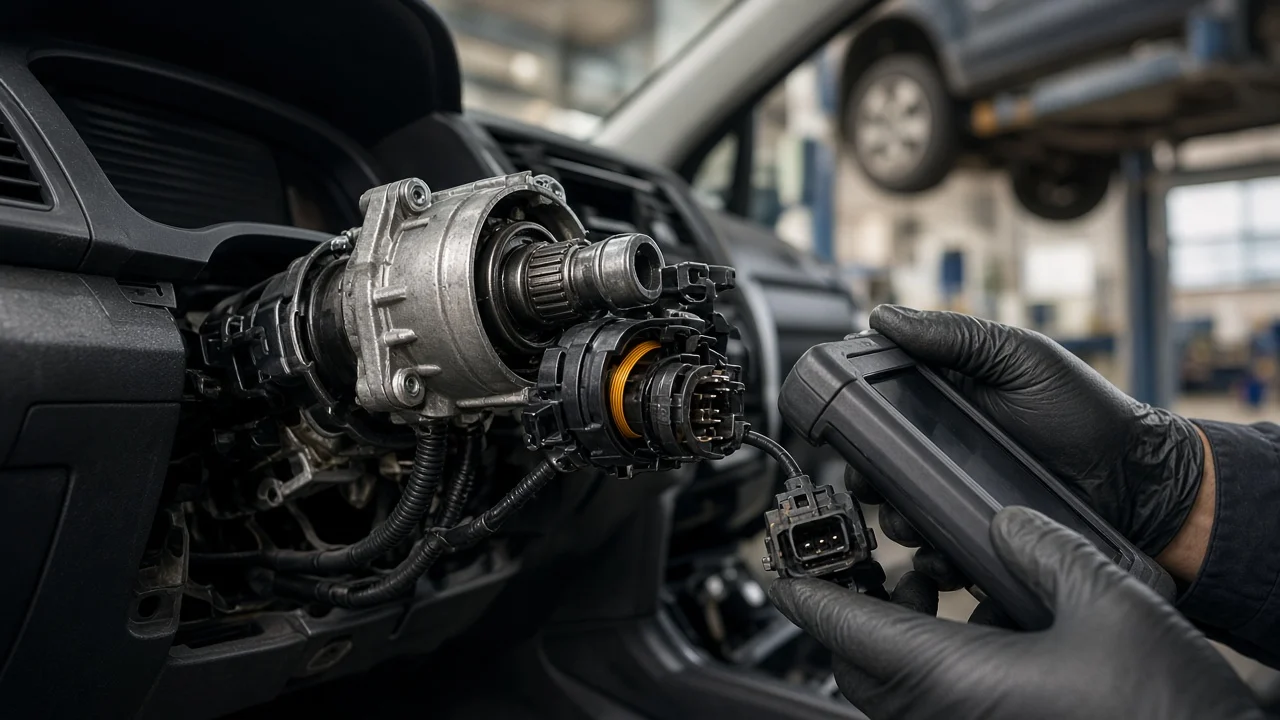
A steering angle sensor that begins to fail can change how stability control, electric power steering, and advanced driver assistance respond, often before a warning light appears. Drivers may notice uneven steering effort, a traction light that flickers, or a steering wheel that feels slightly off-center. Understanding what causes a steering angle sensor to go bad helps separate simple calibration or alignment issues from internal sensor faults, water intrusion, or wiring problems that require closer diagnosis.
Essential answer
The most common causes of steering angle sensor failure are physical wear inside the sensor, contamination from moisture or debris, electrical stress, and loss of calibration after steering or suspension work. Because the sensor usually lives in the steering column or clock spring area, it is exposed to heat cycles, vibration, and movement every time the wheel turns. Over years of use, the internal contact paths or magnetized components can degrade enough that the signal becomes erratic or drops out.
Mechanical damage outside the sensor also matters. A hard impact, a bent steering component, or damaged mounting points can overload the sensor housing or disturb the reference position it learned. In some cases, the sensor does not fail internally but simply reports a value that no longer matches true wheel position after alignment changes. A fault code may point toward the sensor, yet the actual cause can be a wiring connector, a weak ground, or another module supplying unstable voltage.
How it works
A steering angle sensor measures the position and rate of rotation of the steering wheel so the vehicle can compare driver intent with actual yaw and wheel-speed behavior. Many sensors use optical discs, magnetic rings, or contact elements that generate a changing signal as the column rotates. The stability control module reads this signal constantly and uses it to decide when the car is understeering, oversteering, or sliding in a way that requires brake intervention.
The practical effect is that the sensor influences more than traction control. Electric power steering may adjust assist based on steering angle, adaptive headlights may aim into a curve, and lane-keeping systems may use the signal to confirm direction. When the reading is missing or implausible, the control module commonly disables functions that depend on it and turns on a warning. The car may still drive, but its electronic safety net is reduced.
Strengths, limitations and suitability
The location of the steering angle sensor gives it a good view of driver input but also exposes it to conditions that shorten its life. Cabin heat, cold-soak cycles, and voltage spikes during engine start can stress the electronics. Vehicles driven in wet climates may develop condensation inside the column area, while cars with sunroof drains or windshield leaks can direct water toward connectors and sensor circuitry. Even small amounts of corrosion can create intermittent readings.
Suitability depends on how the vehicle is used and serviced. A car that is driven gently and kept dry may retain a healthy sensor for many years, while one that has repeated suspension repairs, collision work, or steering rack replacement may need recalibration more often. The sensor is not usually a high-failure wear item like brake pads, but its dependence on clean power, clean connectors, and an accurate steering reference makes it sensitive to events elsewhere in the chassis and electrical system.
Procedure
Before replacing a suspected sensor, check the basics that affect its operating conditions. Confirm that the steering wheel is physically centered with the front wheels straight, that tire pressures are balanced, and that ride height is not altered by sagging springs or mismatched components. Inspect the connector for moisture, bent pins, or loose fit, and verify that the wiring harness is not strained near the column. Joint play or a loose steering shaft can create an unstable reference that mimics a bad sensor reading.
If a sensor is replaced or the steering system is disturbed, the new or existing unit usually must be calibrated so the module learns its straight-ahead position. Manufacturer procedures vary, and some require a scan tool to reset learned values and perform a steering angle sensor initialization. Without proper calibration, the vehicle may store a new fault or disable stability functions even with a healthy component installed.
Diagnosing a problem
A steering angle sensor fault code should not immediately condemn the sensor. Start by reading the freeze-frame data and any related codes for wheel speed, yaw rate, or steering torque. If the reported angle is fixed at an impossible value or jumps suddenly while the wheel is still, an internal signal problem or voltage supply issue is more likely. If the angle drifts only after turning, inspect for mechanical play, a loose column coupling, or a clock spring that is binding.
Intermittent symptoms can often be traced to a connector that loses contact when the column tilts or when cabin temperature changes. Operating the tilt and telescoping adjustment while watching live data may reveal a repeatable dropout. A vehicle that pulls, shows a brake-system warning, or switches off stability control unexpectedly should be stopped and inspected before continued driving because the electronic chassis controls that depend on steering angle may no longer be available.