Start-Stop Car Battery: What It Is, How It Differs and How to Choose One
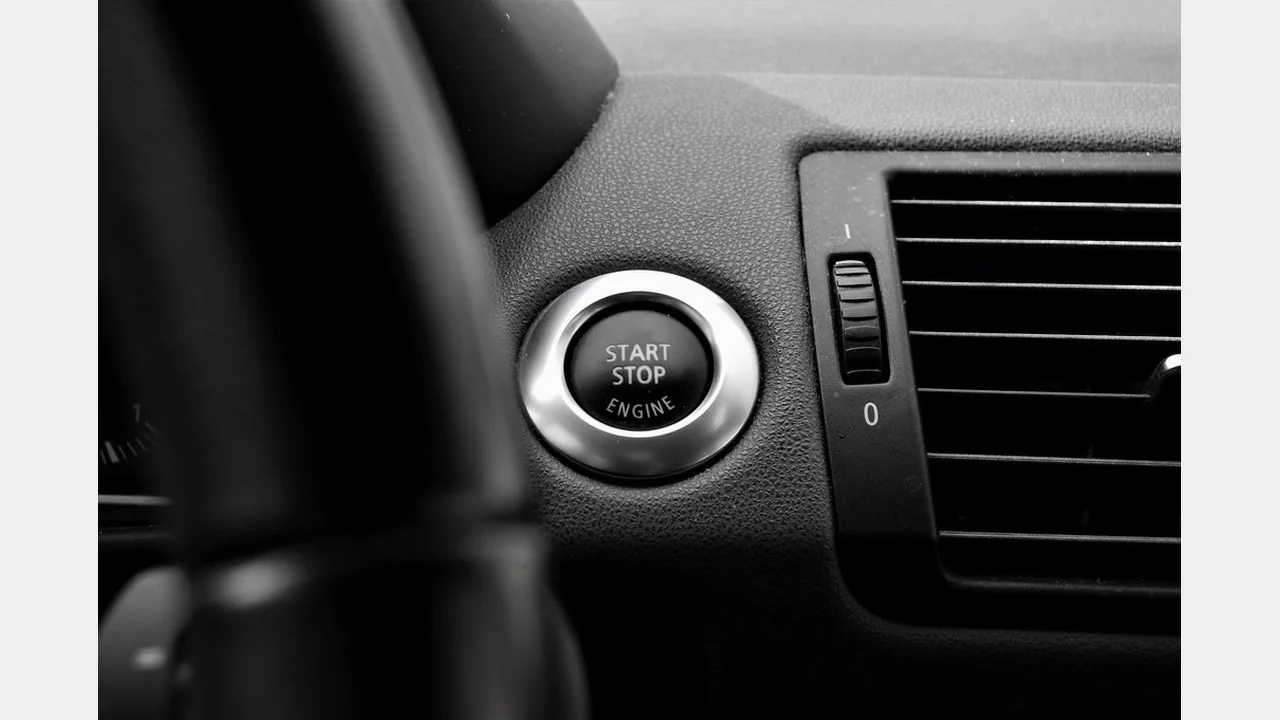
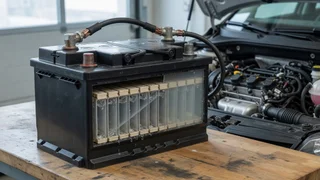
A start-stop battery is a 12-volt automotive battery built for vehicles whose engine shuts off automatically at stops and restarts when the driver releases the brake or presses the accelerator. Compared with a conventional flooded lead-acid battery, it is designed to survive many more starts and to recover from repeated partial discharge. Most start-stop batteries are either AGM (absorbent glass mat) or EFB (enhanced flooded battery) units. The key qualification is that the correct type depends on the specific vehicle. A car that left the factory with an AGM battery generally needs AGM again. A car fitted with EFB can usually take EFB or, in many cases, an AGM upgrade. Fitting a standard flooded battery in either case usually shortens battery life and can disable the start-stop function.
Why Start-Stop Vehicles Need a Different Battery
In a conventional car, the battery mainly cranks the engine once per trip. After that, the alternator powers the electrical system and recharges the battery. In a start-stop car, the engine may shut down many times during a single urban drive. Each time it does, the battery alone supplies lights, climate control fans, infotainment, driver-assistance systems and control modules. Then it has to crank the engine again, often within seconds or minutes.
This pattern is called partial-state-of-charge cycling. The battery rarely sits at full charge and is repeatedly drawn down and topped up. Standard flooded batteries tolerate this poorly. Their plates tend to sulfate, and their capacity fades faster. Start-stop batteries use construction changes that resist this wear and accept charge more readily when the alternator puts current back in.
AGM vs EFB vs Standard Flooded Batteries
Both start-stop battery types are lead-acid designs, but they are built differently and aimed at different levels of electrical demand.
Battery type | Construction | Typical use | Key characteristics; AGM (absorbent glass mat) | Electrolyte held in fiberglass mats between tightly packed plates; sealed, valve-regulated | Vehicles with more demanding start-stop systems, regenerative braking or heavy electrical loads | Strongest resistance to deep cycling, accepts charge quickly, spill-resistant, usually the most expensive option; EFB (enhanced flooded battery) | Liquid electrolyte like a standard battery, with reinforced plates and additives or scrim material to resist wear | Entry-level or less demanding start-stop systems | Better cycling durability than standard flooded, generally less costly than AGM, not as robust as AGM under heavy cycling; Standard flooded | Conventional plates in free liquid electrolyte | Vehicles without start-stop | Fine for one start per trip, wears quickly under repeated start-stop cycling
As a general rule, you can stay with the same type the vehicle came with or move up from EFB to AGM. Moving down is the risky direction. Going from AGM to EFB, or from either type to a standard flooded battery, is not recommended. Always confirm against the owner's manual or the battery maker's fitment guidance for your specific model year, engine and trim. Requirements can change between generations of the same nameplate.
Battery Management and Registration
Many start-stop vehicles use a battery management system. Typically, an intelligent battery sensor is mounted on or near the negative battery terminal. It monitors current, voltage and temperature and reports the battery's state of charge and health to the vehicle's control modules. The car uses this information to decide when start-stop is allowed and how hard the alternator should charge.
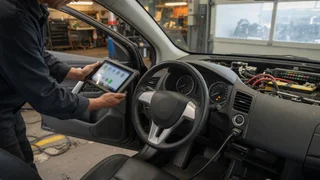
On some vehicles, particularly many European models and some others, the new battery must be registered or coded to the car after replacement. This step tells the management system that a fresh battery is installed. Depending on the vehicle, it may also record the battery's type and capacity. If this is skipped where it is required, the charging strategy may continue to treat the new battery as an aged one. That can lead to overcharging or undercharging, shorter battery life and start-stop staying disabled. Whether registration is needed varies by manufacturer and model, so check the service information for your vehicle. A shop with a suitable scan tool can perform it.
Signs a Start-Stop Battery Is Weakening
Start-stop batteries often give an early warning that standard batteries don't. The car simply stops using the start-stop feature. Because the management system will not shut the engine off unless it is confident the battery can restart it, a weakening battery may show up first as reduced auto-stop activity.
Start-stop rarely or never activates, even in warm weather with accessories off; A dashboard message indicating start-stop is unavailable or that the battery is low; Slower cranking, especially after the car sits overnight or in cold weather; Electrical glitches during auto-stop, such as dimming displays or resetting accessories; A battery or charging warning light
Keep in mind that start-stop also pauses for reasons unrelated to battery health. Common triggers include a cold engine, high climate-control demand, steep inclines, short trips or the driver turning the feature off. Reduced activity on its own is a clue, not a diagnosis.
When the Problem Isn't the Battery
Symptoms that look like a failing start-stop battery can come from the charging system or wiring. Replacing the battery without checking these areas can leave the real fault in place and damage the new battery.
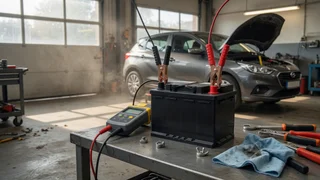
Charging output: A weak alternator or a fault in the charge-control strategy can leave the battery chronically undercharged. A charging-system test checks whether system voltage and charging output stay within the range the vehicle expects with the engine running and loads switched on. Battery terminals and cables: Corroded, loose or damaged battery terminals add resistance. A voltage drop test across cables and connections under load can reveal resistance that a simple resting-voltage check misses. Parasitic draw: A module, accessory or aftermarket device that stays awake after shutdown can drain the battery while the car is parked. A parasitic draw test measures current with the vehicle off and asleep. Remember that many modern cars need time after shutdown before the modules go to sleep. Battery sensor: A faulty or disconnected intelligent battery sensor can feed incorrect data to the management system and disable start-stop even when the battery is healthy. Fuses and wiring: A blown fuse or damaged circuit can affect charging or start-stop components. Use the vehicle's wiring diagram to trace the circuits involved, and replace fuses only with the correct fuse rating.
Choosing a Replacement Start-Stop Battery
Match the technology: Use the same type as the original (AGM or EFB), or upgrade from EFB to AGM where the vehicle maker allows it. Match the group size and terminal layout: The battery must fit the tray, hold-down and cable reach, with terminals on the correct sides. Match or exceed the electrical ratings: Compare cold cranking amps and reserve capacity (or amp-hour capacity) with the original specification for your vehicle. Check venting needs: Batteries mounted inside the cabin or trunk may need a specific venting arrangement. Confirm compatibility before buying. Plan for registration: If your vehicle requires battery coding, budget for that step or confirm you have a tool that can do it. Check the date and warranty: A recently manufactured battery and clear warranty terms are reasonable things to look for at purchase.
Charging, Jump-Starting and Everyday Care
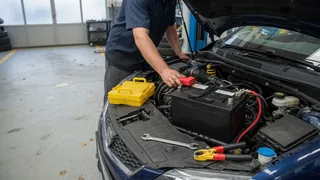
If you use an external charger, choose a smart charger with a mode that matches the battery type. AGM batteries in particular can be harmed by chargers that apply the wrong voltage profile. On many vehicles, the manufacturer specifies remote jump-start or charging points under the hood rather than direct connection at the battery. These points route current through the battery sensor so the management system keeps an accurate picture of state of charge. Follow the procedure in your owner's manual.
Driving habits matter too. Frequent short trips give the alternator little time to restore the charge used by repeated restarts and accessory loads. A car that is mostly driven briefly, or parked for long periods, may benefit from occasional longer drives or a maintenance charger. Keeping the battery terminals clean and tight and addressing any parasitic draw early also help the battery reach its expected service life.
The Bottom Line
A start-stop battery is not interchangeable with a standard car battery. It is an AGM or EFB unit built to handle frequent restarts and partial-charge cycling, often working with a battery sensor and management system that may require registration after replacement. When start-stop stops working or the battery seems weak, test the charging system, connections and parasitic draw before buying a new battery. When you do replace it, match or upgrade the original battery technology and size for your specific vehicle.