Slow Leak at the Tire Valve Stem
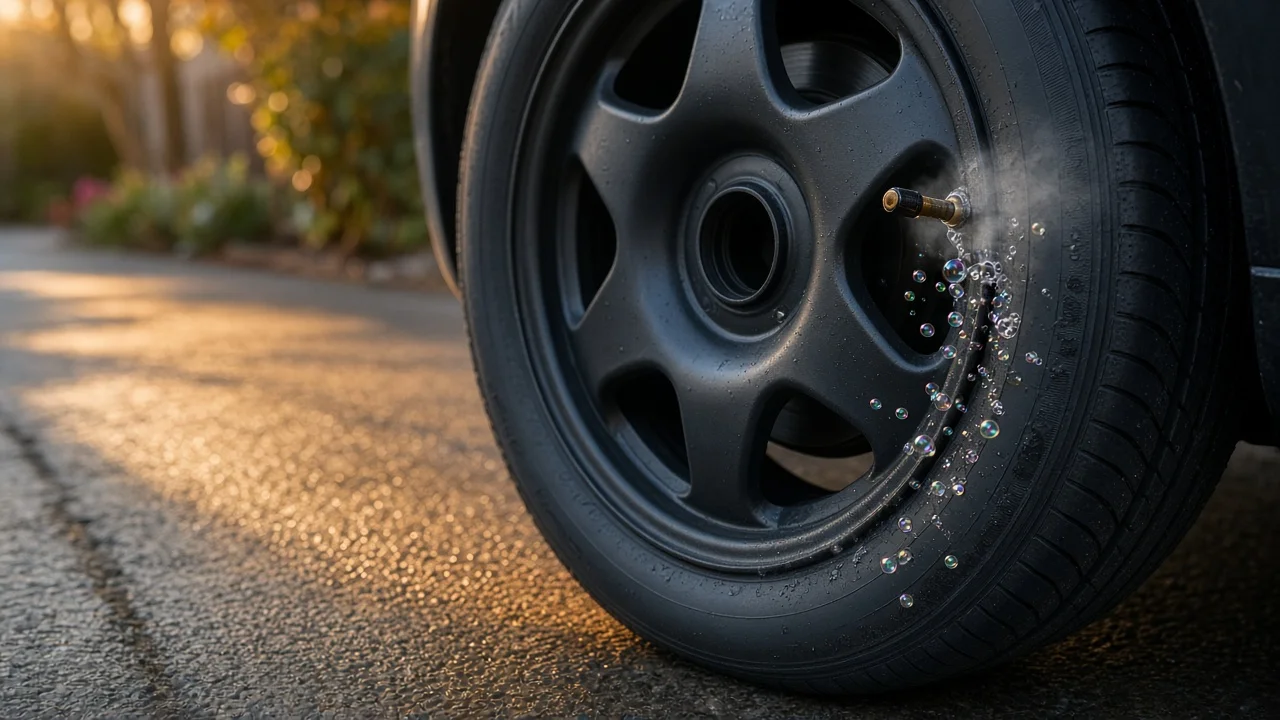
A slow leak at the tire valve stem often hides in plain sight: the tire holds air for days, then triggers a warning light or a visibly low sidewall. On a US-market passenger vehicle, the valve assembly is a small but important sealing point where the inflation air enters the wheel. Because the leak is gradual, the cause may be a loose Schrader core, a cracked rubber base, a corroded metal stem, or a damaged seal. Identifying the leak source early helps prevent uneven tread wear, poor wet braking, and extra heat buildup at highway speeds.
Direct answer
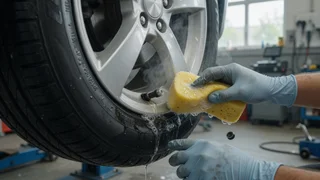
The most likely explanation for a slow leak at the tire valve stem is a failing seal at the valve core or where the stem meets the wheel. The core is the small spring-loaded center piece inside the stem; if its seat is contaminated or not fully tight, air can escape in tiny amounts. With a rubber snap-in stem, age and ozone exposure can make the base crack, while a metal clamp-in stem may leak where the grommet, nut, or rim surface has corroded. Soapy water or a spray solution applied to the stem usually shows bubbles that pinpoint the path.
A slow tire leak at the valve area should not be automatically blamed on a puncture. The tire size, inflation pressure, and load index affect how quickly a small loss becomes noticeable, but they do not change the basic failure points at the stem. Before assuming the tire itself is bad, inspect the cap, core, stem base, and wheel contact area. A missing cap does not seal air, but it allows grit and moisture into the core, which can lead to a slow escape that is easy to correct.