Skoda Octavia/Fabia Steering Angle Sensor
A steering angle sensor question on a Skoda Fabia or Octavia usually begins with a warning lamp, inconsistent steering effort, or a stability-control message that appears without an obvious mechanical failure. The sensor reports where the driver points the front wheels and how quickly the steering wheel turns. That signal helps electronic stability control, electric power steering, and headlight-leveling systems agree on the vehicle’s actual path. This overview explains the component, how it behaves across these two models, and what the readings can realistically indicate before any repair choice.
Essential answer
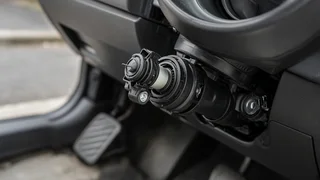
The steering angle sensor is a rotational position sensor mounted in the steering column or combined with the clock spring assembly. It reports steering wheel position, center reference, and rate of turn to modules that compare the driver’s intended path with yaw, wheel speed, and lateral acceleration data. On the Fabia and Octavia, the exact mounting style and calibration routine can differ by platform and model year, so a fault should not be treated as an identical repair across both vehicles.
When the signal becomes implausible, the stability system may reduce assistance, disable traction control, or illuminate a warning lamp. That response is a protective measure, not proof the sensor itself has failed. Wiring, terminal contact, steering column alignment, a recent wheel alignment, or a low battery condition can produce a similar code. The essential answer is therefore scoped: the sensor is a shared input for several systems, and diagnosis requires confirming the complete signal path rather than replacing the part from a code alone.
On both models the sensor works by comparing changes in steering input against a stored center zero point. If the column is turned with the ignition off, if the battery is disconnected, or if suspension work changes the relationship between the steering rack and steering wheel, the sensor may lose its learned center. That can create a mismatch with the yaw sensor, especially during cornering, even when the physical sensor is undamaged.
Practical interpretation starts with observing when the warning appears. A fault that is present at startup and remains static often points toward stored calibration loss or a circuit issue. A code that appears only while steering sharply may suggest mechanical play, a damaged clock spring ribbon, or an intermittent connection near the column. Wheel alignment and joint play checks matter because a sensor can read accurately while the suspension geometry moves in a way that makes the vehicle’s actual path disagree with the measured steering angle.