Serpentine Belt Noise When Starting the Car
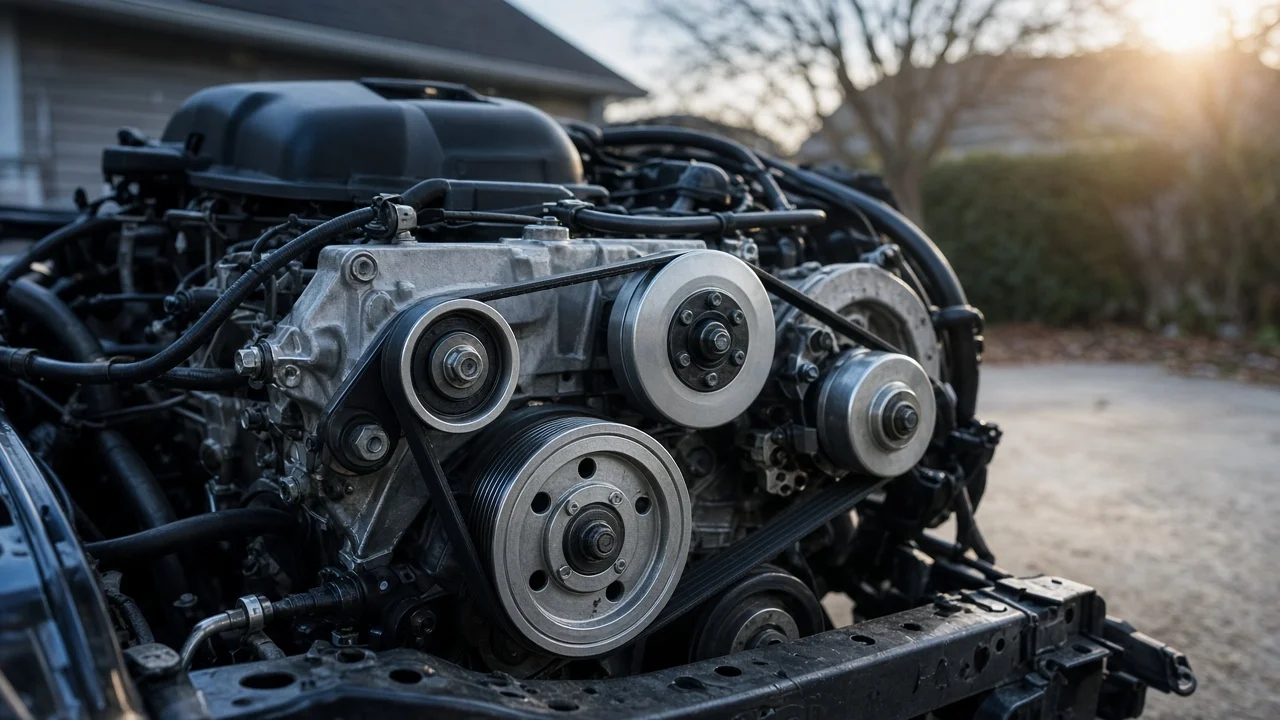
A brief chirp, squeal, or harsh screech right after you turn the key often points to the accessory drive system rather than the engine internals. Serpentine belt noise when starting the car is usually momentary because startup loads are high and the belt must accelerate the alternator, power steering pump, air conditioning compressor, and water pump at once. Cold, damp, or humid conditions can make the ribbed belt slip more easily. Understanding where the sound comes from helps separate a harmless cold-start squeak from wear that will worsen.
Essential answer
The essential issue is almost always momentary slip between the ribbed belt and one of the accessory pulleys. When the engine starts, the crankshaft pulley suddenly drives a long belt that must spin several loaded components. If the tensioner cannot hold the belt tightly enough, or if the belt has hardened and lost grip, the rubber slides across a pulley and produces a high-frequency squeal. The noise commonly fades as the engine warms, belt friction increases, and electrical or hydraulic loads stabilize.
A worn tensioner or misaligned idler pulley can produce the same startup complaint even when the belt looks acceptable. The tensioner uses spring or hydraulic force to keep the belt tight across changing loads, while the idler pulley changes belt routing and provides a stable surface. If either part allows slack during the initial cranking surge, the belt may slip briefly against an accessory pulley. Belt routing and pulley alignment also matter because even a small angular error increases edge wear and screech. The sound is evidence of lost grip or alignment, not proof that any single part has failed.