Sealed Transmission Service Intervals: What "Lifetime Fluid" Really Means

The Short Answer
A sealed transmission is not maintenance-free. "Sealed" describes how the unit is checked and filled. It has no dipstick and no easy owner access. It does not mean the fluid lasts forever. Some manufacturers list no routine fluid change under normal driving. Many of those same manufacturers call for periodic fluid replacement under severe-service conditions. The interval that applies to your vehicle depends on the model year, transmission type, driving conditions and the maintenance schedule for that specific powertrain.
In practice, the useful question is not whether the transmission is sealed. It is which schedule matches how the vehicle is actually driven. For many owners who tow, drive in heavy traffic or live in hot climates, the answer is the severe-service schedule, not the "lifetime" one.
What "Sealed" Means on a Modern Transmission
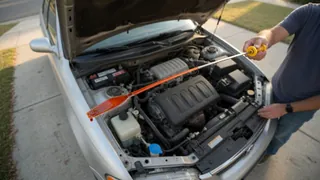
Older automatic transmissions usually had a dipstick tube under the hood. An owner could check the fluid level and condition and top it up through that tube. Many newer designs remove the dipstick entirely. The fluid level is set through a fill plug and a check, or overflow, plug on the transmission case. On some vehicles there is a capped tube or a dipstick that only a technician can reach.
Automakers give several reasons for this design. It keeps owners from adding the wrong fluid. It prevents overfilling and reduces the chance of contamination. It also allows more precise level control on transmissions that are sensitive to small differences in fluid volume. The trade-off is that checking the level becomes a shop procedure, not a quick driveway check.
Why Some Schedules Say "Lifetime Fill"
Synthetic transmission fluids and tighter manufacturing tolerances have extended fluid life compared with older designs. Under gentle, steady driving, a manufacturer may judge that the original fluid can last the period it expects most owners to keep the vehicle. That period may be shorter than the full mechanical life of the transmission.
Transmission fluid does more than lubricate. It transmits hydraulic pressure, controls friction in clutches and bands, and carries heat away from the unit. Over time, heat breaks down its additives and friction modifiers. Fine wear material from clutches and gears also builds up in the fluid. Degraded fluid can change shift quality and raise operating temperature, and it can speed up wear even while the level stays correct. That is why many independent technicians recommend periodic changes even where the normal schedule lists none. This is an editorial judgment widely held in the repair trade, not a universal manufacturer requirement.
Normal vs. Severe Service: The Qualification That Changes the Answer
Most maintenance schedules separate normal and severe operating conditions. The fluid-change guidance for a sealed transmission often differs sharply between the two. Driving patterns commonly treated as severe include the following:
Towing a trailer or carrying heavy loads regularly; Frequent stop-and-go city traffic or extended idling; Sustained driving in high ambient temperatures; Mountainous terrain with long climbs and descents; Short trips where the transmission rarely reaches full operating temperature; Dusty, unpaved or off-road conditions; Commercial, delivery, rideshare or police-type use
Many owners assume they drive under normal conditions. In fact, everyday commuting in congested traffic or a hot climate often fits the severe definition. If any of these patterns describe regular use, follow the severe-service interval in the vehicle's schedule.
How Intervals Differ by Transmission Type
"Sealed" applies to several transmission designs. Each has its own maintenance logic, and the guidance varies by manufacturer and generation.
Transmission type | How it typically works | Maintenance considerations; Conventional automatic (torque converter) | Planetary gearsets and clutch packs controlled by hydraulic pressure | Fluid condition affects shift quality and clutch wear; schedules range from "lifetime" under normal use to periodic changes under severe use; CVT (continuously variable transmission) | A belt or chain running between variable-diameter pulleys | Depends on a CVT-specific fluid with particular friction properties; many manufacturers list replacement intervals, and using the wrong fluid can cause damage; Dual-clutch (DCT) | Two automated clutches pre-selecting alternate gears | Wet-clutch designs often have scheduled fluid changes; dry-clutch designs use different maintenance for the gear oil and clutch system; Manual transmission | Driver-operated clutch and gear selection | Gear oil is often checked and filled through a side plug; some schedules include inspection or replacement intervals
Because fluid specifications are so specific, the correct fluid matters as much as the interval. A transmission built for one fluid can shift poorly or wear faster on a different one, even when the product is labeled as compatible with many vehicles.
How a Sealed Transmission Is Checked and Serviced
Without a dipstick, the level is usually checked with the vehicle level on a lift and the engine running. The fluid must be within a specified temperature window, which is often read with a scan tool. With those conditions met, the technician removes the check plug. Fluid should be at or just at the edge of the check-plug opening. If it is low, fluid is added through the fill port until it does. Checking at the wrong temperature can produce an incorrect reading, which is one reason this is generally treated as a shop job.
There are two common ways to replace the fluid:
Drain and fill: The drain plug is removed and the fluid that drains out is replaced. Much of the fluid stays in the torque converter, cooler lines and valve body, so only part of the total volume is renewed each time. Repeating the procedure raises the share of fresh fluid. Fluid exchange: A machine connected to the cooler lines replaces most of the fluid while the transmission runs. It renews more fluid in one visit. Some manufacturers recommend against certain exchange methods on specific transmissions, so check the guidance for your unit.
Some designs also have a serviceable filter or a pan that is removed during the service. Others use an internal filter that is not replaced routinely. Some vehicles also need the transmission control module's adaptive values reset or relearned after a fluid change.
Servicing a High-Mileage Transmission That Was Never Serviced
Owners sometimes hear that changing old fluid in a high-mileage transmission can cause it to fail. The usual explanation is that the change gets blamed for problems that already existed. A transmission already worn enough to slip may show its condition soon after any service. Fresh fluid does not cause the wear. Opinions differ on how to approach a neglected unit. A cautious option is a single drain and fill, or a series of them, instead of a full exchange. A technician can first inspect the old fluid for burnt odor, dark color or debris to judge the unit's condition.
Signs a Sealed Transmission Needs Attention
Regardless of the schedule, these symptoms warrant an inspection:
Delayed engagement when shifting into drive or reverse; Harsh, slipping or flared shifts; Shuddering, especially at low speed or light throttle; Whining, buzzing or other new noises; A transmission warning light or stored transmission fault codes; Reddish or brownish fluid spots under the vehicle; A burnt smell after driving
A leak matters more on a sealed unit than on a dipstick-equipped one. The owner cannot easily see that the level is dropping, so external seepage may go unnoticed until symptoms appear.
Choosing a Service Interval for Your Vehicle
A practical approach combines the manufacturer's guidance with an honest look at how the vehicle is used:
Find the maintenance schedule for your exact model year and transmission, since one model can use different transmissions across trims or generations. Decide whether your driving fits the normal or severe definition, and use the matching interval. If the normal schedule lists no fluid change and you plan to keep the vehicle long term, consider following the severe-service interval as a conservative choice. Confirm the exact fluid specification and use only fluid that meets it. Ask for a level and condition check during other routine service, especially on older or high-mileage vehicles. Keep records of any transmission service, which can help with warranty questions and resale.
Warranty terms can also affect the decision. If the vehicle is under a powertrain warranty, following the published schedule and keeping documentation is the safest way to avoid disputes over coverage.
Bottom Line
A sealed transmission is designed to be checked and filled by a technician, not to go without service. "Lifetime fill" usually applies only to normal driving and the manufacturer's expected ownership period. Severe-service schedules for the same vehicle often include fluid replacement. Identify your exact transmission, match its schedule to your real driving conditions, and use the specified fluid. For owners who tow, drive in heavy traffic or plan to keep the vehicle a long time, periodic fluid service is a reasonable, conservative choice.